
Author
How does cognitive discernment shape the way people navigate information? Can a shift in one information domain—such as public health—spill over into another, like politics? And if individuals learn to question and examine information more carefully, could that ultimately help rebuild trust in an era overwhelmed by noise and misinformation?
A community library experiment in Bihar—one of India’s least developed states and home to 127 million people—is offering some answers —and perhaps a glimmer of hope. Spread across 583 villages and involving more than 13,500 students, the four-month study—recently published by Cambridge University Press—found that students who completed the training became more adept at separating fact from fiction. They grew more likely to trust scientific sources and less inclined to rely on unscientific and bogus claims and misinformation.
The Classroom as an Information Ecosystem
Inside modest classrooms, students were taught to pause before believing. To ask simple but important questions: Who said this? How do I know it’s true? What are other sources saying? Over time, those questions became habits—small acts of vigilance that rewired their information pathways. They leaned more on science and became a little less dependent on the loudest voices in their feeds.
What the team of researchers led by Prof. Simon Chauchard, a noted researcher at the University Carlos III in Madrid, discovered was not just evidence of learning—but of diffusion. Knowledge did not stay confined to the classroom; it seeped sideways, across households and communities, reshaping not only what people knew, but what they felt was acceptable to share.
“As many countries seek long-term solutions to combat misinformation, these findings highlight the promise of sustained, classroom-based education,” the study notes. “We observe within-household diffusion, with parents of participating students becoming more adept at discerning information.”
Notably, the intervention also brought about changes in health preferences, diminishing reported reliance on alternative medical approaches to cure serious illnesses, as well as changes in ability to evaluate the credibility of sources.
But the most striking transformation came not from the students—but from their homes. Parents and guardians, though never part of the classes, began to show sharper discernment, too. Around kitchen tables and evening conversations, habits of questioning and verification began to spread. The lesson had escaped the walls. Information, it seemed, had found a new pathway.
The Gendered Pathways of Information
The study also uncovered a quieter truth: information does not travel evenly. Boys showed a greater willingness to challenge unscientific claims and misinformation than girls, a difference the researchers attributed not to ability but to circumstance—to the quiet limits placed on how freely girls can speak or debate in public. It’s a reminder that information doesn’t travel in a vacuum. It moves through gendered, unequal worlds—and that any effort to build more resilient information systems must begin by listening to those silences.
The Story Behind BIMLI
The experiment began two years ago, when DataLEADS, in partnership with the University Carlos III of Madrid and the Government of Bihar, launched the Bihar Information and Media Literacy Programme—or BIMLI.
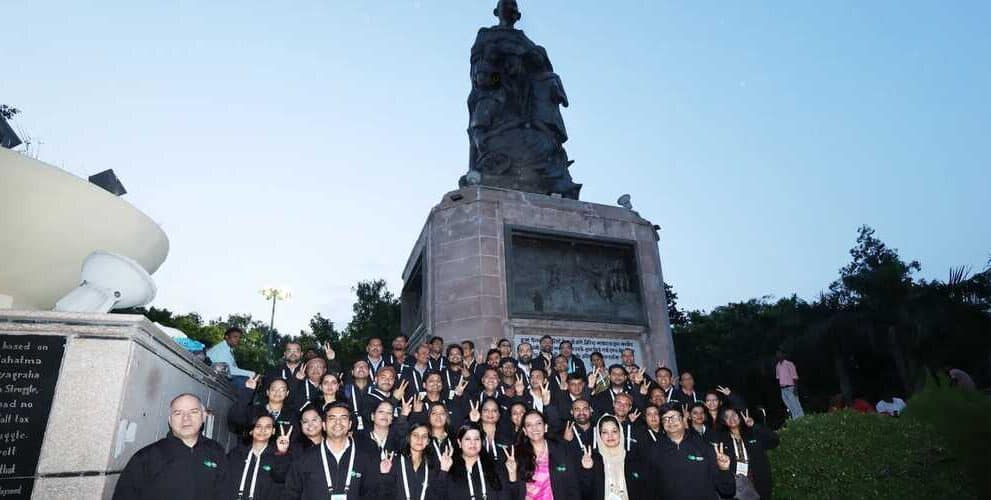
In September 2023, DataLEADS team selected a cohort of 50 educators from across Bihar gathered in a Patna hotel for a two-day Training of Trainers workshop. Amid flip charts, handwritten notes, group discussion and long debates, they worked through a new curriculum — a homegrown antidote to the global epidemic of information disorder.
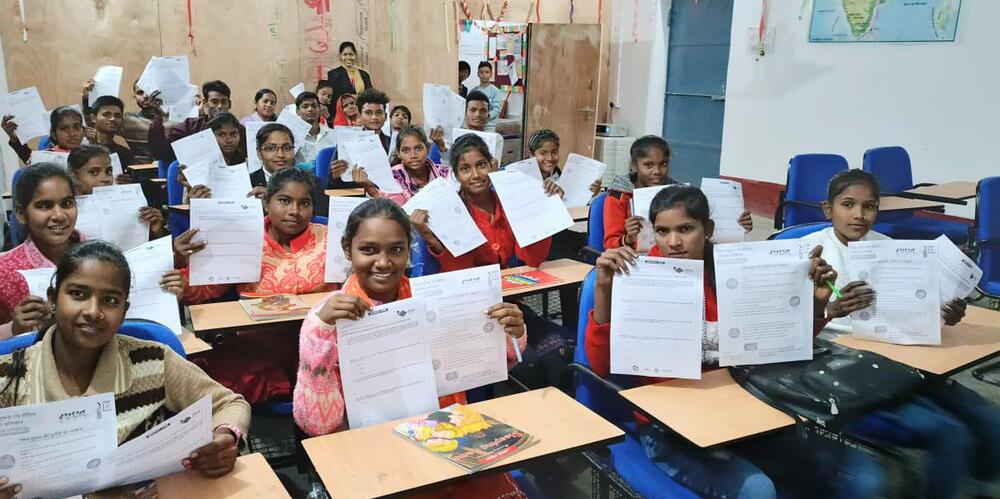
When the trainers returned to their districts, towns and villages, they carried more than lesson plans. They brought with them stories, questions, and a quiet new way of looking at information pathways. A young team at DataLEADS closely monitored each training session, making sure every conversation, exercise, and data point carried meaning. Lesson plans were distributed. And in once-quiet community libraries—from Patna to Nalanda, from Vaishali to Siwan, from Gopalganj to Darbhanga, from Madhubani to Madhepura, from Purnia to Bhagalpur, and all the way to Gaya and Arwal—debates began to stir. Students and trainers discussed vaccines, preventive health, news headlines, and the many ways information moves through their lives.
Conversations spilled beyond their allotted hours, drifting into the chill of winter Sunday mornings. The curriculum was deliberately low-tech—taught offline, through discussion, paper handouts, drawing and chalkboard sketches. Students were given reflective homework—writing short stories, observations, and holding discussions with their families.
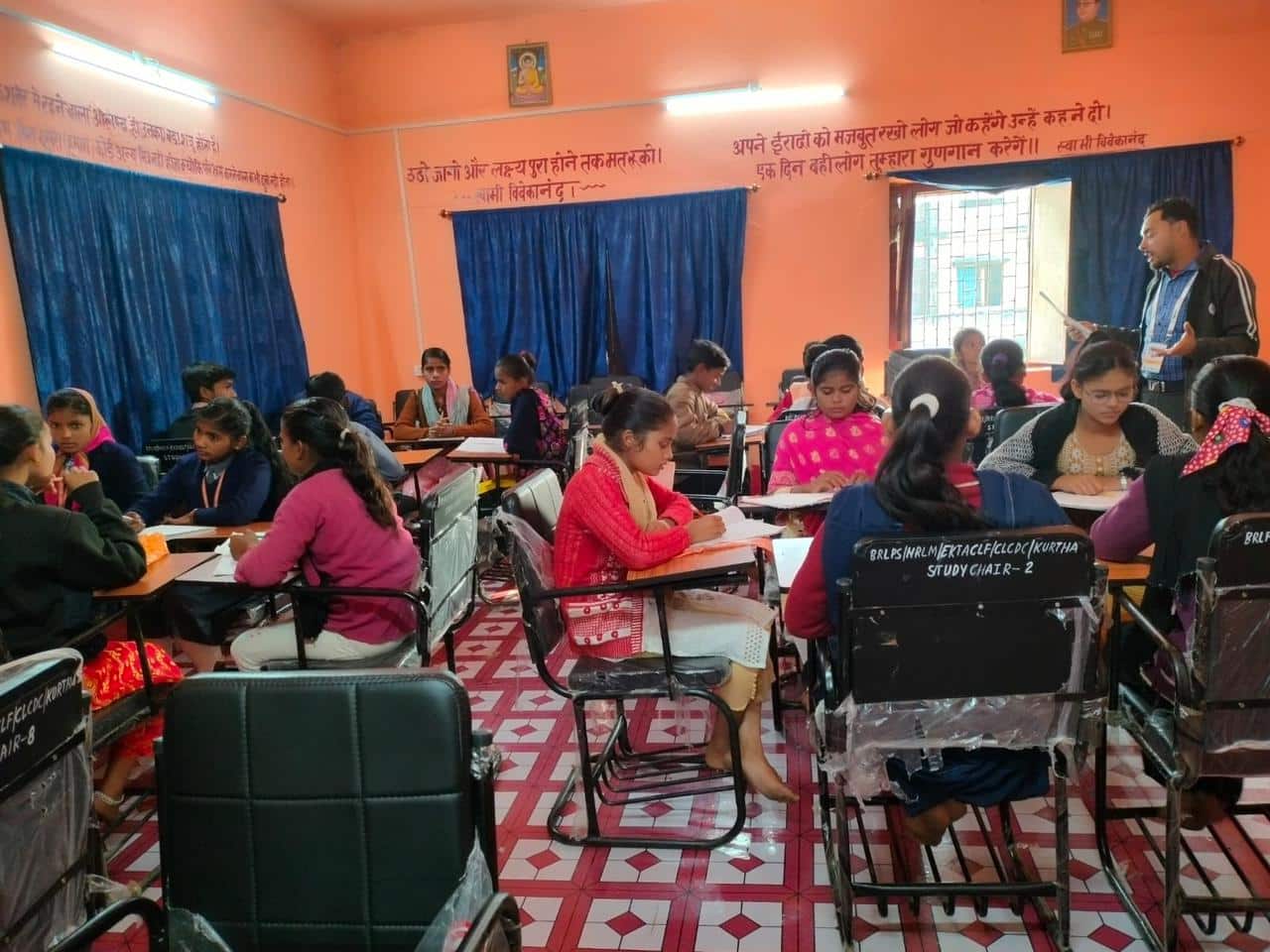
The initiative drew strength from a key ally: the state government of Bihar. Through its Bihar Rural Livelihoods Promotion Society—better known locally as Jeevika—the government didn’t merely endorse the programme; it integrated it. BIMLI became an official, certified course within the state system, lending institutional legitimacy and opening more than a hundred community libraries across 32 districts — enabling the project to reach remote rural populations often overlooked in studies of information resilience. It was a rare instance of public infrastructure serving as a laboratory for rebuilding trust.
Reimagining Information Pathways
Across the world, a growing body of research has been circling around a central question: how do we strengthen trustworthy information pathways in an age where truth must fight for attention? From fact-checks and corrective messages to inoculation games and accuracy prompts, the experiments are many—and most show at least some promise.
But in the era of artificial intelligence, the challenge is no longer merely to connect more people to information. It is to reimagine the routes through which that information travels. The goal is not just access, but alignment—to ensure that what reaches people is not only available, but accurate, relevant, and reflective of their lived experience of communities.
In Bihar, a modest classroom experiment has offered some insight into what that future might look like—one where we invest not just energy and resources, innovative partnership frameworks and imagination to ensure that information flows not just widely, but well.
(Syed Nazakat is an award-winning journalist, media entrepreneur, founder and CEO of DataLEADS, a tech and digital media company he founded to promote open data and democratization of information at scale. He leads DataLEADS in New Delhi, as well as oversees its outreach across the world with different partners.)
Also read: Chikungunya outbreaks: Why India is at the epicentre of a global health threat