Author
The World Health Organization (WHO) has warned that the global risk from cholera remains “very high” despite a decline in cases and deaths compared to the same period last year.
In its latest Multi-country Outbreak of Cholera Epidemiological Update released on May 29, the WHO said that from January 1 to April 26, 2026, a total of 79,740 cholera and acute watery diarrhoea (AWD) cases and 1,010 deaths were reported from 22 countries across four WHO regions.
The agency estimates that one billion people remain at risk globally.
“In April 2026 (epidemiological weeks 14 to 17), a total of 20 100 new cholera and acute watery diarrhoea (AWD) cases were reported from 15 countries, territories, and areas,” the WHO said, noting that this represented “a 20% increase from the previous month.”
The WHO said the African Region registered the highest number of cases, followed by the Eastern Mediterranean Region, the Region of the Americas and the South-East Asia Region.
While outbreaks continue to affect multiple countries, the organization noted some improvement compared with 2025. “Cholera cases and deaths in April 2026 were 54% and 62% lower than the same period last year,” the report said.
The WHO warned that a combination of conflict, displacement and climate-related disasters is continuing to drive transmission.
“In recent years, conflict, mass displacement, disasters associated with natural hazards, and climate-related events have contributed to conditions that may facilitate cholera transmission, particularly in rural and flood-affected areas, where poor infrastructure and limited access to healthcare can delay treatment,” the report said.
According to the WHO, “these cross-border factors have made cholera outbreaks increasingly complex and harder to control.”
During April alone, 243 cholera-related deaths were reported globally. The African Region accounted for the overwhelming majority of fatalities, reporting 239 deaths, while the Eastern Mediterranean Region reported four.
For the year so far, the African Region has recorded 45,250 cases and 995 deaths, making it the worst-affected region globally. The Eastern Mediterranean Region reported 33,946 cases and 14 deaths, while the Americas reported 357 cases and one death.
Among the hardest-hit countries, the Democratic Republic of the Congo reported 23,971 cases and 707 deaths between January and April, followed by Mozambique with 7,188 cases and 64 deaths, and South Sudan with 5,918 cases and 68 deaths.
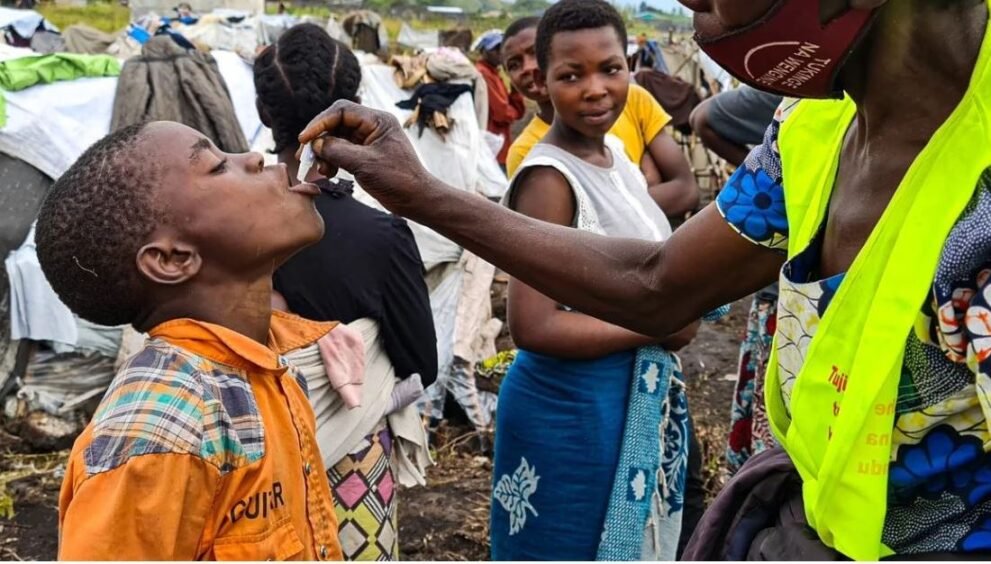
The WHO said that in the Democratic Republic of the Congo, “high levels of ongoing transmission continue in the East, particularly in lakeside communities, conflict-affected areas, and locations that are difficult to access.”
In South Sudan, the report noted that “population displacement and movement related to conflict are likely contributing to cholera persistence and resurgence.”
The agency also linked Mozambique’s outbreak to extreme weather conditions, saying that “persistent torrential rains and widespread flooding across nearly all provinces” may have increased the risk of cholera transmission.
In South-East Asia, the WHO reported 187 cholera or AWD cases between January and April, including 36 cases from India, of which 27 were confirmed cases. No cholera-related deaths were reported from India during the reporting period.
The WHO cautioned that the figures may not fully capture the true scale of the outbreak. “Potential underreporting and reporting delays may affect timeliness and accuracy,” it said, adding that differences in surveillance systems and laboratory capacities can also affect comparisons between countries.
With outbreaks continuing across Africa, the Middle East and parts of Asia, the WHO has maintained its assessment that the global cholera risk remains “very high,” underscoring the continued threat posed by conflict, displacement, poor sanitation and climate-related shocks.