Author
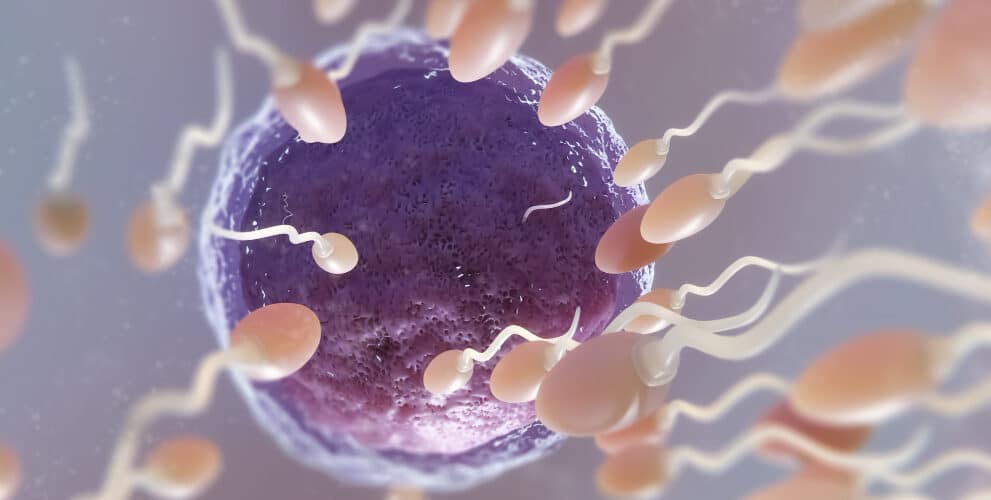
Scientists have claimed to have “rejuvenated” human eggs for the first time, a development that could significantly improve IVF success rates for older women, according to research reported by The Guardian.
The study suggests that age-related defects in eggs — a major cause of IVF failure and miscarriage — can be reduced by supplementing eggs with a key protein. Researchers found that eggs injected with the protein were almost half as likely to show chromosomal defects compared with untreated eggs.
If confirmed in larger trials, the approach could mark a major shift in fertility treatment, particularly for women in their late 30s and 40s, for whom egg quality is the primary limiting factor.
“Overall we can nearly halve the number of eggs with [abnormal] chromosomes. That’s a very prominent improvement,” Prof Melina Schuh, director at the Max Planck Institute for Multidisciplinary Sciences in Göttingen and co-founder of Ovo Labs, was quoted as saying by The Guardian.
“Most women in their early 40s do have eggs, but nearly all of the eggs have incorrect chromosome numbers,” Schuh added, as quoted by The Guardian. “This was the motivation for wanting to address this problem.”

The findings will be presented at the British Fertility Conference in Edinburgh and have been published as a preprint on the Biorxiv platform.
Egg quality declines with age due to errors during meiosis — the process by which eggs divide and reduce their genetic material. In older eggs, chromosomes are more likely to separate incorrectly, leading to embryos with too many or too few chromosomes. This is also why the risk of conditions such as Down’s syndrome rises with maternal age.
According to the most recent UK figures cited by The Guardian, the average birth rate per embryo transfer is 35% for women under 35, falling sharply to 5% for women aged 43 to 44. The average age of women starting IVF treatment in the UK is now over 35.
Dr Agata Zielinska, co-founder and co-CEO of Ovo Labs, said current options for women facing age-related infertility are limited. “Currently, when it comes to female factor infertility, the only solution that’s available to most patients is trying IVF multiple times so that, cumulatively, your likelihood of success increases,” she was quoted as saying by The Guardian. “What we envision is that many more women would be able to conceive within a single IVF cycle.”
The research focuses on a protein called Shugoshin 1, which helps hold chromosome pairs together during egg division. Previous work showed that levels of this protein decline with age. In the latest experiments, researchers injected Shugoshin 1 into human eggs donated by fertility patients at Bourn Hall clinic in Cambridge.
They found that the proportion of eggs showing chromosomal defects dropped from 53% in untreated eggs to 29% in treated eggs. Among eggs from women over 35, defects fell from 65% to 44%, though this result was not statistically significant due to the small sample size.
“What is really beautiful is that we identified a single protein that, with age, goes down, returned it to young levels and it has a big effect,” Schuh said, as quoted by The Guardian. “We are just restoring the younger situation again with this approach.”
Researchers stressed that the technique would not extend fertility beyond menopause, when the egg reserve is exhausted. While microinjections into eggs are currently rare outside procedures such as ICSI, the team said they do not anticipate major safety concerns and are in discussions with regulators about launching a clinical trial.
Dr Güneş Taylor of the University of Edinburgh, who was not involved in the study, described the findings as “really promising”, according to The Guardian.
“This is really important work because we need approaches that work for older eggs because that’s the point at which most women appear,” she said, as quoted by The Guardian. “If there’s a one-shot injection that substantially increases the number of eggs with properly organised chromosomes, that gives you a better starting point.”
Also read: Over 13 million IVF babies born worldwide since 1978: Study
Do you have a health-related claim that you would like us to fact-check? Send it to us, and we will fact-check it for you! You can send it on WhatsApp at +91-9311223141, mail us at hello@firstcheck.in, or click here to submit it online.