
Author
Neck pain has increasingly become a common complaint in today’s fast-paced world. Whether in the office, at home, or among older adults and young individuals, almost everyone experiences discomfort in their cervical spine at some point. Long hours of sedentary work, excessive use of smartphones and computers, and growing stress levels have contributed to a surge in neck pain complaints, making it one of the most prevalent musculoskeletal disorders globally.
Globally, neck pain is a major public health concern. According to a 2020 study published in The Lancet, neck pain affected 20.3 crore people worldwide. The study estimated the global age-standardised prevalence rate of neck pain at 2,450 per 100,000 population and the global age-standardised years lived with disability (YLD) rate at 244 per 100,000.
The prevalence rate remained largely stable between 1990 and 2020. However, females had a higher prevalence than males, with rates peaking between 45 and 74 years of age. Projections suggest that by 2050, the global number of neck pain cases will rise to 26.9 crore, marking a 32.5 per cent increase from 2020.

“Decomposition analysis of the projections showed population growth was the primary contributing factor, followed by population ageing,” the study added.
Considering that musculoskeletal pain, including neck pain, is increasingly reported in India, it becomes imperative to understand its causes, risk factors, and potential solutions to prevent worsening of this public health concern.
What is neck pain?
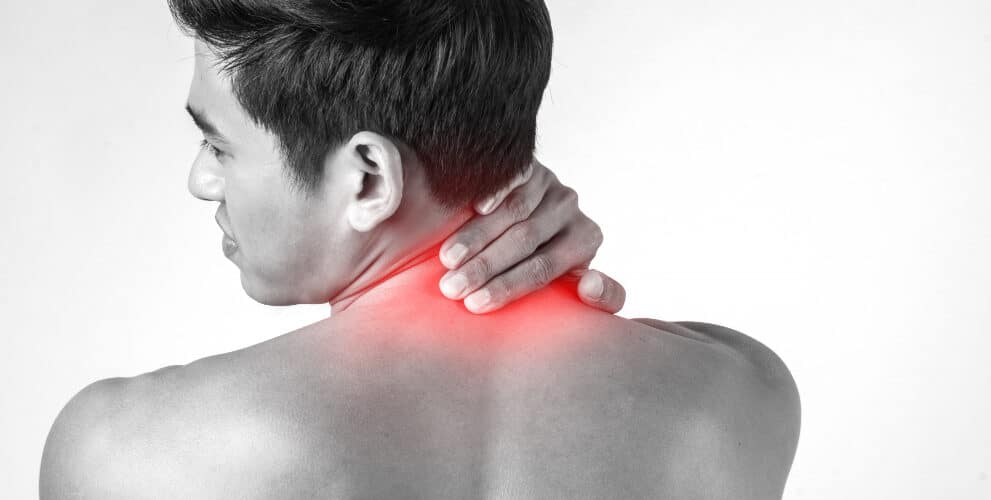
Neck pain, also known as cervicalgia, refers to discomfort or pain in or around the cervical spine, located just below the head. It can arise from a wide range of injuries or medical conditions. Neck pain can manifest as axial pain, which is felt primarily in the neck itself, or radicular pain, where the discomfort radiates to other areas such as the shoulders and arms. It may be acute, lasting from a few days up to six weeks, or chronic, persisting for more than three months. If left untreated, neck pain can interfere with daily activities, reduce productivity, and lower quality of life.
People often describe neck pain as a persistent ache, a stabbing or burning sensation, or shooting pain radiating toward the shoulders and arms. Additional symptoms may include headaches, stiffness in the neck, shoulders and upper back, restricted movement, and numbness or tingling in the upper limbs.
The causes of neck pain are multifaceted. Aging can naturally wear down the cervical spine, causing degenerative conditions such as osteoarthritis and spinal stenosis. Stress and repetitive movements may weaken spinal disks, resulting in herniated disks or pinched nerves. Physical strain, such as poor posture, overuse of neck muscles, and weak abdominal muscles, can contribute to discomfort.
Mental stress often leads to tightening of neck muscles, which in turn causes pain and stiffness. Traumatic injuries, including whiplash from car accidents, can damage muscles, ligaments, or nerves, while growths such as cysts, bone spurs, or tumours may exert pressure on nerves. Additionally, neck pain may be a symptom of underlying health conditions like meningitis, rheumatoid arthritis, or certain cancers.
How common is neck pain in India?
A 2021 survey conducted in six villages of Raigad District, Maharashtra, measured low back and neck pain using the spine pain questionnaire. The study found that, “Among rural people, the point prevalence of low back and neck pain was 4.9 per cent and 2.9 pc, respectively. Among tribal people, prevalence was 10.0 pc for low back pain and 3.6 pc for neck pain.”
Activities like lifting heavy weights and bending the trunk were identified as the most limiting, and villagers largely attributed spine pain to the traditional lifestyle and ageing. Despite the pain, many participants continued their occupational work. Barriers such as lack of transportation and high treatment costs were cited as reasons for delays in seeking care at nearby health centres. The study emphasised the need for community-focused spine care programs and self-empowerment initiatives to address musculoskeletal pain in rural populations.
In 2022, a regional cross-sectional survey in Mathura town explored chronic non-specific neck pain (CNNP) among adults. The study included 2,861 participants and found a prevalence of 18.6 per cent. Females, with a mean age of 40.9 years and engaged primarily in light physical activity, were more affected than males. Multiple regression analysis indicated that age, working hours, body mass index, duration of neck pain, level of physical activity, and cardiovascular diseases were significant risk factors.
Dr Yash Gulati, Senior Consultant Orthopaedic Surgeon at Apollo Hospital in Delhi and a Padma Shri awardee, explains that understanding neck pain starts with understanding the structure of the neck itself. He notes that the cervical spine contains seven vertebrae, each separated by a disc that provides cushioning and allows movement in all directions. He adds that at every level, there are two facet joints, and the cartilage in these joints is similar to the cartilage found in the knee or hip.
According to Dr Gulati, this cartilage undergoes wear and tear with age, just like cartilage in other joints. The disc between the vertebrae can also degenerate, reducing the space or slipping out of place. “A ruptured disc can cause neck pain, and if the disc material presses on the nerve, it can cause arm pain,” he says. When the disc material or age-related bone growth presses on the spinal cord, symptoms can become more serious. This may lead to weakness in the arms and legs, numbness, difficulty walking or, in very severe cases, significant loss of strength.
Dr Gulati explains that neck issues range from a mild, occasional ache to constant pain, pain at night, radiating arm pain, and even neurological problems. While some of this is age-related, lifestyle factors are now causing neck pain in younger people as well. “We are on the phone all the time, playing online games, watching screens, or working for hours on computers. Bad posture, like sitting on the bed with a laptop or lying down and watching TV, aggravates the problem,” he says. These habits strain the muscles and worsen the natural degenerative process.
A 2020 cross-sectional study among undergraduate medical students in central India analysed 331 valid responses out of 423 respondents and found that 58.3 per cent of students experienced neck pain within the past year.
The study noted that third- and fourth-year students had 2.9 times higher odds of current neck pain compared to first-year students. History of neck pain prior to joining the medical course was associated with a higher risk of current pain. The study concluded that “neck pain is not uncommon among undergraduate medical students. History of previous neck pain including that during schooling makes a student prone to the current episode of pain. Academic stress, smartphone and laptop use tend to aggravate the pain in those who have neck pain.”
Another 2024 systematic review and meta-analysis examined work-related musculoskeletal disorders (WMSDs) across various occupational sectors in India, including agriculture, small-scale industries, handicrafts, construction, and banking. The study reported a pooled 12-month prevalence of 76 pc for WMSDs, with neck pain affecting 40 pc of workers. Low back pain affected 60 pc, and shoulder pain 36 pc. The research emphasised that WMSDs, including neck pain, lead to significant absenteeism, reduced productivity, and economic impact. The findings also highlighted the variability in prevalence across different industries, indicating the need for tailored interventions and ergonomic measures to prevent musculoskeletal disorders in occupational settings.
“Occupational factors also play a major role. Long desk hours, improper screen height, incorrect chair setup, and continuous work without breaks contribute significantly. Activities like bending the neck during long phone calls or repeatedly using the phone on one side add to the strain,” Dr Gulati warns that if these issues are not addressed, the pain can become chronic and much harder to manage.
He adds that infections, tumours, and disc prolapse can also cause neck pain, similar to conditions that occur in the lower back, although they are less common.
Prevention and management: Expert insights
Dr Gulati emphasises that prevention is the most important tool when it comes to managing neck pain. He explains that maintaining proper posture and avoiding harmful habits can significantly reduce the risk. “We must watch our posture and avoid the activities that strain the neck. Taking breaks is essential. You should not sit continuously for one, two or three hours on a computer or phone,” he says.
He adds that ergonomic corrections make a huge difference. The height of the desk, computer, chair and table should be adjusted for each individual. The ideal setup varies depending on a person’s height and comfort. “Your eyes should meet the computer screen at the right level. Everyone has to personalise their workstation,” he notes.
Dr Gulati strongly advocates incorporating preventive exercises. Yoga and simple neck exercises, he says, are effective and easy to perform. “Just like we learn back exercises, we should learn neck exercises too. These can be done even while sitting in the office. A few minutes of movement and strengthening go a long way in prevention.”
There is currently no dedicated national programme in India that focuses specifically on musculoskeletal disorders, including neck pain. When asked whether such a programme is needed, Dr Gulati feels the priority should be awareness rather than creating a separate policy.
“General awareness is enough. Just as people are aware of back pain, the same level of awareness for neck pain will help. Schools and colleges should talk about posture and exercises,” he adds. He emphasises that lifestyle habits, regular exercise and mindful posture can prevent or delay many issues related to neck pain.
For those already suffering from chronic neck pain, Dr Gulati recommends a combination of preventive and therapeutic strategies. Some patients may benefit from short-term use of a cervical collar, physiotherapy, massage or targeted exercises. In selected cases, interventions like facet joint injections may be required. “If the disease is advanced and causing arm pain, nerve issues or pressure on the spinal cord, surgical treatment may become necessary,” he explains.
Also read: Why women’s chest pain is often dismissed: Understanding atypical angina