Author
Disability is almost always a spectacle. A few years ago, the internet was viral with news of a teenager being denied air travel in Ranchi. There was much uproar and outrage. A few weeks ago, a different kind of outrage was sparked when a video of a long line of wheelchairs outside a boarding gate, posted multiple times with different soundtracks, went viral. 30 per cent of Air India passengers flying to the US and the UK reportedly requested wheelchair services, screamed headlines, which were then shared on social media and WhatsApp groups.
Many opinions flew across the internet about the misuse of wheelchairs—with renewed ‘outrage’ framed around issues of access to services and safety. Several media reports called this the ‘new scam,’ reporting how people miraculously healed and no longer needed the wheelchair once they passed areas with long queues. There was a demand that people be charged for these services, to weed out who is ‘misusing’ the system and who has ‘genuine needs.’
This is, however, much more than a logistical problem. With the new Directorate General of Civil Aviation (DGCA) guidelines seemingly agreeing and suggesting that those who ‘opt’ to use wheelchair services can pay for them, a deeper set of questions have taken centre stage: what does it mean to be disabled, who is a person with disability, who is allowed to claim disability, and who deserves care. The debate is not simply about safety, efficiency or misuse of resources—it is about disability identity, dignity, and whether we want a society organized around exclusion or shared access for all.

I write this piece not only as a disability researcher but also as a disabled woman who travels alone by air. My entire life, I have struggled with the question of whether I can consider myself disabled or not. It took me several years to accept that a cane would help make walking easier. I can now walk long distances without pain, I no longer have to explain my disability to other people, no longer have to explain why I cannot stand for a long time or struggle to walk long distances when I don’t “look disabled.”
But who decides who needs special assistance?
Why do we think it is fair that some people receive a service for free and others pay? How do we draw the line between who needs to pay to access a space and who deserves free access? Many young people did admit that they requested wheelchair services to help their elderly, non-English speaking parents navigate airports. But who gets to decide that this is not a ‘genuine’ need?
Global regulations on accessible air travel do not limit themselves to disabled people – almost every policy guideline or law refers to persons with disabilities and passengers with reduced mobility. The new DGCA guidelines also do not resolve the question of how we will decide who is opting for the service and who needs it. Can you look at someone and tell who is disabled? What kind of proof would we demand?
These moves will essentially ensure that the power to determine who is disabled is taken away from the disabled person and placed in the hands of airline staff—the charity and pity of strangers rather than the dignity of guaranteed rights. There is almost no financial recourse for being denied services. There is no disincentive for airlines that treat disabled people poorly.
This outrage is not simply about air travel – there are questions about how we choose to live together with our differences, in ways that recognize that everyone has needs. In ways that recognize that anyone – through age, through violence, through accidents, through random chance, through structural harm – can become disabled. The question of how we treat disability is central to how we organize society and democracy.
The rules in the UK, the European Union, and the United States clearly state that disabled people and those with reduced mobility will not be charged for these services along the lines of non-discrimination and in the “interest of social inclusion.” There is a principle here – and we abandon values of care and equality if we succumb to the idea that those who need accommodations should pay for them.
‘But what about safety?’
The other area of contention is safety. The DCGA guidelines state that the number of disabled passengers cannot be more than the number of cabin crew. But countries like the United Kingdom, the United States, and those in the European Union have no such limits or quotas. The US Air Carrier Access Act (ACAA), for instance, makes it illegal for airlines to discriminate against passengers because of their disability and clearly states that “as a carrier, you must not limit the number of passengers with a disability who travel on a flight.”
International organizations like the International Civil Aviation Organization, a United Nations-based body that facilitates international cooperation on air travel, and the International Air Transport Association (IATA), which represents the global airline industry, do not offer any clear guidelines limiting the number of disabled passengers.
This is about disability identity
Disability identity is a topic studied by psychologists and disability studies scholars who defined it as the “sense of self that includes one’s disability and feelings of connection to, or solidarity with, the disability community.” It addresses the question of whether a person considers themselves disabled and the consequences of identifying oneself as disabled.
When disabled people identify themselves as such, they experience access to a community, they realize they have rights, and can and should fight for those rights like any other minoritized group. They exchange notes on how to navigate a world that wasn’t made for them, and they ask for their rights . It lowers their risk of anxiety and depression. It improves their ability to access services and seek accommodations.
And importantly, they realize that their struggles are intertwined – that disability, caste, gender, class, religion, and race all operate together in contributing to exclusion, segregation, and differences.
A recent New York Times article outlines the negative consequences of older adults not identifying as disabled. When older adults, who need accommodations to access certain health care services, do not identify themselves as disabled, they deny themselves access to X-ray machines, examination tables, and parking spaces that can aid their experience of seeking healthcare.
But it is not always straightforward. Unlike other identity groups, disabled people often do not have other disabled people in their families or communities. For many disabled people, the answer to whether they can, or should consider themselves as disabled is shaped by their interactions with doctors, caregivers, teachers, and other kinds of institutions. Such institutions are often dominated by able-bodied people.
Airports are one such institution. When institutions deny people the opportunity to express their disability identity, they support the stigma, shame, and silence around disability that perpetuates the massive undercounting of disability in India. This begins a vicious cycle – we do not make good policy, allocate enough resources, or develop appropriate budgets to address the needs of disabled people because many disabled people are not counted or seen as disabled by the state. And so, we end up with a situation where we do not have enough wheelchairs at the airport or have not designed air travel to account for the possibility that nearly 30 per cent of passengers might need assistance to access the airport.
But what about those who don’t “look” disabled?
Airports are usually places where one is expected to walk a lot, with heavy luggage. Walk to the check-in counter, stand in line at security, walk to the boarding gate, run across the airport to catch a tight connection. I need wheelchairs to navigate the airport, even if I don’t “look” like I “need” it.
When I started my PhD in the United States, my advisor, Dr. Anjali-Forber Pratt, a Paralympian, ran a disability identity lab. Almost everyone in the lab was disabled. And everyone was brilliant and independent, and it was the first time in my quarter life of existence that I realized that being disabled could be a matter of pride, community, joy, belonging, culture, and knowledge.
Being disabled was not the end of the world but the beginning of many possibilities. That the problem did not reside in my body; the problem was that the world was not made for bodies like mine.
Research on disability identity demonstrates the positive effects that identifying as disabled has for disabled people. My experience of disabled joy, of experiencing disability as a political identity—one that could be used to leverage change in the world—was not a singular experience.
I began requesting wheelchairs at the airport. At the start, the guilt was immense—I did not want to be taking resources away from people who need them the most.
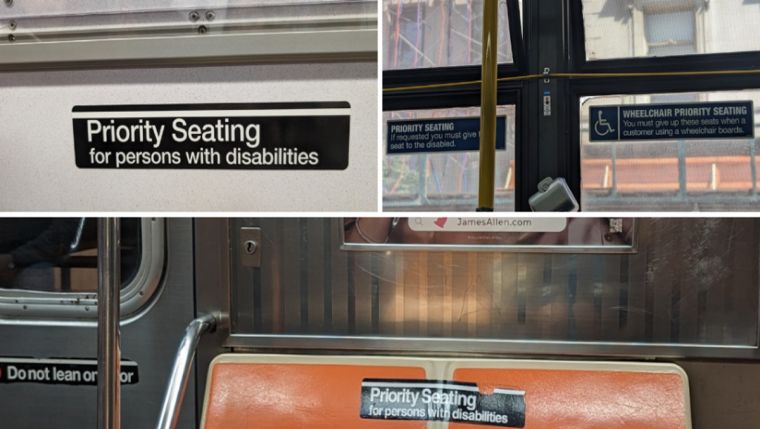
I research disability for a living, and the contradiction was immense. I had to confront my own reluctance to admit that not only do I need help but also that the service exists as a right for people with disabilities.
Special Assistance is not a ‘perk’
Able-bodied people see wheelchair services as a perk, but I wonder whether most would be able to bear the indignity that comes with being a wheelchair user or the immense labor that the wheelchair staff performs.
What happens when you request wheelchair services at the airport? Let’s first take a step back and try to book a flight ticket. For this example, I will focus on domestic travel in India.
If you’re able-bodied, you log into MakeMyTrip or ClearTrip or some other third-party app. Maybe you’ll use the many discount codes you have access to. I have to go directly to the airline website to be absolutely certain that I can select the ‘special services’ option.
I have learned the hard way that if you book through a third-party app for domestic travel, it’s almost impossible to add wheelchair services to your ticket. You have to be prepared to be on the phone with several disinterested, underpaid call center staff to get it on your PNR. This is a Catch-22 situation: lose time or lose money.
On the Indigo website, you click a few buttons of further indignity. IndiGo requires you to select why you need the wheelchair. My disability does not fit neatly into any of the options, so I select miscellaneous. This does not satisfy the app. None of the options work for me. Even though my disability is listed in the International Statistical Classification of Diseases and Related Health Problems (ICD 10) and is a category in the Paralympics, I select arthritis and hope for the best.
I am not singling out Indigo, which already has a tainted record around this. In fact, they were probably the first airlines to have a ramp instead of a staircase to get on their planes – an excellent example of Universal Design.
I am at the airport now. If I am traveling domestically, the airlines will not issue a boarding pass to me. The US laws do not allow this because it forces disabled people to access services they have the right to refuse. For people like me, who are on the edges of disability categories, the problem becomes one of predicting our needs – and of having those needs be predictable and palatable to others. Some days I am in immense pain and need the wheelchair. Other days, I could go straight through security.
But I do not have the choice here. I go to the counter and tell them I booked a wheelchair. I am told to wait. You wait a lot if you request a wheelchair. You wait for so long that you know you won’t be able to use the bathroom, or stop for a snack, or shop at the airport. Things able-bodied folks take for granted.
In the US, there is a clause that passengers using wheelchair services cannot be left unattended or waiting for more than 30 minutes. There is no such clause in India. There is utter chaos; you don’t know when they will come and take you to your gate.
It is finally my turn. The wheelchair operator and I are now in a fight because he needs me to put my cabin bag between my legs. He wants me to do this because airport wheelchairs in India are not designed to store luggage, and he would have to push my wheelchair and my suitcase across the airport. I refuse – I have a hip condition. We are now in a deadlock. The airline tries to convince me to check my cabin bag. I refuse because I have the right, like all other passengers, for a personal item and a cabin bag. The deadlock continues. I have fought, shouted, pleaded.
I cannot get too angry because I need to be the kind of disabled person who needs to be pitiable, not ungrateful. They finally relent. We are now on the way to security with barely any time left till boarding. So, we now scramble through security.
Why is the wheelchair operator cutting the line? Because they are understaffed and we’ve had to wait so long at the counter that we’re now barely going to make it to the gate. I’ve been at the airport almost 3 hours, and there is no way I am getting a bathroom break.
There is no perk to this. There is immense indignity. The airline staff sometimes won’t even look at you or just refer to a group of you as ‘wheelchairs.’ You are no longer a person. You are an object, a liability, a cargo to be moved across the airport. Sure, maybe I’ll board first, but disabled people are disembarked last, and the same wait cycle will repeat itself once I land.
Challenges across the globe
I have used wheelchair services in India, the United States, the United Kingdom, Canada, Qatar, and Japan. I have a horror story from everywhere – long wait times, rude comments, stares, mistreatment, questioning, and resistance.
Airports lose people’s wheelchairs all the time. The staff in the UK abandoned me in the middle of the airport. I also have stories about incredibly kind, hardworking, wheelchair workers.
The question remains: whose bodies are airports designed for? Not for disabled people. Not for folks who do not speak or read English. Not for non-binary or trans people who are forced into gendered bathrooms and gendered security lines.
Like the rest of the world, the airport is a reflection of designing for the able-bodied.
Across the gamut of internet outrage about wheelchair use, there is no article, no news outlet that asked disabled people or wheelchair operators what kind of air travel accessibility they would want. It is easier for others to declare who “genuinely” needs a service and who is misusing it.
For some, I might be misusing the service. For others, I am the imagined beneficiary. We do not have to pit people’s needs against each other – it makes for terrible policy and manufactured resentment. We can imagine otherwise.
Dr Tanushree Sarkar is an educator and a researcher. Her research examines the implications of the global spread of educational theories, policies, and practices for social justice, teachers’ work, and the experiences of children with disabilities in schools.
(Do you have a health-related claim that you would like us to fact-check? Send it to us, and we will fact-check it for you! You can send it on WhatsApp at +91-9311223141, mail us at hello@firstcheck.in, or click here to submit it online)