
Author
Eating roti with ghee prevents blood sugar spikes and lowers the risk of type 2 diabetes, while eating dry roti increases diabetes risk.
FACT:
There is no scientific evidence that adding ghee to roti prevents diabetes. Experts explain that while fat may slightly slow digestion and reduce the immediate blood sugar spike, the total sugar absorbed by the body remains the same, and excess ghee can increase calorie intake and diabetes risk.
In a viral reel posted by Vedant Singh, who has over 7 million followers on Instagram, the content creator shares health-related and daily life information videos. In his bio, he mentions that his mission is to “spread awareness and save lives.”
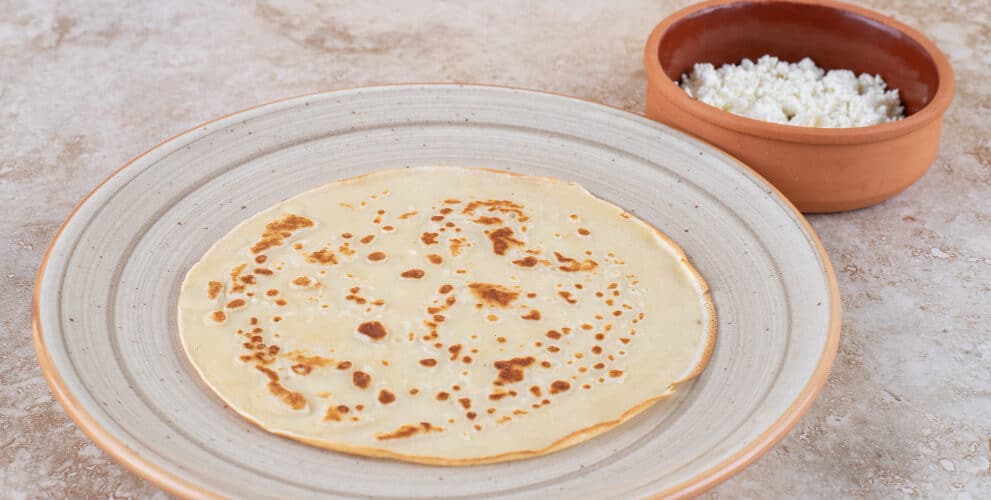
In the reel, he talks about the popular habit of eating roti with ghee and links it to diabetes prevention. Addressing viewers, he says, “How many of you eat roti with ghee? If you don’t eat roti with ghee, then stop eating roti.”
Explaining his point, he adds that roti contains carbohydrates, which convert into sugar in the body and mix with the blood, increasing the risk of type 2 diabetes.
He further claims, “If you eat roti with ghee, then the good fat present in ghee will slowly digest the roti, due to which the sugar will not increase at all and your stomach will remain full for a long time.” According to him, this is the reason our ancestors ate roti with ghee and “stayed away from diabetes.”
The reel has gained significant traction on social media, crossing 6.59 lakh views, 15,300 likes, and 11,700 shares, sparking debate about traditional eating habits.
Does applying ghee to roti lower the risk of diabetes?
Dr Rajiv Kovil, Head of Diabetology and Weight Loss Expert at Zandra Healthcare, explained that there is no clinical study showing that adding ghee to roti reduces the risk of diabetes. He said the claim is based on basic human physiology rather than evidence of disease prevention.
“When you add any kind of fat to a carbohydrate, it simply slows gastric emptying. This means the food leaves the stomach more slowly, which can blunt the immediate post-meal glucose spike,” Dr Kovil said. However, he clarified that this effect is temporary and limited.
Explaining the mechanism further, he added, “The glycaemic index may come down slightly because absorption is delayed, but the glycaemic load remains the same. In simple terms, the body eventually absorbs the same amount of carbohydrates.”
Using an example, Dr Kovil said that consuming sugar or carbohydrates alone can cause a sharp rise in blood glucose within an hour, while adding fat may reduce the peak spike marginally. “It may lower the one-hour reading, but the total sugar entering the bloodstream does not change,” he explained.
He emphasised that this common belief is often misunderstood as diabetes prevention. “This is a long-standing dietary myth. Slowing gastric emptying does not mean you are preventing diabetes or controlling it. The effect is modest and short-lived,” he said.
Dr Kovil also pointed out that roti, whether eaten plain or with ghee, remains primarily a carbohydrate source. “Roti is made from wheat flour. Whether you eat it dry or with ghee, the body will eventually absorb the same carbohydrate load,” he said.
Warning against excess fat intake, he added, “Ghee is 100 per cent fat and highly calorie-dense. If total calorie intake increases over time, it leads to weight gain and insulin resistance, both of which are major drivers of type 2 diabetes.”
“While small amounts of ghee are not harmful, there is absolutely no high-quality clinical evidence showing that adding ghee to roti reduces the risk of developing diabetes,” he concluded.
Also read: FACT CHECK: Does ghee help reduce inflammation?
Do you have a health-related claim that you would like us to fact-check? Send it to us, and we will fact-check it for you! You can send it on WhatsApp at +91-9311223141, mail us at hello@firstcheck.in, or click here to submit it online.