
Author
As both a doctor and a mother, I often find myself looking at adolescence through two very different lenses. One comes from years of clinical experience. The other comes from everyday conversations around the dinner table with my own teenager.
Those two worlds overlap more than ever.
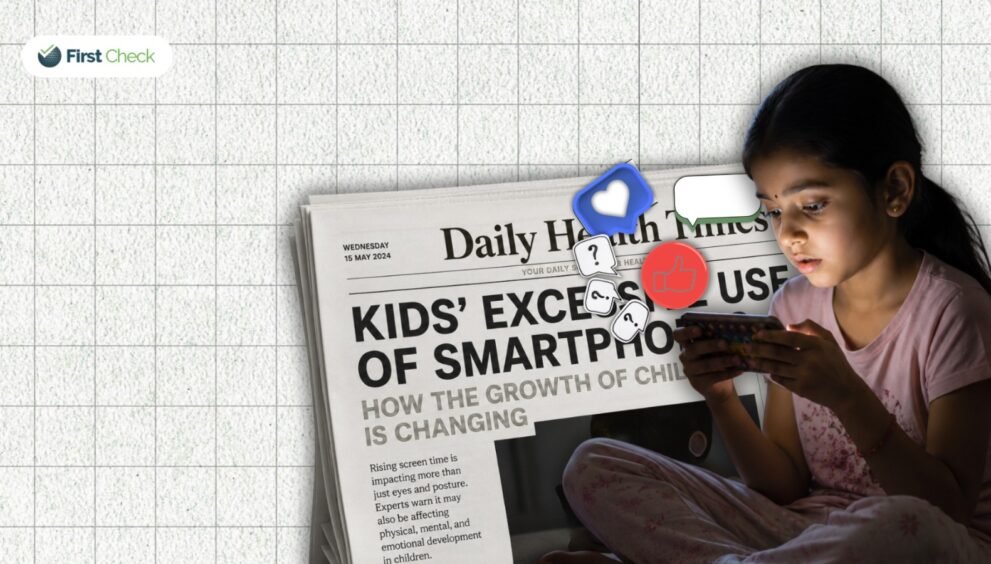
Some of our biggest conversations at home are no longer about homework or exam stress. They’re about something we never had to think about growing up: what young people are constantly seeing online. One reel recommends a new diet. Another promises perfect skin. A third confidently explains a health “hack” that sounds convincing but has little science behind it.
A friend recently shared something that really stayed with me. Her teenage daughter had become convinced she needed an entire skincare routine after watching influencers online. Every week, there seemed to be a new product she “had to have.” It wasn’t really about skincare. It was about how easily confidence can be shaped by what appears on a screen.
And that’s what worries me.
Adolescence, between the ages of 10 and 19, is one of the most important stages of life. It is when young people begin to understand who they are, build relationships, make independent decisions, and develop habits that often stay with them for years.
But today’s adolescents are growing up in a world that looks very different from the one many of us knew. Every day, they are surrounded by endless information, opinions, advertisements, and AI-generated content, all competing for their attention. Algorithms influence not just what they watch, but often what they believe, what they buy, how they see themselves, and even the health choices they make.
Science tells us why this matters. During adolescence, the part of the brain that seeks rewards develops faster than the part responsible for judgement and self-control. That makes young people naturally more curious, more influenced by peers, and more likely to trust what feels popular or familiar.
We are already seeing the impact. Around 80% of adolescents worldwide do not get enough physical activity (according to WHO), while increasing numbers are turning to social media for advice on nutrition, fitness, mental health, and even medical conditions.
In India, where one in five people is between the ages of 10 and 19, this matters even more. The choices this generation makes today will influence not only their own health, but the future health of our communities.
That is why I believe prevention during adolescence is about much more than vaccinations or regular health check-ups. It is also about building healthy screen habits, learning how to question information, recognising misinformation and AI-generated content, and developing the confidence to ask, “Is this actually true?”
As parents, teachers, healthcare professionals, and caregivers, we cannot, and should not, keep young people away from technology. Our responsibility is to help them navigate it with confidence, curiosity, and critical thinking.
At First Check, we believe trusted, evidence-based health information is one of the most powerful tools we can give the next generation.
That is exactly why our very first First Check LIVE session focuses on Healthy Lifestyle and Risk Prevention for Teens and Adolescents.
We’ve brought together leading experts in adolescent health, mental wellbeing, public health, and digital literacy, not just to discuss the problem, but to share practical guidance you can take back to your home, classroom, or clinic the very next day.
I warmly invite you to join us.
📅 Date: 5 August 2026
🕒 Time: 3:00–4:30 PM IST
💻 Mode: Live – Online
Whether you’re a parent trying to make sense of your teenager’s online world, an educator supporting young minds, a healthcare professional, a policymaker, or simply someone who cares about the next generation, I hope you will join us. I believe you’ll leave with practical ideas, meaningful insights, and conversations you can continue long after the session ends.
Reserve your spot now: https://fclive.firstcheck.in/webinars/healthy-lifestyle-teens-adolescents
Because the digital world isn’t waiting for us to catch up. The question is whether we’re giving our children the tools to navigate it safely.
Until next time!