
Author
Depression is a mood disorder that causes a persistent feeling of sadness and loss of interest. Also called major depressive disorder or clinical depression, it affects how you feel, think and behave, often leading to emotional and physical problems. People suffering from depression may struggle with daily activities and sometimes feel as if life isn’t worth living.
More than just a bout of the blues, depression isn’t a weakness, and one can’t simply “snap out” of it. It often requires long-term treatment involving medication, psychotherapy, or a combination of both. But a question that researchers have long sought to answer is, does depression affect women more than men?
A recent study published in Nature Communications may have an answer. It found that women have a higher genetic risk of depression compared to men. Considering depression is among the leading causes of disability worldwide, it becomes important to understand what this study reveals and why it matters for us.
What the study says
The research, described as the largest genetic study on sex differences in Major Depressive Disorder (MDD), identified 16 genetic variants associated with depression in women and eight in men. The researchers provided evidence of a higher burden of genetic risk in females, which could be due to female-specific variants. The study suggests that sex-specific pleiotropic effects, where a single gene affects multiple traits, may contribute to the higher prevalence of metabolic symptoms in females with Major Depressive Disorder.
For this study, DNA data was collected from five international cohorts: Australia, the Netherlands, the United States, and two from the United Kingdom. The final sample size included 130,471 women and 64,805 men diagnosed with major depression, and 159,521 women and 132,185 men without the diagnosis.
As quoted by The Guardian, Dr Brittany Mitchell, a senior researcher at QIMR Berghofer’s genetic epidemiology lab, said, “We already know that females are twice as likely to suffer from depression in their lifetime than males.” She further added, “And we also know that depression looks very different from one person to another. Until now, there hasn’t been much consistent research to explain why depression affects females and males differently, including the possible role of genetics.”
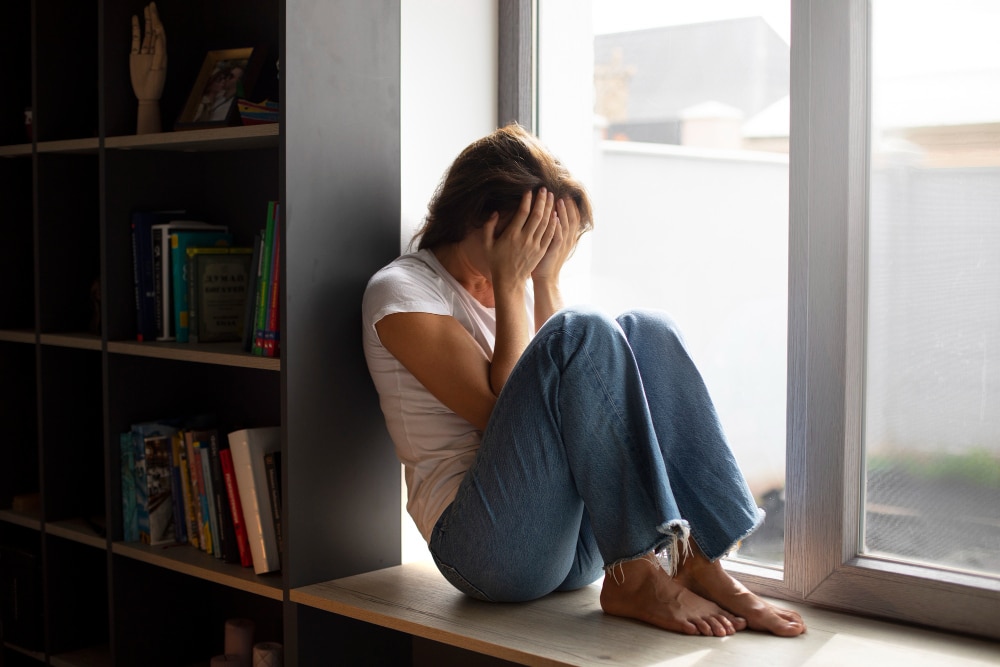
The study noted that these findings highlight the need for a “multifaceted approach” to improve the understanding of the underlying mechanisms of depression. However, the authors also proposed that a “key component of the biological mechanisms underlying these disparities could be differences in genetics.”
According to the researchers, the “findings underscore the importance of considering sex-specific genetic architectures in the study of health conditions” to achieve more targeted and effective treatment strategies.
There was also a notable genetic connection found between depression and metabolic traits like Body Mass Index (BMI) and metabolic syndrome in women. As quoted by The Guardian, Dr Jodi Thomas, the lead researcher, said these genetic differences “may help explain why females with depression more often experience metabolic symptoms, such as weight changes or altered energy levels.”
The study thus sheds light on an important dimension of mental health research, one that intertwines biological predisposition with psychological and social outcomes, especially for women.
Why it matters
According to the World Health Organization (WHO), “An estimated 4 per cent of the population experience depression, including 5.7 pc of adults (4.6 pc among men and 6.9 pc among women), and 5.9 pc of adults aged 70 years and older. Approximately 332 million people in the world have depression. Depression is about 1.5 times more common among women than among men. Worldwide, more than 10 pc of pregnant women and women who have just given birth experience depression.”
In India, the mental health scenario mirrors this gender imbalance. Approximately 15 pc of the adult population experiences mental health issues requiring professional intervention. Yet, awareness and access remain alarmingly low. According to available data, “70 pc to 92 pc of people with mental disorders do not receive proper treatment due to lack of awareness, stigma, and shortage of professionals.”
Dr Nimesh Desai, Senior Consultant Psychiatrist and Psychotherapist and former director of the Institute of Human Behaviour and Allied Sciences (IHBAS), explains that while the new study adds genetic precision to our understanding of depression, the observation itself is not new. “This was found in the early 70s. In fact, Harris and Brown established in England in 1978 that depression as a disease is higher in women than in men,” he says.
He explains that this latest research may help settle the issue somewhat, but not finally, since depression in women has long been confirmed many times in epidemiological studies.
Dr Desai adds with a touch of humour, “I often say men need not chuckle at this finding. We have always known women are the best in themselves.” He attributes women’s greater vulnerability to two major factors – biological and situational. “Among the biological causes are genetics and the entire hormonal cycle, from menarche to menopause. The boon of becoming a mother, which no man can experience, unfortunately, has a flip side too,” he says.
On the environmental side, he points to harassment, exploitation, and discrimination that women have faced over centuries. These experiences tie into epigenetics, where social experiences and environmental stressors modify genes over decades and centuries. “So, this finding is interesting, but not new. It reconfirms earlier research and does not mean depression is purely biological. Nothing is purely biological; it is also epigenetic,” he says.
Speaking about India, he emphasises how social transition intensifies the problem. “Rapidly changing societies face worse gender pressures. One of the most vulnerable groups for depression today is working women,” he says, calling for mental health services specially tailored for such groups.
In fact, a 2023 study focusing on gender differences in self-reported depression among older adults in India found that chronic diseases, disability, and higher body mass index contribute significantly to these gender disparities. The researchers wrote, “Our findings suggest that chronic diseases, disability and higher body mass index contribute to the gender differentials in depression. Consistently, studies have found a strong relationship between body mass index, which is highly correlated with physical health status, and depression among women.”
The study also revealed that social participation, working status, and place of residence were significant factors associated with higher rates of depression in women. It was observed that “marital transitions such as separation/divorce and widowhood are major risk factors for depression among women as these life events may signal loneliness onset.” Older women were found to have a higher chance of living in solo arrangements, and lower social capital was linked to increased vulnerability to depression.
In the socio-cultural setting of India, factors such as life cycle vulnerabilities, gender-based violence, limited educational opportunities, economic distress, and minimal family support further heighten depressive symptoms among women. The study concluded that there is an “urgent and critical need for gender-specific policy formulation to address the socioeconomic disadvantages and increased burden of mental illnesses among older women in India.”
Another significant finding discussed in the study was the difference in coping mechanisms. “Women may have a different age of onset, disease course, internalizing factors for depression, symptom profile of mental illnesses, and may be more willing to admit and report the symptoms and affective depressed feelings when asked in comparison to men.” This can lead to reporting differences between genders, making it seem like women experience depression more, though part of this gap may also stem from men’s reluctance to report emotional struggles.
Dr Desai also highlights how help-seeking behaviour varies across socio-economic backgrounds. “Housewives in traditional setups often never had the chance to express themselves or seek help. Among upper-middle-class professionals, the openness is increasing. Still, many social and cultural groups do not consider it acceptable for women to seek help,” he says.
He concludes with a hopeful message. “Let women express themselves more freely. Let society be more open. Let mental health services be more attuned to their needs, and let men be more supportive of women seeking help.” \
Also read: Bollywood’s silent battles: Actors who spoke about their struggles with depression
Do you have a health-related claim that you would like us to fact-check? Send it to us, and we will fact-check it for you! You can send it on WhatsApp at +91-9311223141, mail us at hello@firstcheck.in, or click here to submit it online.