
Author
CLAIM:
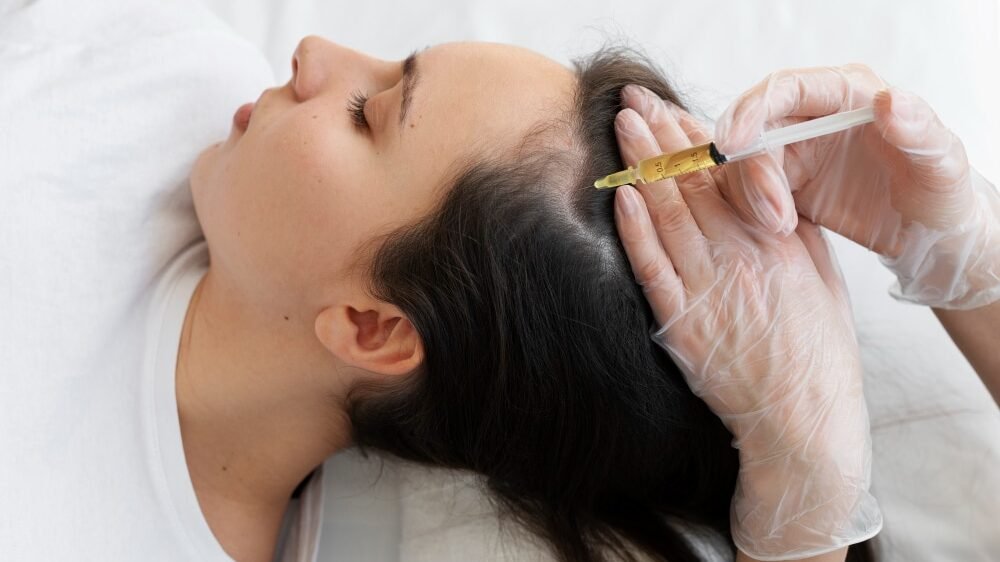
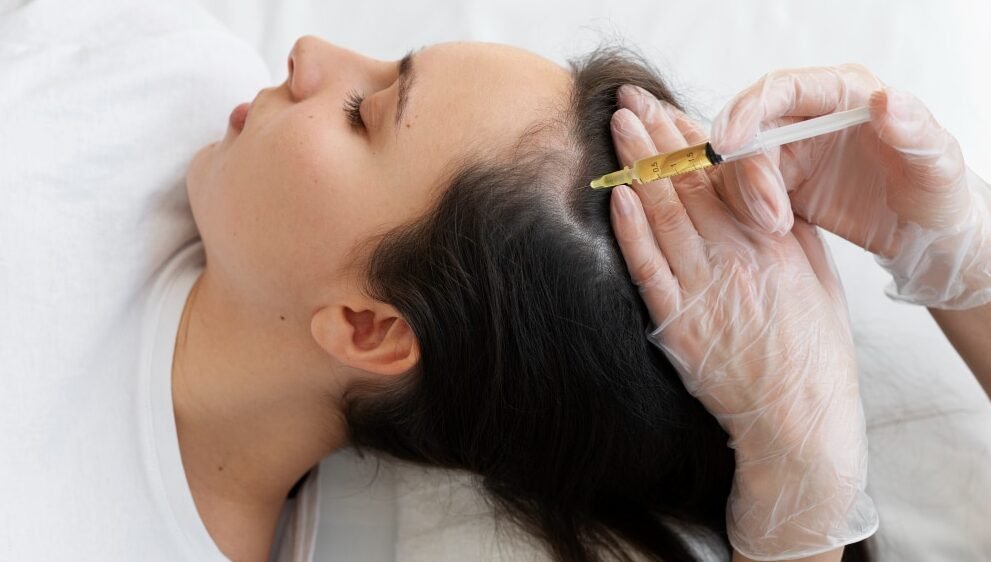
PRP (platelet-rich plasma) combined with microneedling is an advanced treatment that effectively combats hair loss caused by factors such as poor diet, genetics, PCOD, female pattern hair loss, and COVID. The treatment claims to stimulate existing hair follicles, strengthen hair, and promote hair regrowth by delivering growth factors from a person’s own blood into the scalp.
FACT:
Misleading. Current scientific evidence suggests that PRP, particularly when combined with microneedling, may improve hair growth in some people – especially those with early-stage androgenetic alopecia (male and female pattern hair loss). However, it does not work equally well for everyone or for all causes of hair loss. Experts say treatment outcomes depend on the underlying cause of hair loss, and more high-quality research is needed to establish who benefits most and under what conditions.
A viral YouTube Short by @MedLinksHairTransplants, which has over 2.58 lakh subscribers, claims that platelet-rich plasma (PRP) combined with microneedling can effectively treat various types of hair loss. The claim has attracted significant attention online.
In the video, the creators state that “poor diet, genetics, PCOD, female pattern hair loss, and COVID can trigger severe hairfall.” They then promote PRP with microneedling as a solution, saying, “PRP combined with Microneedling is one of the most advanced hair loss treatment at MedLinks Trichology.”
According to the Shorts, PRP is “enriched with growth factors derived from your own blood” that “stimulates existing hair follicles & strengthens them followed by hair regrowth.” The video further claims that “microneedling ensures thorough infusion of PRP and other growth serum into your scalp,” suggesting that the combination treatment helps combat hair loss effectively.
Can everyone with hair loss benefit from PRP?
Available research suggests that PRP, particularly when combined with microneedling, may improve hair growth in some patients with androgenetic alopecia. However, there is no evidence that it works equally well for everyone or for all causes of hair loss, such as nutritional deficiencies, PCOS-related hair loss, or post-COVID hair shedding. More large, well-designed clinical trials are needed before such broad claims can be made.
A 2022 systematic review evaluated 22 clinical studies involving 1,127 participants with different types of hair loss, including androgenetic alopecia and alopecia areata. The researchers found that microneedling generally improved hair growth when used alongside treatments such as PRP, topical minoxidil, or growth factor solutions, rather than as a standalone treatment.
Across 17 studies involving 911 people with androgenetic alopecia, microneedling combined with PRP or other therapies improved hair-related outcomes, while studies in alopecia areata also reported encouraging results. However, the authors cautioned that “data are of relatively low quality,” with considerable differences in treatment methods and study designs. They concluded that “large-scale randomised controlled trials are recommended” to determine how effective microneedling is on its own and in combination with other treatments, and to establish its long-term safety.
The findings are supported by a 2023 systematic review examining combination therapies for androgenetic alopecia. After reviewing studies published between 2010 and 2022, researchers found that PRP combined with treatments such as topical minoxidil, and in some studies, microneedling, often produced better improvements in hair growth, hair density, and patient satisfaction than PRP or minoxidil alone.
However, the review also highlighted important limitations. The authors noted that the available evidence is based on relatively few randomised controlled trials, many with small sample sizes and different PRP preparation protocols, making it difficult to directly compare results or draw firm conclusions.
More recently, a 2025 systematic review specifically compared PRP delivered by scalp injections with topical PRP applied using microneedling for androgenetic alopecia. After screening 108 published articles, only three randomised controlled trials met the inclusion criteria.
The review found that topical PRP combined with microneedling appeared to produce better outcomes than PRP injections alone in several measures, including hair count, hair density, and hair diameter. Researchers suggested that microneedling may improve the penetration and distribution of PRP into the scalp while also stimulating hair follicles.
Despite these promising findings, the authors stressed that the evidence is still limited. They concluded that “further high-quality studies with uniform protocol are needed to confirm these findings,” as differences in PRP preparation methods, treatment schedules, and outcome measurements continue to affect the reliability of results.
The uncertainty surrounding PRP is also reflected in the latest 2026 commentary. The authors noted that although PRP is widely used for hair loss and has “plausible biology and an evolving clinical evidence base,” treatment outcomes remain inconsistent because the composition of PRP varies from person to person and between preparation methods.
Rather than claiming PRP is universally effective, the researchers argued that more standardised formulations and rigorous clinical trials are needed before its effectiveness can be evaluated consistently. They concluded that any proposed improvements “should be validated in comparative trials with transparent reporting,” highlighting that stronger evidence is still required.
What experts say
Dr Shireen Furtado, Sr. Consultant – Medical & Cosmetic Dermatology, Aster CMI Hospital, Bengaluru, said PRP combined with microneedling does not work equally well for every type of hair loss, as its effectiveness depends on the underlying cause.
According to Dr Furtado, the best results are seen in people with early-stage androgenetic alopecia (male and female pattern hair loss), where hair follicles are still active. Patients with PMOS-related hair loss may also benefit, but the underlying hormonal imbalance should be treated alongside PRP for lasting results. Referring to post-COVID hair loss, she noted that it is often temporary and “PRP may help speed up recovery, although many patients improve naturally over time.” Similarly, she said hair loss caused by nutritional deficiencies requires correction of the underlying deficiency first, adding, “If the cause is not addressed, PRP alone is unlikely to provide lasting benefits.”
Explaining the evidence, Dr Furtado said PRP can improve hair density, increase hair thickness, and reduce hair shedding in selected patients, particularly those with androgenetic alopecia. However, she stressed that PRP is a supportive treatment rather than a permanent cure, and outcomes vary between individuals. Patients with early hair thinning and healthy hair follicles generally respond best, while those with advanced baldness, scarring alopecia, untreated hormonal disorders, severe nutritional deficiencies, or certain autoimmune conditions may respond poorly.
Addressing the role of microneedling, Dr Furtado said it may improve the penetration of PRP and stimulate the scalp’s natural healing response. “Some clinical studies have reported greater improvements in hair density and thickness with the combined approach. However, treatment protocols differ widely between studies,” she said, adding that larger, high-quality clinical trials are still needed before firm conclusions can be drawn.
She also emphasised that “there is no single treatment that works for everyone with hair loss. The most appropriate treatment depends on the underlying diagnosis, and managing conditions such as PCOS, thyroid disorders, or nutritional deficiencies alongside evidence-based therapies offers the best chance of meaningful hair regrowth.”
Also read: FACT CHECK: Can sleeping with wet hair make you catch a cold?