
Author
Over the years, one topic has surfaced again and again—in conversations with patients, around family dinner tables, at community events, and more recently in my direct messages: food, gut health, and what it really means to eat well.
That is hardly surprising. Nutrition science continues to evolve as new evidence emerges. At the same time, people are exposed to an overwhelming volume of information from social media, influencers, news headlines, and increasingly, artificial intelligence. Distinguishing evidence-based medical guidance from opinion, marketing, or misinformation has become more difficult than ever.
What should we actually eat to stay healthy? Is intermittent fasting the answer? Should we be taking longevity supplements? Is raw milk healthier? Is Ozempic changing the way we think about food? Do we really need protein in everything? Should we cut out sugar completely? Which superfood should we be eating this month?
Every day brings a new question. Every day, someone offers a new answer or a new product. But food doesn’t work that way. Nutrition science is complex, and gut health is influenced by many factors. What benefits one person may do little—or even the opposite—for someone else.
Meanwhile, healthmaxxing has turned eating into a performance, where every meal, supplement, and fasting window is something to optimize. Teenagers are tracking macronutrients before they’ve finished growing. Adults are eliminating entire food groups based on a 60-second video. Everyone seems to be chasing optimization.
Much of what circulates online is misinformation or advice taken out of context. When your health routine is built on what went viral this week instead of guidance from a doctor who understands your individual needs, the risks are real. Too often, wellness starts looking more like anxiety disguised as science.
It has become increasingly difficult to answer a simple question: What should I actually eat? In an age when your fitness app, your nutritionist, your family member, and a stranger on Instagram are all giving you different advice—and all of them sound equally certain—the confusion is understandable.
More worrying, however, is what fills the vacuum when trust in credible health information begins to erode. Fad diets promise transformation. Wellness trends package aesthetics as science. And increasingly, AI tools deliver personalized health advice with remarkable confidence, often without transparency or robust scientific evidence.
At First Check, we have been at the forefront of combating health misinformation and building trust in evidence-based, science-backed health information. As part of our continued commitment to making reliable health information accessible to everyone, we launched the inaugural edition of First Check LIVE on Wednesday with a dialogue on Healthy Lifestyle & Risk Prevention for Teens and Adolescents.
It was inspiring to see an enthusiastic turnout of over 500 participants, all eager to hear from our distinguished panel of experts, which included an endocrinologist, a parent coach, an educationist, a sportsperson, and a digital literacy specialist.
We also had an engaging and insightful masterclass by a renowned nutritionist and influencer who shared practical, evidence-based guidance with the audience in his signature engaging and relatable style.
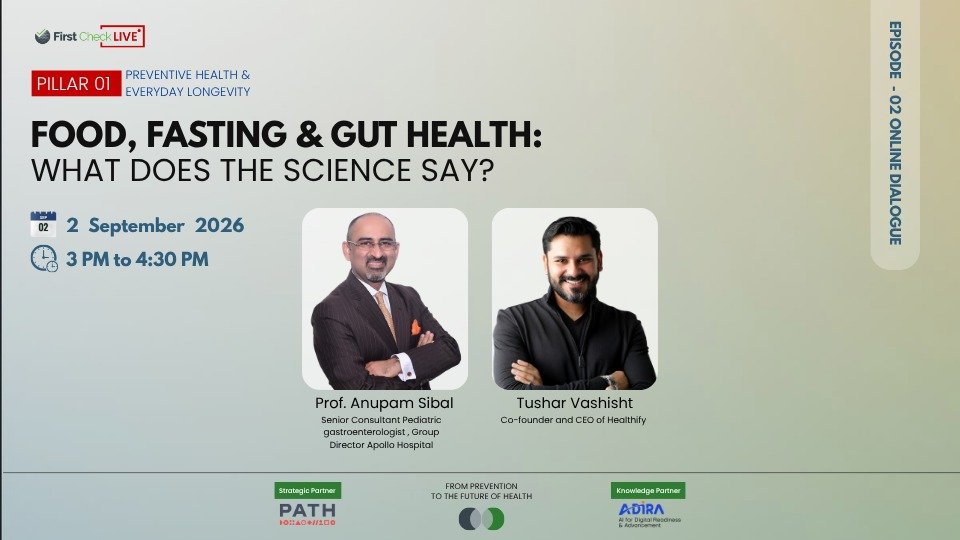
The conversations reaffirmed the need for credible, science-backed discussions on the health topics that matter most. Building on this momentum, we are excited to bring you Episode 2 of the First Check LIVE dialogue series on September 2 : “Food, Fasting & Gut Health: What Does Science Say?” Join us as leading experts unpack the latest evidence, debunk common myths, and answer your questions on one of the most talked-about topics in health today.
Joining us are Dr Anupam Sibal, Group Medical Director of Apollo Hospitals and one of India’s leading paediatric gastroenterologists, and Tushar Vashisht, Co-founder & CEO of HealthifyMe. Together, we’ll cut through nutrition myths, AI-generated advice, and diet fads to explore what the science actually says about food, gut health, and healthy eating.
If you’ve ever wondered what to eat—and who to trust—this conversation is for you. No fads. No fear. No miracle cures. Just honest, grounded conversation about food, the kind you deserve but rarely get in a world where every headline is selling something and every trend has a sponsor.
You don’t need more noise. You need a compass.
Consider this yours.
Until Next Time!