Author
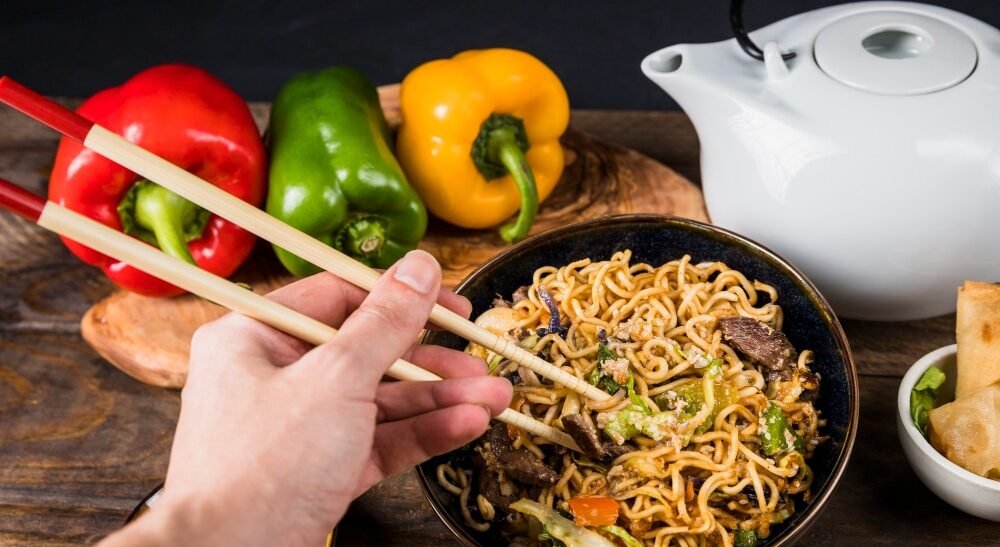
CLAIM: A viral Instagram post claims daily instant noodle consumption can silently harm fertility, citing high sodium, refined carbs, and unhealthy fats alongside low zinc, folate, omega-3s, and antioxidants. It suggests these deficiencies impair sperm/egg development and hormone balance, while a nutrient-rich diet improves fertility outcomes in both men and women.
FACT: Animal studies show high noodle intake can affect sperm quality and reproductive hormones in rats, but human evidence remains limited and observational. Experts note the real concern is an overall poor diet, not noodles alone. No proven causal link exists in humans, though nutrient deficiencies from processed diets can indirectly affect fertility over time.
A viral instagram post has claimed that having noodles daily could silently ruin the chances of having a child.
The post claims that regularly eating instant noodles as a daily staple might affect overall reproductive health over time. “Many instant noodles are high in sodium, refined carbohydrates, and unhealthy fats while being low in essential nutrients such as zinc, folate, omega-3 fatty acids, and antioxidants that support healthy sperm and egg development,” the post stated in its caption.
The post further claimed that research suggested that a balanced diet rich in fruits, vegetables, whole grains, lean protein, and healthy fats is associated with better fertility outcomes in both men and women. “Enjoying instant noodles occasionally is generally fine, but replacing frequent servings with more nutritious meals can help support hormone balance, overall health, and reproductive well-being,” the post suggested.
The post was shared by the Instagram account @lifewith_biologyye, which has more than 3.2 lakh followers. It has garnered over 5,700 likes and has been reshared around 150 times.
What do the studies say?
A 2021 study published in the Indian Journal of Pharmaceutical Sciences has examined how instant noodles affect reproductive health, using Indomie noodles as the test product on albino rats. In the research, male and female rats were fed varying proportions of noodles for eight weeks and then examined for blood, organ and fertility markers.
The findings showed a clear decline in male fertility indicators. Sperm count, motility and viability all dropped as noodle intake increased. Testosterone levels also fell, though the change was not statistically significant. Female rats showed changes in kidney and liver markers, as well as shifts in red blood cell values.
“The effect of Indomie noodles on male reproductive capacity appears to be mostly unknown, but results of the present study demonstrate that graded concentrations of Indomie noodles had significant adverse effects on sperm concentration, motility and viability,” the study noted.
The study linked this to reduced testosterone activity affecting sperm production. “Also, Indomie noodles consumption could have adverse effects on the body weight, brain-testis and liver-kidney weights of adult rats. This means the Indomie noodles do not promote growth because they have low protein and high carbohydrate content,” the study pointed out.
A 2023 study published in the Nigerian Medical Journal looked into how instant noodles affect early reproductive development in young female rats. The study fed young Wistar rats different noodle brands, including Indomie, mixed with regular feed for eight weeks, then tracked pubertal and cycle changes.
The results showed that noodles brought on puberty earlier than expected. All the noodle-fed groups showed a significant reduction in the mean onset of vaginal opening compared to the control. Their reproductive cycles were also disrupted, with rats showing irregular patterns instead of a normal cycle.
Blood tests showed a rise in two key reproductive hormones, LH and FSH, while estrogen and progesterone stayed unchanged. The rats also gained less weight than the control group, and tissue examination showed further changes.
The study concluded that instant noodles induce early vaginal opening and irregular oestrous cycles in young female rats, most likely by disrupting the hormonal pathway that controls reproduction.
Doctor’s view
Doctors are pushing back against the idea that instant noodles alone can silently ruin fertility. “Current evidence does not show that instant noodles directly cause infertility,” Samiksha Chordiya, Chief Dietician at DPU Super Specialty Hospital, Pimpri, Pune, said, adding that most alarming findings come from animal studies, while human research remains largely observational.
According to Chordiya, the bigger concern is the overall quality of a person’s diet rather than instant noodles alone. “The concern is the overall dietary pattern, not instant noodles alone.”
“Frequent consumption often reflects a poor-quality diet high in sodium, refined carbohydrates and saturated fats,” Chordiya said.
On whether the link between instant noodles and fertility is proven, Chordiya said, “At present, the relationship is associative rather than causal,” noting that human studies have not shown noodles independently harm fertility after accounting for factors such as body weight, smoking and overall diet.
She also highlighted nutrient deficiencies as a greater clinical concern than any single food. “Deficiencies of folate, zinc, iron, vitamin D, omega-3 fatty acids, selenium, iodine, vitamin B12, and antioxidant nutrients such as vitamins C and E are of greatest concern for reproductive health,” she said, stressing the importance of a balanced, nutrient-dense diet rather than avoiding one particular product.
Also read: FACT CHECK: Are 2-minute noodles and soft drinks as dangerous as viral posts claim?