
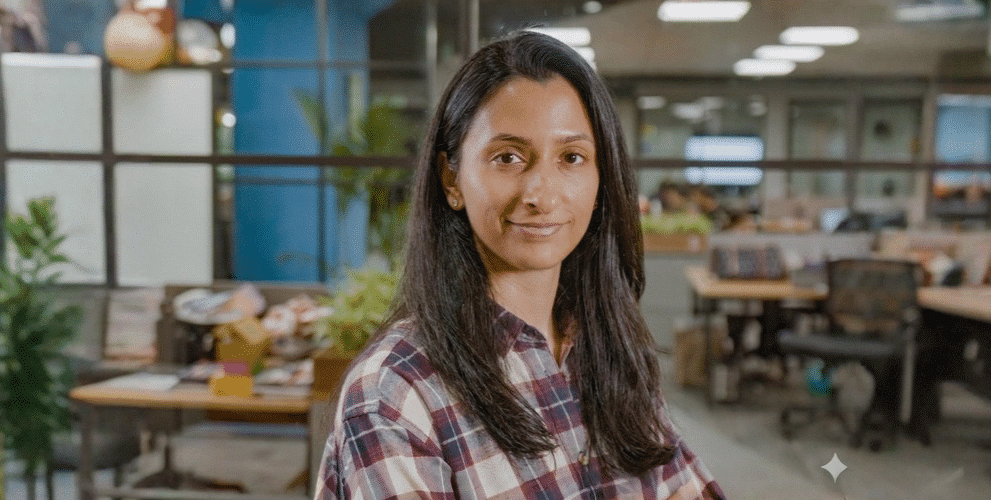
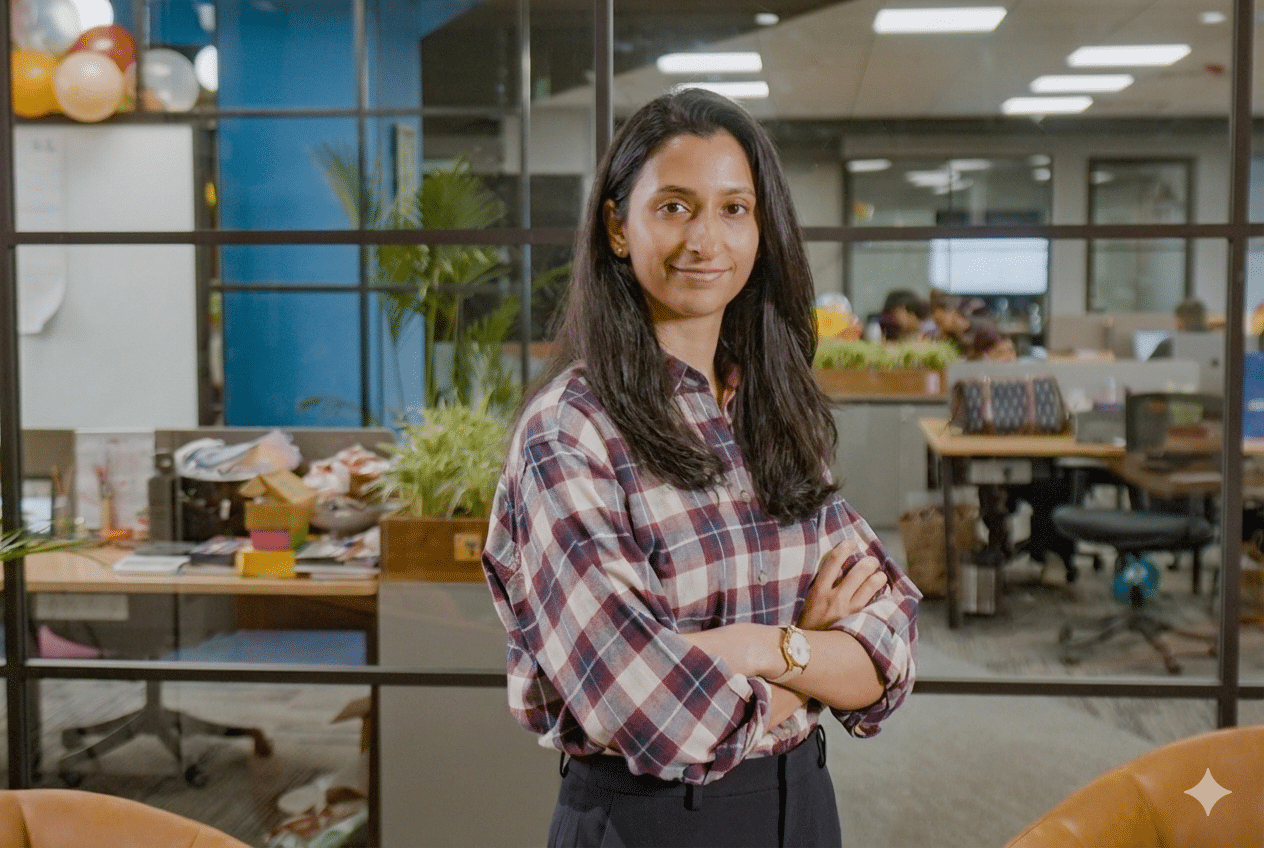
Author
Mental health is more than the absence of mental disorders; it is a state of well-being that enables people to cope with life’s stresses, realise their abilities and participate meaningfully in society. Yet in India, mental health remains a largely neglected dimension of healthcare. Government data suggests that around 15% of adults experience mental health issues requiring professional intervention, while 70% to 92% of people with mental disorders do not receive adequate treatment, owing to factors including stigma, lack of awareness and limited access to professionals.
The challenges extend beyond access to care. A 2025 scoping review of Indian studies found that climate change and related events can have significant mental health impacts, particularly among children and young people and people from lower socioeconomic backgrounds and rural communities. The review also highlighted psychological impacts of climate change and the need for greater research and preparedness around issues such as climate anxiety.
Amid these challenges, we spoke to Anisha Padukone, CEO of The Live Love Laugh Foundation, an organisation that has been at the forefront of advancing mental health awareness, reducing stigma, and expanding access to support across India. In this conversation, she discusses India’s mental health challenges, including awareness, access, affordability and stigma, and the impact of COVID-19, climate change and popular culture. She also speaks about women’s mental health and the policy changes needed to make care more accessible.
Here are the excerpts from that conversation:
Over the past decade, mental health has become far more visible in public discourse in India. From your perspective, what has changed the most in how people understand and talk about mental health? Where do you still see the biggest gaps?
You’re absolutely right. I think we have made some tremendous progress over the past decade where mental health is concerned, especially on the awareness front. I think where we have done well is that there is definitely a better understanding of mental health, certain types of mental health, primarily the common mental disorders. People are a little bit more understanding, aware and therefore accepting of mental health. So I think those are the things that have changed or improved for the better. However, I think what’s really important is that while awareness is created, there are also a couple of things that are happening.
“I think one policy change I would love to see is better adoption of mental healthcare under insurance coverage, not just for group coverage, but for individual coverage.”
One is that people are loosely using mental health terminology without really understanding the gravity of what they’re actually saying. Just to give you a few examples, you know, the term OCD is thrown out very casually, or even the term depression is thrown out very casually. There’s a lot of labelling going on, because there is more mental health vocabulary.
So I think these are some of the things that, as common people, we need to be a little more aware of and cautious about before we actually utilise some of these terms, get a proper understanding of them, and therefore use them only in the right context. So I think we have had instances of awareness increasing. These are some of the things that can be the flip side of awareness, but it just means that people need to become further aware, and organisations like us need to then raise the bar when it comes to awareness. We can’t just be doing very basic-level awareness anymore.
Yeah, I agree with you. I remember covering an article about how people often use mental health terms very casually. For example, people sometimes say, “I’m bipolar,” without really understanding what bipolar disorder means.
So, Anisha, despite growing awareness, access to mental healthcare remains highly unequal, particularly in rural India. What are the biggest barriers people in these communities continue to face, and what kind of interventions have proven most effective?
The illness doesn’t change whether it’s rural or urban India. When we started the foundation, back in 2015, there was a perception that mental illness probably only affects certain sections of society. But that’s not true. Like any other illness, mental illness affects anybody. It obviously does not discriminate on the basis of gender, age, caste, or religion; it can affect anybody at any point in time. So that’s one of the main reasons we also wanted to start a rural mental health programme.
And, of course, we’ve come a long way where that programme is concerned. So, to answer your question, I think some of those factors remain the same. One is that the illness doesn’t really change.
How it affects and shows up also doesn’t change. What does change is the cultural and societal realities, which are slightly different in urban India versus in rural India. In rural areas, there is a greater lack of awareness; there is stigma, but the stigma is slightly different, in the sense that there is a very high dependency on religious practices, as well as on faith healers.
Apart from that is a small level of societal stigma as well. Because in rural areas, individuals or communities are more collectivist, and they’re still living in a community-based system or setup. Whereas in urban areas, we are moving towards, you know, more nuclear families and more individual lifestyles.
“One out of five Indians will experience mental illness in their lifetime. And this was a Lancet study, which was done many years back. If you look at the suicide rates in the country, we’re probably one of the highest in the world.”
Our intervention draws from the strengths of the community-based system in the rural areas. In fact, our programme, while it’s called the rural programme, but it actually what is a community-based mental health programme.
Health-related programmes, apart from mental health, that utilise the community-based model have proven effective in the past. And there are wonderful examples, maybe the closest being HIV awareness programmes using the community, which also has very high levels of stigma, for example. So we’ve drawn from that.
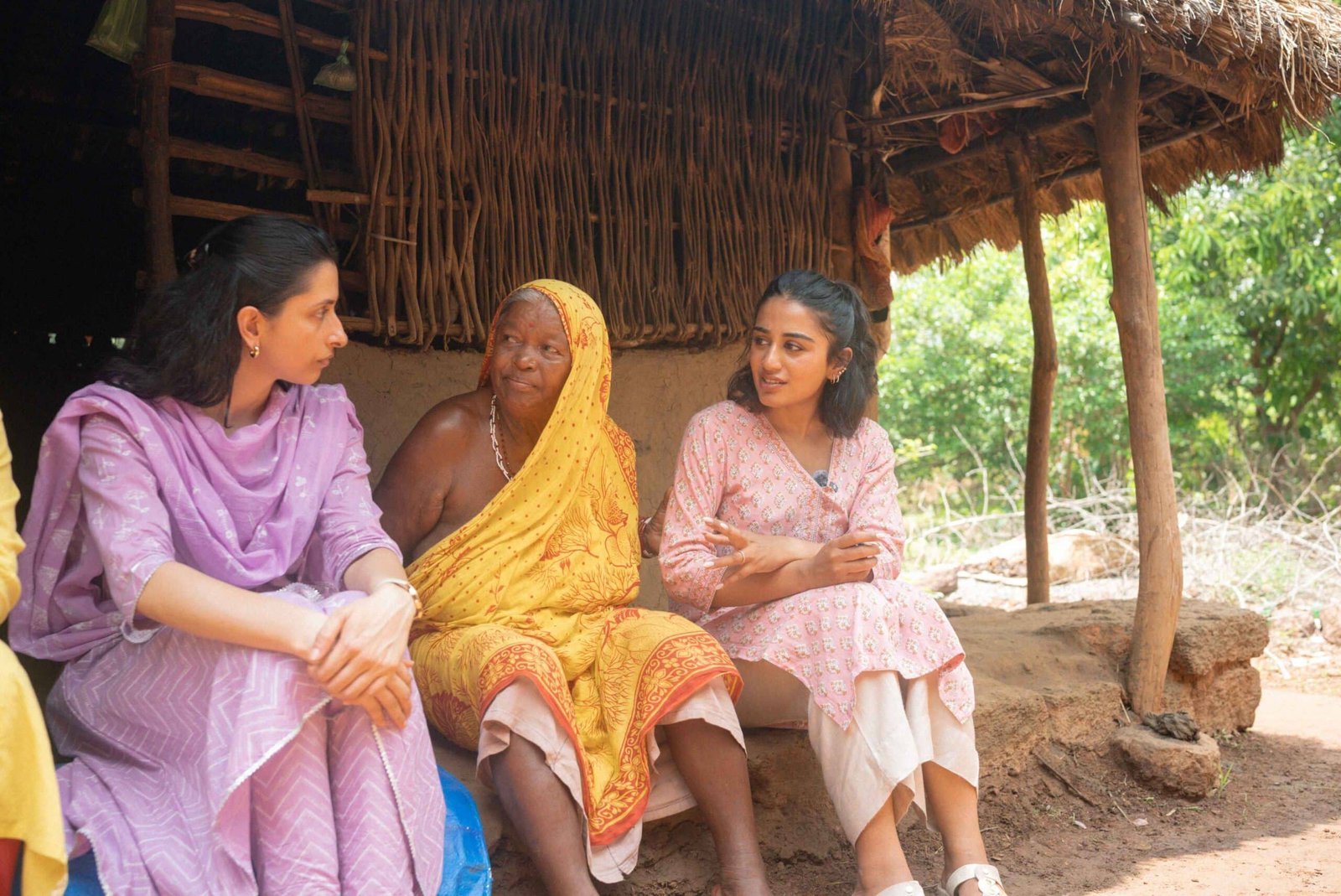
And our programme or intervention model uses various aspects, including, of course, identification of individuals, providing them free medication and treatment, but also an equal and important focus on the caregivers, on providing the families and the beneficiaries, livelihood opportunities, income generation opportunities, providing them access or ability to integrate back into society, and at the same time, focusing on the society at large, or the community rather that they live in, so that there is no ostracisation that happens, and a certain sense of community care comes into play. So that’s really the model that we follow. We’ve found it to be extremely effective. We train the communities to be able to run these programmes over a period of time, which means that when we start off the programme, we identify individuals and people in the communities who can be champions.
And this consists either of caregivers or persons who have gone through their mental illness and recovered or are in a stabilised condition. And they form various groups and ensure that the programme is then run by the individuals of the community with the support of ASHA workers or support of the government. So, using this community-based model has really shown us the ability that we have in coming together and working as a close-knit group.
And we’ve seen success in a couple of different locations that we operate in. And therefore, that’s the model that we have implemented across all our locations. Mental health, unfortunately, is viewed as only a health-related challenge. But that’s not the case. And so there are many factors that come into play. As I mentioned, the social, there’s cultural, there’s economic, so all of these factors, whether it’s urban or rural India, are spread across. And so we have to really be able to incorporate all of these factors when we come up with programmes. And when we are looking, especially, to integrate individuals back into communities.
The COVID-19 pandemic brought mental health into mainstream conversations, with many people seeking support for the first time. A few years later, do you think that awareness has translated into lasting behavioural change, or has the momentum slowed?
I would definitely say that COVID did play a catalytic role in speeding up the process of people understanding mental health, experiencing mental illness in certain cases, if not people themselves directly, but caregivers, or maybe family, friends, co-workers and colleagues. So I think collectively, we just went through COVID-19, realising that, yes, mental health is very, very serious and needs to be taken more seriously. So I think, unfortunately, that’s the good thing that came out of COVID for mental health awareness. There definitely was an uptick in, for example, even on our own website, where we provide access to resources, there was almost a 1,400% increase in the number of people calling the helplines that we list, and then reaching out for help and support from mental health professionals.
So we also definitely saw that trend, obviously, because of the circumstances. I think thereafter, people have gone back into their regular lives and routine. I would say, you know, it’s mixed, because there are some people who still remember what they’ve been through and who prioritise their mental health and take care of it.
But the majority of people have forgotten and it shows that there’s a lot more work to be done on the awareness front, as well as companies or organisations and the government —, there’s only so much that all of us can do. At the end of the day, it really comes down to the individual person, how much they actually think this is important for them, and how much they want to prioritise their mental health.
Mental health is increasingly being shaped by newer challenges – from climate disasters and displacement to workplace burnout, social media and digital fatigue. Which of these emerging issues concerns you the most, and why?
I wouldn’t choose one. It’s all of these and more. Our lives have become a lot more stressful than they were, maybe even five or 10 years back. And that’s probably not going to change.
There are natural disasters, like in Odisha; the cyclone has really affected a lot of the families and beneficiaries that we serve. And mental illness cuts across various sectors, and factors that really influence it. It’s a very, very valid case for why individuals, institutions, companies, and policymakers should prioritise this and take it more seriously than we already are, because you cannot run through life without experiencing some form of it.
If not yourself, for someone else — one out of five Indians will experience mental illness in their lifetime. And this was a Lancet study, which was done many years back. If you look at the suicide rates in the country, we’re probably one of the highest in the world.
It’s really important that people prioritise this for themselves and the people around.
Women often experience unique mental health challenges across different stages of life – from caregiving responsibilities and workplace pressures to reproductive health and gender-based violence. Do you think India’s mental health ecosystem is adequately responding to these realities?
If you ask me whether we are adequately responding, probably not. But is there effort being made? Yes. As I said, at an individual level, there are a lot of organisations, NGOs , civil society organisations working on specific women-centric challenges. So I do know that there is a work being done now. Whether that work is enough or not, is arguable. Having said that, in general, one thing that I keep talk about when it comes to women’s mental health, especially in the Indian context of culture, women largely feel sort of guilty about prioritising their own selves.
And I don’t just mean mental health, whether you’re a daughter, or you could be a mother, you could be a sister, you’re playing sport, you know, all of these various roles. If you are married, a working woman, there are additional challenges.
So I think there are a lot of various kinds of challenges that you possibly face as a woman in this country. And somewhere we feel, culturally, we feel a little bit guilty of prioritising time for ourselves, taking time out to take better care of ourselves. And so one thing that I usually keep talking about when I’m asked this question is: don’t feel guilty about, you know, taking care of yourself.
The basic concept is that if you can’t take care of yourself, you won’t have the ability to pour into another cup. Your cup has to be full to be able to help others around you. And so that’s really something that I would urge women to start focusing on.
Also, Anisha, when you were talking about women, I think a lot of people come to me and say, “I know I’m struggling with my mental health, but I don’t have the money to see a psychiatrist or seek professional help.” What would you say to people who are facing this kind of financial barrier?
And could you also talk about why it is important to invest in mental health?
I’ll probably take that in a couple of parts. I think the first part is that for somebody who is requiring help and support immediately, maybe someone who’s watching this and wants to know what to do, there are affordable ways to actually get that help and support.
For example, on our website, we list about 20 helpline numbers from service providers that are spread across the country. They provide mental healthcare, counselling and support in different languages. Many are free of cost.
People can call in and get at initial help and support that’s readily available. In addition there are organisations offering therapy and support spread across the country that providing free or low-cost services. So feel free to reach out. Again, some of them are listed on our website.
The government recently launched a mental healthcare helpline called Tele-MANAS, which is functional across every single state and union territory. So people can avail that as well.
But if we look at the demand, as well as where we go from here in terms of the way forward, I think there’s a lot that needs to be done. We have progressed as a country as far as mental health is concerned. We were speaking earlier about how awareness has improved.
Once awareness improves, we need to ensure that access to facilities is available. And with access comes the question of affordability. These are, in fact, the three things that Live Love Laugh also focuses on: awareness, accessibility, and affordability of mental health.
So when we speak about affordability, and from a long-term perspective, there’s a lot that can happen at various levels. If you are an employer, you have your own senior leader or employer in an organisation and there are a lot of things that you can do at an organisational level. Similarly, things can be done at a school and college level.
Then, of course, at a policy level as well. So as LLL, we are also trying to focus on some of these issues and trying to ensure that the affordability of mental health is something that is also looked into while we raise awareness and while we are helping people access better quality care.
Popular culture has an enormous influence on how people perceive mental illness. Compared to a decade ago, do you think Indian films and OTT shows have become more responsible in portraying mental health, or do stereotypes still persist? What kind of representation would you like to see more of?
Yes, I think it’s a representation of how society also views it. And therefore, with an increase in awareness, it also demands that the audience also demand better representation. If the audience is more aware, then you can’t go on with stigmatised ways of representing mental illness. Audiences are more aware in today’s day and age. And so you can’t just stereotypically represent someone with mental illness anymore. And maybe that was the case earlier because people were not as aware. And so, you have fantastic examples; for example, Gehraiyaan is a really good one. I thought that the representation of someone with anxiety, it was very subtle.
Someone living with mental illness is not necessarily going to act in stigmatising ways that people would typically expect. I’m not saying it doesn’t happen. I’m just saying that, you know, it’s not necessarily the only way.
I think that becomes really important for people to understand. And we all know that cinema is a very big influence in our culture. And so it’s very important for people making movies or shows or even writing a book, to be able to represent accurately. Even journalists like you are really important and responsible in how they are also reporting and communicating about mental health or mental illness.
I think another great example is the show called The Perfect Family, which talks about an Indian family that goes to therapy. So I think the narrative is changing. There are shows and movies and ways in which mental health is changing. “Dear Zindagi” is another one. I think people are becoming a little bit more responsible in how they portray it. It’s good to see, and I hope it continues.
If you could recommend one policy change and one societal change that could transform India’s mental health landscape over the next five years, what would they be?
I think just because we’ve spoken about affordability as a concept or a topic, I think one policy change I would love to see is better adoption of mental healthcare under insurance coverage, not just for group coverage, but for individual coverage. And there are a few companies that offer it. I wouldn’t say it’s consistent yet across various organisations or various insurance companies.
In my understanding, the coverage is more for hospitalisation, whereas people may experience it, but may not require hospitalisation all the time. And so, if insurance coverage can also cover outpatient care, then, you know, aspects such as counselling or psychiatric consultations, can be covered, that’s one way of making mental healthcare more accessible.
I also know that abroad, mental healthcare is included as a part of annual health check-ups when people go for their regular check-ups. So there’s a lot that can happen.
It really depends on how we’re able to push through on some of these ideas, and whether people are willing to join us on this journey of trying to be able to make some of these long-term changes.
Also read: Mental health: The silent pandemic we are grappling with