Author
India could see a rise in heat-related illness, along with shifting patterns of dengue, malaria and waterborne disease, as a very strong El Niño takes hold over the coming months, doctors have warned, pointing to a fresh assessment by the World Meteorological Organisation (WMO) that flags an extended and intense event lasting into 2027.
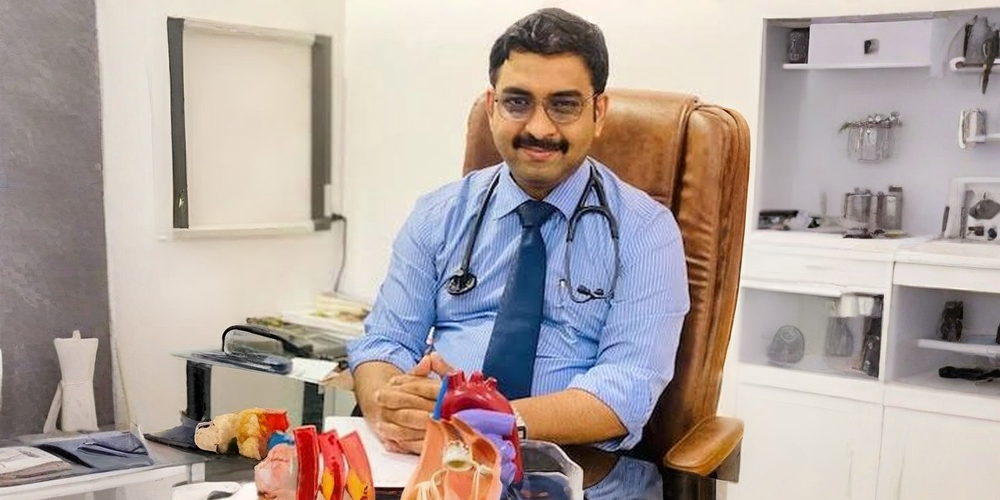
“A very strong El Niño can affect health mainly via its influence on temperature, rainfall, water, food, and infectious disease ecology,” said Dr Basavaraj S Kumbar, senior consultant, internal medicine, at Aster Whitefield Hospital. He said the WMO’s own forecast for September to November shows a higher chance of below-normal rainfall over the Indian subcontinent even as temperatures stay elevated.
“This is a combined risk situation from a public health viewpoint,” he said, warning that heat can worsen dehydration and heat exhaustion and aggravate existing heart, lung and kidney conditions.
El Niño is a climate phenomenon marked by the periodic warming of sea surface temperatures in the central and eastern equatorial Pacific Ocean, which can disrupt weather patterns worldwide.
Dr Kumbar said the effects should not be seen as a single illness caused by El Niño but as a chain of weather-sensitive health risks that differ from place to place, depending on how temperature and rainfall changes affect mosquito breeding and people’s contact with contaminated water.
He was cautious, however, about predicting which diseases would rise.
“El Niño does not uniformly increase mosquito-borne diseases across India,” he said, explaining that dengue and malaria depend on a mix of temperature, rainfall, humidity, mosquito behaviour, water storage habits and local health infrastructure.
He cited a 2026 review of Indian data that found rainfall to be the strongest climate factor linked to dengue cases, ahead of minimum and mean temperature. A separate study from Kerala found El Niño-like conditions were associated with warmer, drier weather before the monsoon, which in turn raised dengue risk.
For malaria, he referred to a 2024 outbreak in northeastern India where temperature effects on cases showed up two to three months later, with El Niño acting as an indirect factor.
“Rather than predicting that one particular infection will definitely increase,” he said, the response should be to strengthen district-level surveillance for dengue, malaria and waterborne infections.
Dr Kumbar said elderly people, young children, outdoor workers and pregnant women are all vulnerable, though for different reasons. The elderly have a reduced ability to regulate body temperature and often carry existing heart, lung or kidney conditions.
Children are more prone to dehydration and heat stress, while outdoor workers cannot avoid heat exposure during working hours. He added that poorer, rural households face compounded risk because their vulnerability is tied not just to weather but to their access to water, healthcare, sanitation, food and income, all of which a climate shock can strain further.
He also flagged the risk of worsening nutrition. “Yes, this is an important indirect pathway,” he said of the link between El Niño-linked rainfall changes and malnutrition, though he noted the scale would depend on how rainfall and farming are affected in different parts of the country, since the relationship between El Niño and India’s monsoon varies by region.
He referred to a large national study of over 42,000 women and nearly 40,000 young children which found that higher temperatures were linked to more time spent fetching water and poorer diets, while better rainfall improved both water access and diet quality.
Dr Kumbar said the focus now should be on getting ahead of the problem rather than reacting once cases appear. He advised people to follow India Meteorological Department heat alerts, stay hydrated, avoid unnecessary exposure during extreme heat, and ensure shade and water for children and the elderly. He also called for clearing stagnant water where mosquitoes breed, and for people to seek medical help early if they have persistent fever, dehydration or breathing trouble, instead of delaying treatment.
For hospitals, he recommended stocking essential medicines and intravenous fluids in advance, setting up emergency triage plans, arranging cooling facilities, and strengthening laboratories to detect climate-sensitive illnesses. He said linking weather forecasts with health surveillance, as has been tried with malaria early warning systems in northeastern India, could help the health system respond before, rather than after, a spike in cases.
The warning comes against the backdrop of a rapidly intensifying El Niño. The WMO said on September 3 that the event has become firmly established and is set to turn “very strong” in the coming months, with its latest update putting the chances of it lasting till February 2027 at close to 100 percent, the first time the agency has been this certain in one of its updates.
Data from the agency show the Niño 3.4 index, which tracks sea surface temperature in the central and eastern Pacific, averaged 1.5 degrees Celsius above normal between May and July, and touched 2 degrees Celsius in July. By mid-August, weekly readings ranged between 2.2 and 2.6 degrees Celsius above average. Some areas below the ocean surface were more than 8 degrees Celsius warmer than usual.
The WMO expects the event to peak towards the end of this year, with its effects continuing well into 2027. For September to November, it has forecast above-normal temperatures over almost all land areas, along with a positive Indian Ocean Dipole and warmer than usual conditions in the tropical Atlantic. The agency has cautioned that these overlapping patterns mean the impact of El Niño will not be the same everywhere, and clarified that El Niño is a natural phenomenon, not a result of climate change.
WMO Secretary General Celeste Saulo said the event “demands exceptional preparation and response,” adding that the organisation has launched its largest ever mobilisation of national weather services to deal with it.
Also read: Climate change: Warm winters set new temperature records globally
Do you have a health-related claim that you would like us to fact-check? Send it to us, and we will fact-check it for you! You can send it on WhatsApp at +91-9311223141, mail us at hello@firstcheck.in, or click here to submit it online.