Author
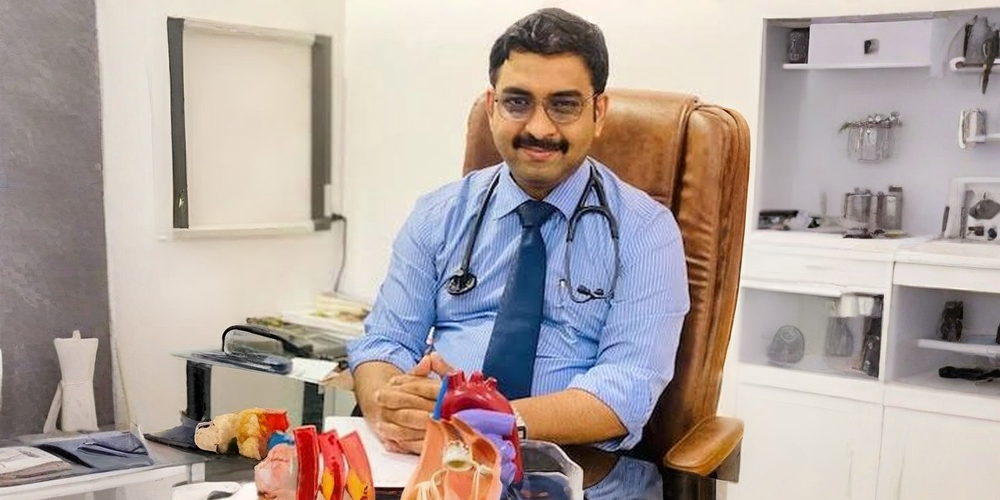
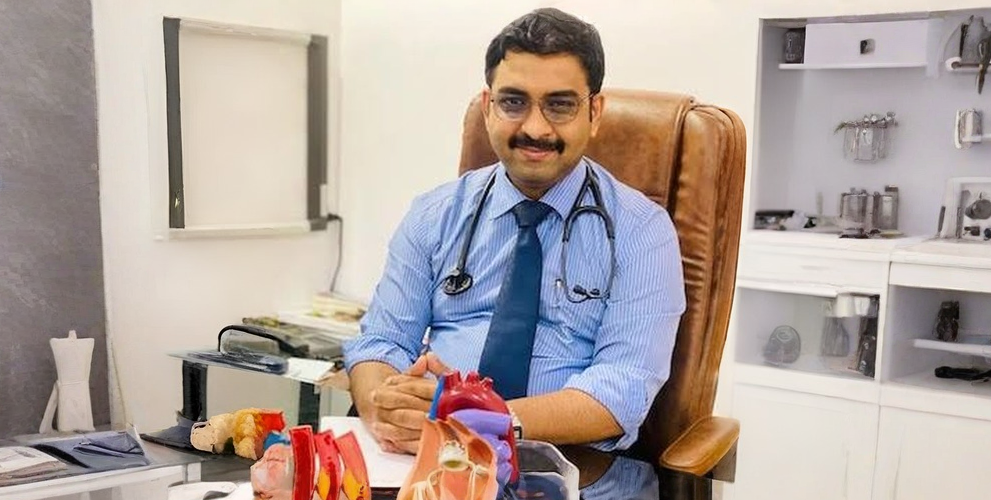
Dr Swarup Pal is senior consultant and chief of cardiothoracic and vascular surgery at Gleneagles Hospital, Mumbai, with nearly three decades of experience in cardiac surgery. His work spans bypass, valve, minimally invasive and robotic cardiac procedures, as well as vascular surgery and heart transplantation. First Check spoke to Dr Pal about the increasingly younger age of his bypass patients, gaps in cardiac care, and the lifestyle and addiction factors he sees behind the changing pattern of heart disease.
Studies show heart disease in India is increasingly affecting people in their 30s to 60s, not just the elderly. Does that match what you see?
I would go a step further and say I’m seeing more patients in the younger age group, 30 to 40 or 40 to 50. Traditionally, we used to operate on a lot of patients beyond their 60s and 70s. Nowadays, most of the patients coming to me are in their late 30s. The other day, we did a bypass for a 35-year-old. This year, I would have operated on close to 10 patients in the 40 to 47 age group.
By the time many patients reach you, how advanced is their heart disease?
We deal with more emergencies every day. Earlier, we used to see a lot of patients with chronic but stable disease. Nowadays, we see many who have suddenly developed the disease. These are often young patients who don’t have a family history of heart disease. A lot are diabetic, obese, or have addictions and other bad habits.
When they get admitted, they often have very bad heart disease; the coronary vessels have become very small and shrivelled. They need early surgery. Earlier, I could wait five days and then plan surgery. Nowadays, we plan it in the next two to three days. We stabilise them and then go ahead.
India has a major shortage of cardiologists. How does that gap look outside the big cities?
I think Mumbai has more cardiologists than are needed. The same is true of metropolitan cities. Most metros are flooded with consultants and super-specialists. But as you move towards tier-two and tier-three cities, there is more patient load and fewer cardiologists.
A lot of times, when patients are shifted from a tier-two or tier-three city to a tier-one city, something goes wrong in transit. That can be prevented if we have more cardiologists positioned there. But we also need a cath lab and the ability to perform procedures, not just the presence of a cardiologist. The infrastructure has to be there.
What happens when a patient from a small town needs a complex procedure such as robotic or minimally invasive cardiac surgery?
When you deal with a high-end procedure involving minimally invasive cardiac surgery, robotic surgery or complex angioplasty, the machines may not be available in tier-two cities. Patients can also be unstable after the procedure and require a very good ICU and backup, which are more readily available in tier-one cities.
If there is a complex procedure or difficult heart surgery, I would still say it should be done in a metro and a proper hospital. If you need backup, there is a machine called ECMO, used if a patient suddenly collapses, and these machines are not available in many tier-two and tier-three cities.
Do government schemes such as Ayushman Bharat affect what procedures can be offered?
Ayushman Bharat and the government schemes in our country are excellent schemes, but they are made keeping in mind the majority of the population requiring a particular procedure. If the procedure is more complex, the compensation in that package is not feasible in a tier-one private hospital because some of the instruments we use are really costly.
There are government hospitals in tier-one cities, and if they develop those, where hospitals are capable of dealing with everything, I think that would be great. Ayushman Bharat was made keeping 80 or 90 percent of the population in mind, who would require general procedures, but not very high-end procedures.
The moment it becomes a very high-end procedure, I feel it is probably a little inadequate.
Where has Indian cardiac healthcare improved most, and where does it still lag?
I’m a cardiovascular thoracic surgeon. I operate on the heart, lungs and vasculature, and we do mechanical circulatory support, or ECMO, and heart and lung transplants.
Bypass surgery was initially very difficult, but with better materials and infrastructure, India has really progressed and is doing amazing. In fact, we are leaders in bypass surgery because we deal with smaller hearts and very small coronary arteries and still do a good job.
The other big leap would be transplants. Earlier, getting an organ was difficult because people had their own beliefs about organ donation. But now, if you look at South India, particularly Chennai and Hyderabad, people are more forthcoming, and more heart and lung transplants are happening.
ECMO played a very important role during COVID and saved many lives. It costs close to a lakh to run an ECMO machine per day, and initiating ECMO costs about five to seven lakhs. It’s not covered in government schemes, so we do lose some patients who could have benefited because they cannot afford it.
Something I’m looking for in the future is an artificial heart or LVAD. These machines are used in a failing heart that otherwise may not survive even two months, and with the machine, you can be there for another six to eight years.
But again, the cost is a factor. The machine costs around one crore, and I don’t think everyone can afford that. In countries like Israel, it is included in Medicare. I hope that in the future India includes it.
How has lifestyle changed the pattern of heart disease?
Lifestyle is definitely one of the reasons why a lot of new heart disease has come up. Earlier, people used to eat healthy, walk for half an hour after food, exercise and sleep early. They had no telephones, Instagram or Facebook to keep them engaged all night.
Today, you’re working the whole day, and even when you go home at nine, you sit and check Instagram and Facebook until one in the morning. Then sleep doesn’t come early. You’re sleeping less and your stress levels have also gone up because of work-related stress. People are working in high-pressure environments with fixed targets.
That leads to addiction issues and interpersonal differences as well. All these things have changed the way of life. If you can get back to a healthier lifestyle, I think the number of heart disease incidents can come down.
How often can leg pain signal serious vascular disease?
There are two important conditions. There are acute diseases of the arteries where a blood clot can suddenly develop and prevent blood flow. The leg can become dark in colour, very painful and develop gangrene. These are emergency surgeries where we need to quickly identify the problem, operate and remove the clot.
The second is narrowing of the leg vessels, as we have in the heart, which can also require bypass surgery. In the venous system, a huge blood clot can cause deep vein thrombosis. The clot can break off and go to the heart and lungs, causing difficulty in breathing, heart failure and pulmonary thromboembolism, which can be life-threatening.
Something as minuscule as a leg blood vessel problem can also take your leg, so we should be aware of it.
What is the biggest bottleneck behind India’s low heart-transplant numbers?
The first thing you need for a transplant is a donor. Earlier, beliefs about organ donation made people hesitant in some parts of the country. In South India, people have generally been more forthcoming about donation.
Policies also matter. When heart transplants were beginning in the south, the government worked with officials to chart roads for transporting organs so they could be moved quickly. The heart has to be transplanted within about four hours. These systems were planned well, and therefore the south does the maximum number of transplants today.
In South India, government schemes also pay around 25 lakhs for a heart transplant. This is not the case everywhere. Other states don’t fund transplants to the same extent, but if they do, the number of transplants could go up.
Transporting an organ is another issue. We have very good air ambulances, but they are expensive, around seven to eight lakhs for transit, and this cost is usually borne by the patient. Things are definitely getting better, and they should improve further.
If you could fix one thing about India’s heart disease problem over the next decade, what would it be?
I would initially pick awareness and lifestyle because it begins with us. If you want policies fixed, they are fixed by someone else.
But why should someone else dictate your life? When you yourself have everything in your hands, you can eat healthy, exercise and sleep early. With these three small things, I think the whole scenario changes completely.
A lot of us keep pushing ourselves. Even if your body is giving you symptoms, you’re getting tired or having chest pain, you don’t acknowledge it. You say, “I don’t think this is something critical; let’s move on.”
Understanding the problem, awareness and simple lifestyle changes can make the maximum amount of change. Obviously, if you develop heart disease despite all this, then policies come into the picture and they’ll help you.
What about heart health in India? It is still not discussed enough?
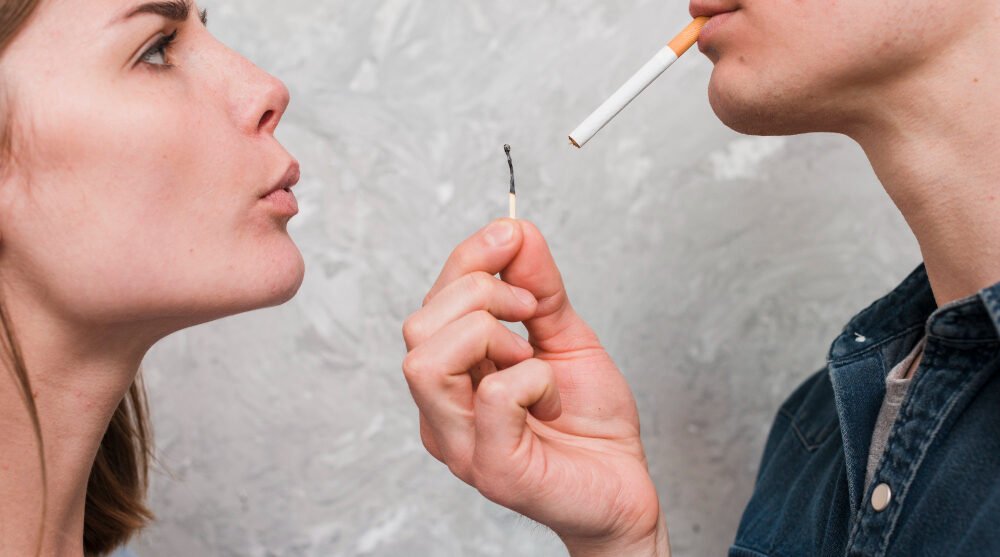
In India, I still feel that patients hide a lot of their symptoms and addiction history. I ask patients, “Do you smoke? Do you drink alcohol?” Everyone denies it.
Drugs are still available, and a lot of young people are now getting exposed to them. We have heart problems happening in a 22-year-old who came in with a heart attack. We had a 26-year-old with a heart attack who had to be stented.
We need to be more mindful and tell the consultant about all these things. If you don’t tell us, it’s difficult for us to understand the problem. If we can get the drug problem down a little, I think that will help. The addiction problem is going to be something in the next few years.
Also read: FACT CHECK: Does skipping breakfast really raise your risk of diabetes and heart disease?
(Do you have a health-related claim that you would like us to fact-check? Send it to us, and we will fact-check it for you! You can send it on WhatsApp at +91-9311223141, mail us at hello@firstcheck.in, or click here to submit it online)