
Author
Have you ever wondered what you would do if someone suddenly collapsed in front of you? In an emergency like cardiac arrest, every second counts. Cardiopulmonary resuscitation (CPR), a lifesaving emergency procedure that helps maintain blood flow to the brain and other vital organs, can improve a person’s chances of survival until medical help arrives. Yet, many people may hesitate to act because they do not know when or how to perform it.
Research highlights why immediate action matters. A 2020 systematic review of 141 studies found that the pooled rate of survival to hospital discharge among people who experienced out-of-hospital cardiac arrest and received CPR was 8.8%. The analysis also found a higher survival rate among those who received CPR from a bystander. More recently, a 2026 systematic review of 72 studies involving nearly 2.9 million out-of-hospital cardiac arrest events found that bystander CPR was associated with 44% higher odds of survival to hospital discharge.
We spoke to Ms Khushboo Bhatt, Specialist in Cardiac Rehabilitation, Aster CMI Hospital, Bengaluru, to understand what CPR is, when it should be performed, how bystanders can administer it, and what they should keep in mind during an emergency.
What is CPR, and why is it important?
Cardiopulmonary resuscitation (CPR) is an emergency procedure used when a person’s heart stops beating effectively and they become unresponsive and stop breathing normally. It helps maintain blood flow to the brain and other vital organs until medical help arrives.
CPR mainly involves pressing firmly and quickly on the chest. These chest compressions help circulate blood when the heart cannot pump it properly. CPR does not always restart the heart, but it can improve the person’s chances of survival.
During cardiac arrest, the brain and other organs quickly begin to suffer from a lack of oxygen. Every minute without immediate help can reduce the person’s chance of survival. CPR performed by a bystander can help keep blood circulating until emergency medical professionals arrive. In some cases, an automated external defibrillator (AED), a device that checks the heart’s rhythm and delivers an electric shock when needed, may also help restore a normal rhythm.
Knowing CPR can make a difference at home, in the workplace, in public places and during emergencies involving family members or strangers.
When should CPR be performed?
CPR should be started when a person is unresponsive and is not breathing normally or is only gasping. First, check whether the surroundings are safe. Call 112 in India or ask someone nearby to call for emergency assistance.
Do not mistake occasional gasps for normal breathing. If you are unsure, follow the emergency dispatcher’s instructions and begin chest compressions when cardiac arrest is suspected.
It is important to understand that CPR is meant for cardiac arrest, not for every medical emergency. A person having a stroke who remains conscious and breathes normally does not need CPR. They need immediate medical attention.
How should CPR be performed? A step-by-step guide
For an adult or teenager who suddenly collapses, hands-only CPR is a practical option for bystanders.
Step 1: Check for responsiveness
Tap the person’s shoulders and ask loudly if they are okay. If they do not respond and are not breathing normally, act immediately.
Step 2: Call for emergency help
Call 112 or ask someone else to call. If an AED is available, ask another person to bring it.
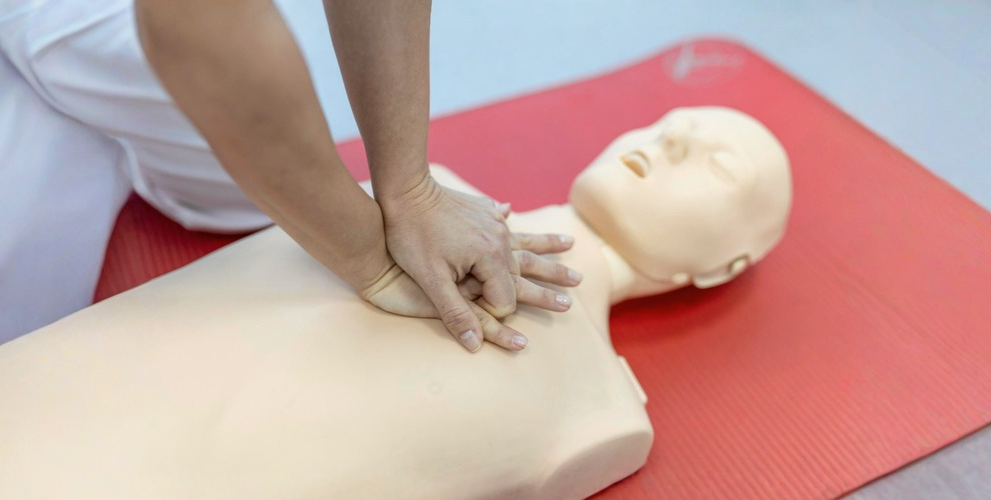
Step 3: Position your hands
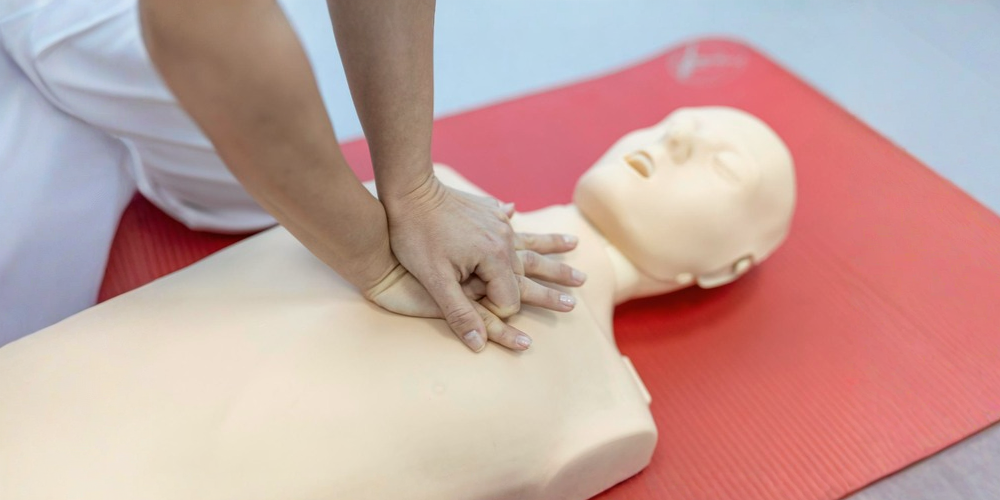
Lay the person on their back on a firm, flat surface, if this can be done safely. Kneel beside them and place the heel of one hand in the centre of the chest. Place your other hand on top and interlock your fingers.
Step 4: Start chest compressions
Keep your arms straight and shoulders directly above your hands. Push firmly and quickly, pressing the chest down about 5–6 centimetres in an average adult. Aim for 100–120 compressions per minute and allow the chest to rise fully after each push.
Step 5: Continue until help arrives
Keep performing compressions with as few interruptions as possible. If an AED arrives, switch it on and follow its voice instructions. Stop only when the person shows signs of recovery, trained responders take over, or you cannot continue.
Who can perform CPR?
Almost anyone can learn CPR. You do not need to be a doctor, nurse or healthcare professional to help someone experiencing cardiac arrest. Family members, teachers, office workers, security personnel, students and other bystanders can all learn this lifesaving skill.
Formal CPR training is recommended because it helps people understand correct hand placement, compression depth and speed. Healthcare professionals and trained rescuers may also provide rescue breaths when appropriate. Infants and children, as well as people whose cardiac arrest follows drowning or breathing-related emergencies, require particular attention to rescue breathing.
Also read: Are adults missing critical vaccines? Experts discuss immunisation across life stages
Do you have a health-related claim that you would like us to fact-check? Send it to us, and we will fact-check it for you! You can send it on WhatsApp at +91-9311223141, mail us at hello@firstcheck.in, or click hereto submit it online.