

Author
Do you remember when we were children or teenagers and used to think, “When I grow up, I’ll buy all my favourite packets of chips,” or even, “I’ll buy the entire store!” Those were the carefree days of innocence. Fast forward a few years, and many of us find ourselves doing the exact opposite – encouraging our children to eat healthier, reading nutrition labels, or consciously choosing healthier foods ourselves. Somewhere along the way, we realise that the habits we build in our younger years have a lasting impact on our health.
The importance of these formative years is reflected in global health data. According to the World Health Organization (WHO), more than 1.5 million adolescents and young adults aged 10–24 years died in 2021 – around 4,500 every day. Injuries, interpersonal violence, self-harm and maternal conditions remain among the leading causes of death, while half of all mental health disorders begin by the age of 18, though most cases go undetected and untreated. Early substance use is also associated with a higher risk of dependence and other health problems later in life.
Researchers have described adolescence as a critical window for shaping future health. A landmark Lancet Commission on Adolescent Health and Wellbeing notes that these are the years when the brain undergoes rapid development and young people acquire the physical, cognitive, emotional and social capacities that influence not only their own future, but also the wellbeing of the next generation. At the same time, today’s adolescents face unprecedented challenges, including unhealthy diets, sedentary lifestyles, excessive screen time, environmental pressures and growing mental health concerns.
India is witnessing many of these trends. A recent scoping review of 93 Indian studies on adolescent overweight and obesity found that insufficient physical activity, calorie-dense diets, increasing screen time, urban lifestyles and shorter sleep duration were among the major factors associated with excess weight gain in teenagers. The review also highlighted significant research gaps and underscored the need for stronger evidence and targeted interventions to promote healthier lifestyles among Indian adolescents.
Against this backdrop of growing concerns about adolescent health and lifestyle-related diseases, an important question emerges: how can young people build healthy habits early enough to stay healthy and reduce their risk of disease later in life?
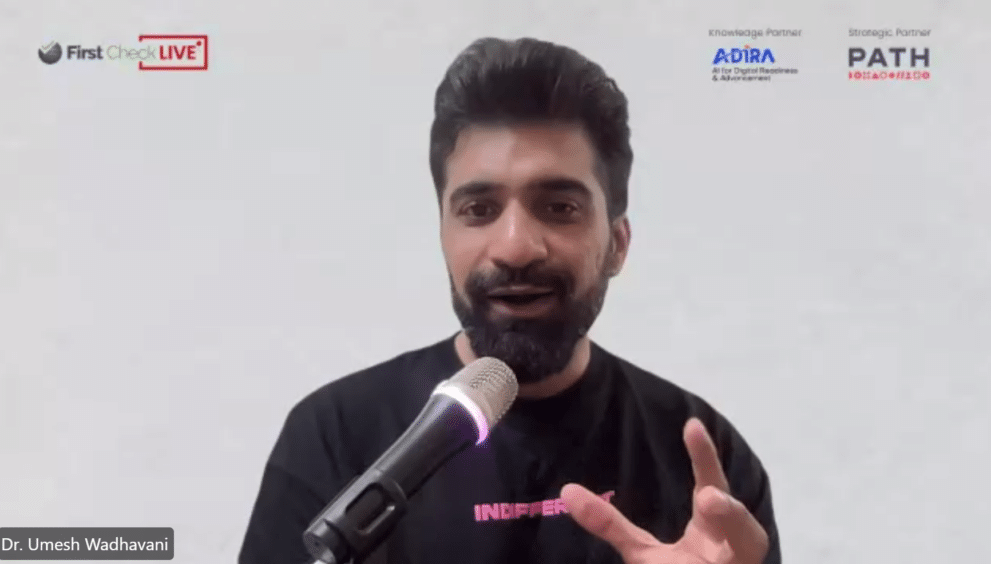
Speaking at First Check LIVE’s first episode, ‘Healthy Lifestyle & Risk Prevention for Teens and Adolescents,’ held on Wednesday, Dr Umesh Wadhavani, BHMS, Nutritionist, Diet Coach, and Content Creator, shared interesting strategies to help teenagers build healthier routines and make informed choices that support their long-term health and wellbeing.
Healthy habits matter more than quick fixes
Dr Wadhavani said many lifestyle conditions, including diabetes, obesity, high cholesterol and hormonal disorders, can often be prevented or managed through healthy eating and small but consistent lifestyle changes. However, he noted that conflicting nutrition advice on social media has left many people confused and fearful about food.
Rather than chasing detoxes or eliminating entire food groups, he encouraged teenagers and parents to focus on building habits they can sustain over time.
“Anything can be healthy or unhealthy depending on how frequently you do it,” he said. “The problem is not food. The problem is overconsumption and underutilisation.”
Using almonds as an example, he explained that no single food can improve health overnight. “For almonds to do anything good for your brain, you have to eat them in the right amount and eat them regularly,” he said, stressing that consistency matters more than occasional healthy choices.
He also reminded participants that no food should be labelled as completely “good” or “bad”.
“Dosage and frequency make the difference. Unless you are allergic or intolerant to something, you don’t have to avoid any particular food. You have to quantify it.”
A balanced plate is more important than cutting carbs
According to Dr Wadhavani, healthy eating is not about eliminating carbohydrates or following restrictive diets but ensuring the body receives all the nutrients it needs.
Drawing an analogy between the human body and a car, he said just as a vehicle requires fuel, engine oil, coolant and regular maintenance to function efficiently, the body also depends on carbohydrates, proteins, healthy fats, vitamins, minerals, fibre and water.
“If you understand this, you will understand that nothing is negotiable,” he said.
He noted that a typical Indian diet already contains sufficient carbohydrates but often lacks adequate protein and fibre. Instead of cutting out rice or roti, he advised people to eat balanced meals with appropriate portions of all essential nutrients.
“What we need to do is reduce overconsumption of carbohydrates and fats to the right amount and increase protein and fibre where they are lacking,” he said.
Dr Wadhavani also highlighted the importance of hydration, explaining that nutrients reach the body’s cells through the bloodstream.
“If you’re not drinking enough water, your nutrients are not going to reach your cells,” he said, recommending regular water intake throughout the day.
Focus on movement, not perfection
Dr Wadhavani urged teenagers to stop viewing healthy living as a series of restrictions and instead build routines they genuinely enjoy.
He said technological advances and increasing screen time have significantly reduced daily movement, making physical activity an essential habit to cultivate early.
“I deliberately don’t use the word ‘exercise’. I use the word ‘movement’,” he said. “Pick any activity that you enjoy and spend 30 to 45 minutes every day doing it.”
He also suggested tackling unhealthy habits by replacing them with better ones instead of simply trying to suppress them.
“If you think you have a screen-time issue, instead of focusing only on reducing screen time, build better habits around it. Get something more meaningful to do during that time,” he said.
Concluding the session, Dr Wadhavani encouraged teenagers to view healthy living as an investment in their future rather than a burden.
“Eating healthy and living healthy is not as complicated as people have made it,” he said. “Whatever you eat and the habits you build today will shape your physical and mental health in the future. If you want to achieve your dreams, your body is the only machine that will help you get there.”
Also read: Mental disorders nearly double globally, adolescents and women most affected