Author
For millions of Indians, especially women in rural households, the smoke damaging their lungs may not come from just one source.
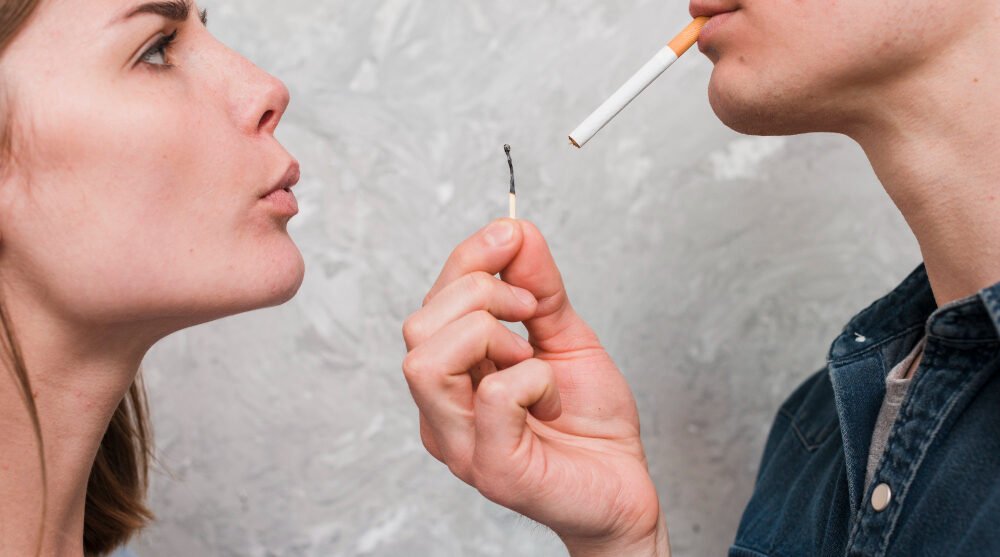
It may come from a cigarette or bidi smoked by someone else in the home. It may also come from the wood, dung or crop waste used for cooking. And in some households, both kinds of smoke may be filling the same kitchen or living space, exposing the same person day after day.
A new global health study has put the scale of one part of this problem into numbers. It estimates that 444 million people in India were exposed to second-hand smoke in 2023, the second-highest number in the world after China.
The study, published in The Lancet Public Health, also found that deaths in India linked to second-hand smoke increased by nearly 50% between 1990 and 2023. This happened even though the proportion of people exposed fell from 43.2% to 30.6%.
The apparent contradiction is largely explained by India’s population growth: even with a lower percentage of people exposed, the total number of people exposed has grown substantially.
But the bigger public health concern may be what these numbers do not show.
The study measures exposure to tobacco smoke. Another large and longstanding source of indoor air pollution in India comes from cooking with solid fuels. These two exposures are usually studied separately, even though they can occur in the same home.
The rural woman at the centre of the problem
The health effects of second-hand smoke are well established. The new study found that heart disease was the leading cause of deaths linked to passive smoking, followed by chronic obstructive pulmonary disease (COPD), stroke, lower respiratory disease and lung cancer.
COPD is particularly important in India because it is also strongly associated with household air pollution from cooking fuels.
For many rural women, cooking can mean years of repeated exposure to smoke from wood, dung, crop residue and other solid fuels, often in kitchens with poor ventilation.
A 2024 study published in the Indian Journal of Chest Diseases and Allied Sciences found a significant link between indoor air pollution—including biomass fuel use and poor ventilation—and COPD in a rural population.
Among the COPD patients identified in the study, 92.9% were women.
The study also found that indoor air pollution was associated with airflow obstruction being more than twice as common among COPD patients than controls.
That does not mean biomass smoke was the only cause of COPD in these women. But it illustrates why the question of indoor smoke cannot be separated from the wider respiratory health of rural women.
And there is another smoke source that may be present in the same household.
When cigarette smoke and cooking smoke overlap
A 2025 study of non-smoking adults with pulmonary tuberculosis in Haryana looked at two environmental exposures together: second-hand tobacco smoke and the use of biomass cooking fuel.
It found that 44% of the homes studied did not have a separate cooking area, while 49.3% lacked exhaust ventilation.
In such homes, smoke from cooking has fewer ways to escape. If someone also smokes indoors, tobacco smoke can add another layer of exposure.
The important point is not that one study has proved that the two forms of smoke combine to cause a particular disease. It has not.
Rather, the evidence raises a much simpler question: what happens when the same person is exposed to both for years?
India does not have enough data to answer that question clearly.
Existing health surveys generally measure tobacco exposure and household air pollution as separate issues. That means a rural woman may be counted as someone exposed to cooking smoke, while the fact that she also spends years breathing tobacco smoke inside her home may not be captured as part of the same exposure picture.
What the national data tells us
The National Family Health Survey-5, conducted in 2019-21, found that someone smoked in about four in 10 Indian households, while daily smoking was reported in roughly one in four households.
It also found that 9% of women and 38% of men aged 15 and above used tobacco, with higher levels of tobacco use in rural areas.
But the survey does not combine household tobacco exposure and biomass-fuel exposure into a single measure of smoke exposure.
That matters because the people most exposed to one source of smoke may also be exposed to another.
The Lancet study itself has some important limits. Its definition of second-hand smoke covers exposure to combustible tobacco products at home or at work, but does not capture exposure in places such as restaurants, public transport or private vehicles.
It also found a significant gender difference in some countries, with women experiencing much higher levels of exposure than men. The researchers noted that the health burden from second-hand smoke among women can be comparable to that from active smoking.
For the first time in this global analysis, the researchers also included asthma as a health outcome associated with second-hand smoke. They found that asthma accounted for 3.4% of the total health burden linked to second-hand smoke globally, rising to 6.3% among children and adolescents.
That makes the issue relevant not only to adults living with years of smoke exposure, but also to children growing up in smoky homes.
Doctors see the problem differently
Dr Sunil Kumar K, lead consultant, interventional pulmonology at Aster CMI Hospital, Bangalore, said doctors are often unable to identify a single cause for a patient’s COPD.
“In most cases, it is difficult to identify one single cause of COPD because lung damage can result from several exposures over many years,” he said.
Doctors therefore ask about cooking fuel, kitchen ventilation, tobacco smoke at home or work, occupational exposure and other possible risks.
But even after taking a detailed history and conducting lung-function tests, he said, it is usually impossible to say which particular source of smoke caused the damage.
“In many rural women, biomass smoke and second-hand tobacco smoke may both contribute, so it is important to recognise the combined exposure rather than attributing COPD to only one source.”
That does not mean the two exposures have been proven to interact in a particular way in every patient.
Dr Kumar said it is “reasonable to be concerned about a greater cumulative effect when biomass smoke and second-hand tobacco smoke occur together,” because both “irritate the airways, promote inflammation and, over time, contribute to reduced lung function and chronic respiratory disease.”
But he cautioned that the exact effect of having both exposures cannot be predicted for every individual because factors such as the amount and duration of exposure, ventilation, age and underlying health also matter.
The practical message, he said, is straightforward: “reducing both sources of smoke exposure is important for protecting lung health.”
The smoke that doctors may not ask about
Dr Kumar said an ideal respiratory assessment should consider a person’s entire exposure history, including cooking fuel, kitchen ventilation, occupational exposure, personal smoking and whether other family members smoke inside the house.
In busy clinical settings, however, second-hand smoke exposure may not always be discussed unless the patient or family brings it up.
Asking “about who smokes at home, where they smoke and whether the home has a separate smoking area can reveal an important exposure that might otherwise be missed,” he said.
That may be particularly important for women who have never smoked themselves.
A persistent cough, repeated phlegm, wheezing, breathlessness while walking or doing household work, reduced ability to exercise, frequent chest infections and unusual tiredness should not simply be dismissed as part of ageing or the demands of daily work.
A woman may initially notice only that she needs more breaks while cooking, walking or climbing stairs.
Children are also vulnerable. Dr Kumar said both tobacco smoke and cooking smoke can affect developing airways, particularly in poorly ventilated homes.
“It is important to ask families about both tobacco smoke and cooking-fuel exposure when a child has recurrent respiratory symptoms, rather than considering them separately.”
Two smoke problems, one set of lungs
The new global estimate makes the scale of second-hand tobacco smoke in India difficult to ignore: 444 million people exposed in a single year.
But the number tells only part of the story.
For a rural woman who spends hours cooking over a smoky stove and lives with someone who smokes indoors, the distinction between “second-hand smoke” and “household air pollution” may exist in health surveys, but not in her lungs.
The available studies do not yet establish exactly how these exposures interact or how much additional risk they create when they occur together. That evidence gap is important.
What is already clear is that both are preventable sources of smoke exposure.
And for the millions of Indians living with both, the question may no longer be which smoke is responsible for damaging their lungs.
It may be why the two exposures are still being treated as separate problems when, inside the home, they can be part of the same one.
Also read: Smoking doesn’t just damage your lungs—It could age your ovaries too
Do you have a health-related claim that you would like us to fact-check? Send it to us, and we will fact-check it for you! You can send it on WhatsApp at +91-9311223141, mail us at hello@firstcheck.in, or click here to submit it online.