
Author
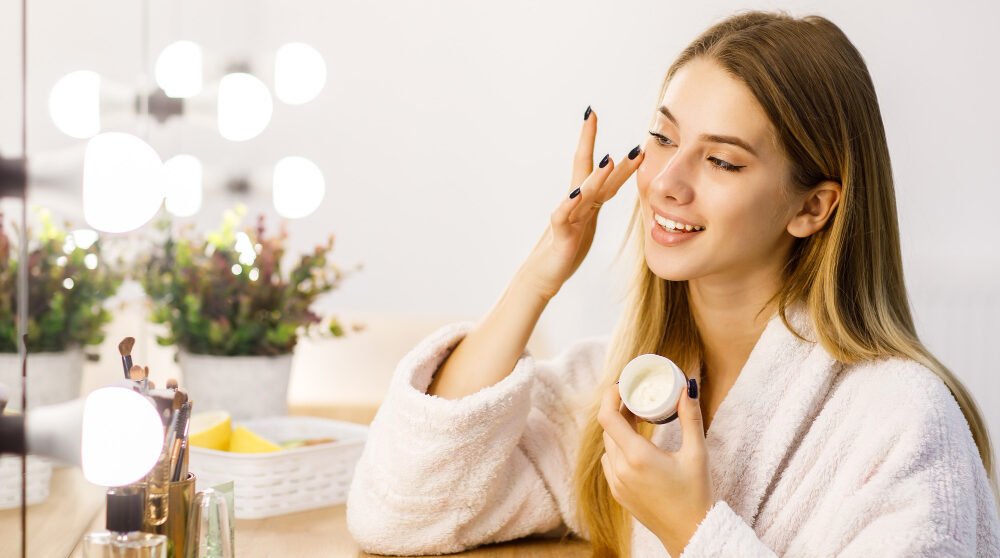
Before you scroll and add your favourite cosmetic to your cart, excited to try a new shade, serum or skincare product, a recent survey is drawing attention to another side of India’s rapidly growing beauty market – counterfeit products and adverse reactions.
A new national survey by LocalCircles found that 40% of consumers surveyed who had purchased cosmetics or beauty products in the last three years said they had found one or more products to be fake or counterfeit, while 26% said they had experienced an allergic reaction to one or more cosmetics.
The survey received more than 23,000 responses from household consumers across 318 districts in India. Of the respondents, 61% were men and 39% were women. About 46% were from tier 1 districts, 33% from tier 2 districts and 21% from tier 3 and tier 4 districts. Participants were validated citizens registered on the LocalCircles platform.
The findings come as India’s beauty and personal care market continues to expand, with consumers increasingly purchasing cosmetics through online marketplaces, apps, quick-commerce platforms and social media. But alongside this growth, regulators have also been reporting cases involving counterfeit, misbranded, unlicensed and expired cosmetic products.
Unlike many household products, cosmetics are applied directly to the skin, hair, lips and areas around the eyes. Products that are counterfeit, poorly manufactured, improperly labelled or contaminated can therefore pose a direct consumer health concern.
What problems are consumers facing with cosmetics?
To understand the problems consumers and their families had experienced, LocalCircles asked respondents: “In the last 3 years, what issues have you or family members faced with cosmetics and beauty products? (Select all that apply)”
The question received 12,208 responses. Among those surveyed, 18% said they had purchased a cosmetic or beauty product and later found it to be fake or counterfeit. Another 4% said they had experienced an allergic reaction to some cosmetics, while 22% said they had experienced both a counterfeit product and an allergic reaction.
Based on these responses, 40% of consumers surveyed had encountered at least one counterfeit cosmetic in the previous three years, while 26% had experienced an allergic reaction to one or more cosmetics.
Half of the respondents, or 50%, said they had faced no such issues, while 5% were unable to say.
The survey also found that none of the respondents reported having suffered a severe ailment due to cosmetics or beauty products, either independently or in combination with the other reported problems.
The overlap between counterfeit purchases and allergic reactions is notable. Among respondents who reported an allergic reaction, most were also among those who said they had purchased a counterfeit cosmetic. However, the survey does not establish that counterfeit products caused the reported allergic reactions.
The findings also come against the backdrop of enforcement action by regulators in different parts of the country.
In Maharashtra, the Food and Drug Administration has taken action against unlicensed and misbranded cosmetic products. In raids conducted in Mumbai and Bhiwandi in June 2026, officials seized illegal cosmetics and manufacturing machinery worth Rs 1.52 crore. At one location, officials found children’s hair and skincare products, shampoos, lotions, powders, sunscreens and men’s grooming products carrying the address of a non-existent manufacturing unit and lacking details such as batch numbers, manufacturing dates and expiry dates.
At another unlicensed unit in Bhiwandi, officials found cosmetics being manufactured and marketed online, including products carrying a fake Mumbai address. The unit was sealed and an FIR was registered.
The Maharashtra FDA has also reported other enforcement actions against misbranded and substandard products. In June alone, the department raided 34 manufacturing units and acted against illegal drugs, medical products and cosmetics worth Rs 4.12 crore. Of 787 samples tested, 35 were declared Not of Standard Quality, according to the information cited in the survey material.
Another case involved a skin-lightening product called Goree Beauty Cream. The Maharashtra FDA reported that laboratory testing found mercury in the product at levels 752 times above the permissible limit. The product had been linked to kidney disorders among 18 women in Nagpur, according to the FDA’s findings. On July 4, 2026, the department banned the product and flagged other cosmetics after testing found excessive levels of heavy metals.
These cases highlight why authenticity, manufacturing standards, labelling and regulatory oversight matter when consumers purchase cosmetics.
Where are counterfeit cosmetics reaching consumers from?
The survey also looked at where consumers had purchased products that later turned out to be fake or counterfeit.
LocalCircles asked respondents: “In the last 3 years, where all did you buy cosmetics and beauty products from that turned out to be fake or counterfeit? (Select all that apply)”
The question received 11,299 responses. Online platforms, apps or websites were identified by 23% of respondents, making them the most commonly cited source of counterfeit cosmetics.
Beauty, cosmetics or general stores followed at 18%, while 14% said they had purchased counterfeit products from local stores or stalls in markets. Department stores were cited by 9% of respondents. Company stores and direct sellers or individuals were each cited by 5%.
No respondent reported purchasing a counterfeit cosmetic from a mall kiosk, while another 5% could not say where they had purchased the product.
Because respondents could select more than one option, the percentages do not add up to 100%.
The finding that online platforms were the most commonly cited source is significant as consumers increasingly rely on digital marketplaces to purchase beauty and personal-care products. The survey data suggests that the online channel accounted for a disproportionately large share of the counterfeit purchases reported by respondents.
At the same time, the findings do not establish that online purchases are inherently more likely to be counterfeit than offline purchases. The survey captures what respondents reported purchasing and where they bought products that they later believed were fake.
Recent enforcement actions, however, have also highlighted the role of online channels in the distribution of questionable cosmetics.
The Maharashtra FDA’s action against the Bhiwandi unit found cosmetics being sold through e-commerce platforms. The Goree Beauty Cream case also involved products purchased largely through social media and e-commerce sites, according to the FDA.
Another investigation in Delhi-NCR highlighted the risks posed by expired cosmetic products being relabelled and sold with altered manufacturing or expiry details. Such practices can make it difficult for consumers to establish whether a product is genuine and whether its contents are safe to use.
What should be done to make cosmetics safer?
The LocalCircles survey also examined what consumers believe should be prioritised to improve complaint redressal and online safety around cosmetics and beauty products.
While the survey found that counterfeit products and allergic reactions remain significant concerns, the findings also point towards the need for stronger traceability and accountability across the cosmetics supply chain.
LocalCircles has proposed that every cosmetic product sold in India should carry a unique, scannable authentication code that allows consumers to verify its authenticity and manufacturing and expiry details before use.
It has also called for e-commerce and quick-commerce platforms to follow defined seller due-diligence standards for cosmetics, including disclosure of the actual seller, licence details and batch and expiry information on product listings.
Another recommendation is the creation of a public national database containing details of cosmetics that have been banned, recalled or found to be Not of Standard Quality. Such information, the organisation suggests, should also be shared with online platforms so that flagged products can be automatically removed from sale.
LocalCircles has further recommended regular random sampling of cosmetics across online and offline markets, with the findings made publicly available. It has also called for a simple, single-window mechanism through which consumers can report suspected counterfeit products or adverse reactions.
What experts say
Dr Shireen Furtado, Sr. Consultant – Medical & Cosmetic Dermatology, Aster CMI Hospital, Bengaluru, said cosmetic products can cause a range of skin reactions, including redness, itching, burning, dryness, swelling, rashes, contact dermatitis and, in some cases, infections.
“Common triggers include fragrances, preservatives, hair dyes, certain dyes, essential oils, metals and other ingredients used in skincare, makeup and hair-care products,” she said. According to Furtado, some people may develop an allergy after repeated exposure, while others may experience irritation because of sensitive skin.
She said poor-quality, expired or contaminated products can increase the risk of adverse skin reactions. Counterfeit cosmetics are particularly concerning because “their ingredients, concentration, manufacturing conditions and contamination levels may not be reliable.”
However, a skin reaction alone does not necessarily indicate that a product is counterfeit. “It is difficult to identify whether a reaction is caused by an allergy to a genuine cosmetic or by a counterfeit or contaminated product based only on symptoms,” Furtado said. Both can cause redness, itching, burning, swelling, rashes and irritation.
She added that certain signs may raise concerns about a product’s authenticity or quality, including an unusually strong reaction, a sudden change in smell, colour or texture, damaged packaging, missing batch details, spelling mistakes or an unusually low price.
“Consumers should stop using the product if they develop persistent irritation, swelling, blistering or worsening symptoms,” she said. Medical attention is particularly important in cases of significant facial or eye swelling, difficulty breathing, widespread hives, severe skin damage, dizziness or other signs of a serious allergic reaction.
Furtado advised consumers to purchase cosmetics from authorised retailers, established stores or verified brand websites and to be cautious of products sold at unusually low prices. Before buying, consumers should check the packaging, manufacturer details, batch number, expiry date and ingredient list, and avoid products from unverified social-media sellers.
She also advised consumers not to use a product if its packaging appears tampered with or if the product looks, smells or feels different from usual.
“If a reaction occurs, stop using the product and gently wash the affected area. Keep the packaging and product for identification and consult a dermatologist if symptoms persist or worsen,” Furtado said. If a counterfeit or unsafe product is suspected, consumers should also report it to the platform or seller and the appropriate regulatory authorities.
Also read: FACT CHECK: Does eating white rice on an empty stomach cause a rise in blood sugar levels?
Do you have a health-related claim that you would like us to fact-check? Send it to us, and we will fact-check it for you! You can send it on WhatsApp at +91-9311223141, mail us at hello@firstcheck.in, or click here to submit it online.