
Author
CLAIM:
Applying kajal to children’s eyes is dangerous, offers no health benefit, and can harm vision by causing allergies and eye infections.
FACT:
Kajal, kohl, or surma can contain high levels of lead and other toxic metals, which may cause eye irritation, infections, and systemic lead poisoning in infants. Scientific studies and health authorities like the FDA and CDC warn that its use offers no proven benefits and should be strictly avoided for babies.
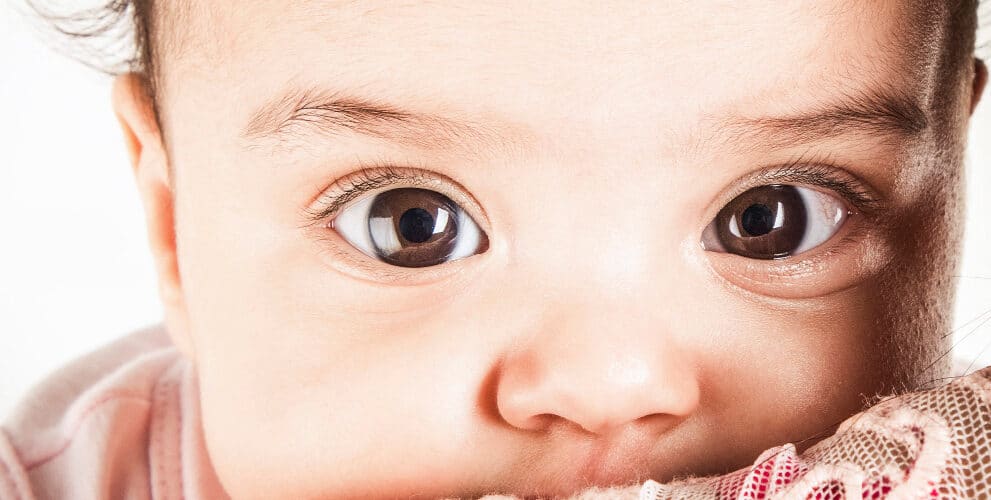
In many Indian households, applying kajal to a baby’s eyes is considered a ritual of care and protection. Elders believe it makes the eyes bigger and brighter, wards off the evil eye, and even improves eyesight. But is this age-old practice actually safe for babies?
In a viral Instagram reel posted by ‘The Ranveer Show’, the official handle of Ranveer Allahbadia or ‘BeerBiceps,’ who has over 1.9 million followers on Instagram, the influencer addresses this very question while discussing eye health myths. The clip is from his podcast series, which he describes as a platform where “every episode has been designed to bring you some kind of value adds,” focusing on health, lifestyle, and self-improvement.
In the reel, Ranveer is seen asking Dr Rahil Chaudhary, an ophthalmologist, what he calls “the most dangerous desi eye habit.” Responding candidly, Dr Chaudhary dismisses the practice of applying kajal to children’s eyes. “When kids apply kajal to their eyes, that is the worst somebody can do to your kid’s eyes,” he says, adding that there is “no advantage” to the practice.
Addressing popular beliefs, Dr Chaudhary explains, “People think that applying kohl will increase the brightness of the eyes, or the eyes will become bigger, or the kid will be saved from some disease. There is nothing like that.” He then points to a lesser-spoken belief behind the practice, adding, “I understand one reason for that. That is, the kid will not be able to see. Because that is also superstition.”

Questioning the logic of this belief, he remarks, “If you want to save the kid from the sight, then apply some ointment somewhere else. Why do you want to spoil the kid’s eyes?” Dr Chaudhary further warns that continued application of kajal can trigger allergic reactions in children. “When you continue to apply kohl, the kids get allergic to it,” he says.
The doctor also raises concerns about hygiene and infection. He points out that when the same kajal stick is shared between children, it can spread eye infections. “If you share that kajal stick with one kid and then apply it to the other kid’s eyes, then it becomes a trachoma and causes an infection,” he cautions.
The reel has struck a chord with people across the country, garnering over 2 million views, 26.3k likes, and 39.1k shares, reigniting debate around traditional childcare practices and their impact on infant health.
Is Kajal safe for babies’ eyes?
Medical literature has repeatedly flagged potential health risks associated with its use, especially in infants and young children.
A letter authored by Dr Anup Mohta, currently Director-Professor in the Department of Surgery at Lady Hardinge Medical College, published on PubMed Central, cautions against the use of kajal due to its lead content. In the letter titled “Kajal (Kohl) – A dangerous cosmetic”, Dr Mohta warns that many commercially available products are unsafe for prolonged use.
“Most commercially produced ‘kajal’ contains high levels of lead,” the letter states. It further explains that “prolonged application may cause excessive lead storage in the body, affecting the brain and bone marrow, causing convulsions and anaemia.” The letter also notes that due to these risks, “the US FDA does not permit its use in a cosmetic or in any other FDA-regulated product.”
These concerns are echoed by the US Food and Drug Administration (FDA), which has issued clear advisories against kohl-based eye cosmetics. In an official safety note, the FDA states, “One colour additive of particular concern is kohl. Also known as al-kahl, kajal, or surma, kohl is used in some parts of the world to enhance the appearance of the eyes, but is unapproved for cosmetic use in the United States.”
The agency explains that kohl often consists of “salts of heavy metals, such as antimony and lead,” and cautions against assuming safety based on tradition. “It may be tempting to think that because kohl has been used traditionally as an eye cosmetic in some parts of the world, it must be safe. However, there have been reports linking the use of kohl to lead poisoning in children,” the FDA notes.
The FDA has also issued Import Alerts for kohl products, citing three major reasons for detention: the presence of unsafe colour additives, false claims of being “FDA approved,” and the absence of ingredient declarations. It clarifies that while some eye cosmetics use the word “kohl” only as a shade descriptor, consumers should verify whether the listed colour additives are approved for use around the eyes.
In fact, the Centres for Disease Control and Prevention (CDC) has documented two cases of infant death due to kajal use.
Adding contemporary evidence, a 2024 study analysed 220 samples of traditional eye cosmetics and cultural powders collected in New York City between 2013 and 2022 during lead-poisoning investigations and retail surveys. Researchers compared blood lead levels (BLLs) of children who used these products with those who did not.
The study found that “lead levels in traditional eye cosmetics surma and kohl were much higher than levels in kajal and other cultural powders,” though it also noted that the terms surma, kohl, and kajal are often used interchangeably despite regional differences. Most surma samples originated from Pakistan, kohl from Morocco, and kajal from India. Importantly, the researchers concluded that “these products can contribute to elevated BLLs (blood lead levels) in children.”
The study emphasised that traditional eye cosmetics are used “among children as young as newborns,” and that exposure can “significantly add to their lead body burden.” It also stressed the need for culturally specific terminology in public health messaging, noting that accurate naming is critical for effective risk assessment and communication.
Beyond chemical toxicity, awareness and behavioural factors also play a role. Another study titled ‘Investigating the Awareness of Kajal (Kohl) Application Among Primary Caregivers’ examined how widely kajal is used and how little its risks are understood. Conducted as a hospital-based, cross-sectional survey in Mastichak, Bihar, the study involved 222 primary caregivers of children under 10 years of age.
The findings revealed that all respondents reported using kajal on their children, mostly homemade. About 20 per cent applied it on the day of birth, while 75.2 per cent had used it within the previous month. Alarmingly, 78.4 per cent of caregivers were unaware of potential eye-related problems, and 43.2 per cent reported that their children experienced eye issues directly linked to kajal application.
The authors concluded that “awareness of eye health problems among children related to the application of kajal on children’s eyes was found to be low,” stressing that people continue to use it “without knowing much about the ocular side effects that can occur.” The study called for widespread public education and targeted interventions to address the risks, particularly for children.
What do doctors recommend?
Dr Amit Gupta, Senior Neonatologist and Paediatrician at Motherhood Hospitals, Noida, explained that applying kajal to babies is a very common traditional practice, and in his clinic, “at least five or six parents ask about it daily.”
When asked whether it could harm a baby’s eyes, he was clear that “there is no clinical or scientific evidence that applying kajal is beneficial for health.” He added that it can be actively harmful, leading to conjunctivitis, tear duct blockage, inflammation, and significant irritation.
Dr Gupta emphasised that the practice is more cultural than medical. “It has no scientific backing to say that kajal really helps. In fact, it is more of a toxic thing, which can actually lead to a lot of damage to our eyes,” he said. He advises parents to reconsider the practice.
Dr Gupta emphasised that even if parents try alternatives or homemade preparations, the safest approach is to avoid applying anything to a baby’s eyes. “I always tell the parents, please try to avoid it as much as possible,” he said.
Also read: FACT CHECK: Is kajal really good for your eyes?
(Do you have a health-related claim that you would like us to fact-check? Send it to us, and we will fact-check it for you! You can send it on WhatsApp at +91-9311223141, mail us at hello@firstcheck.in, or click here to submit it online)