
Author
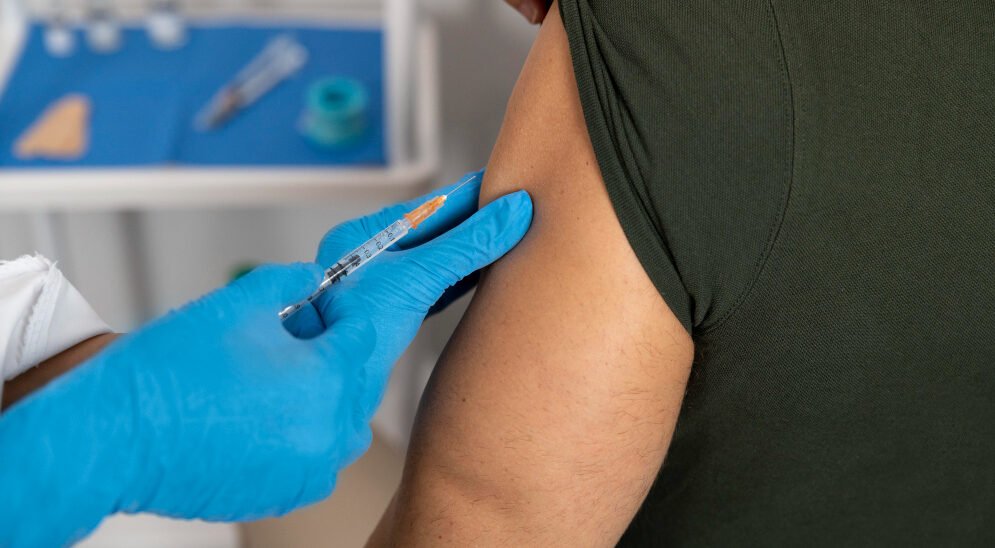
CLAIM: Rabies vaccines should not be administered in the buttocks after an animal bite or scratch. They should be given in recommended sites such as the shoulder or thigh, and a dose given in the buttocks may need to be repeated.
FACT: True. Rabies vaccines should not be administered in the buttocks because absorption may be inadequate, potentially reducing the immune response. WHO and CDC recommend the deltoid region for adults and the anterolateral thigh for young children when the intramuscular route is used. Experts suggest if a rabies vaccine is mistakenly given in the gluteal area (buttocks), the person should consult a healthcare professional promptly, as the affected dose may need to be repeated according to applicable guidelines.
In a viral Instagram reel posted by Dr Sivaranjani Santosh, a paediatrician who has 9.97 lakh followers on the platform and is also known for raising concerns about misleading claims around electrolyte drinks, warns against administering rabies vaccines in the buttocks.
Dr Sivaranjani explains that if a person is bitten or scratched by a mammal such as a dog, cat, horse, cow, buffalo, monkey or bat, and rabies vaccination is prescribed, the vaccine should be administered in the recommended sites, such as the shoulder or thigh, and not in the buttocks. “Again and again I am telling you, if a dog or a cat or a horse or a cow or a buffalo or a monkey or a bat scratches you or bites you or, for that matter any mammal, okay, and if rabies vaccine is prescribed, it should be taken either in the shoulder or in the thigh, not in the buttocks, not in the bumps,” she says.
She further warns that administering the rabies vaccine in the buttocks can affect how the vaccination is considered and says that in such cases, the course may need to be repeated. “If it is given in the buttocks or bumps, the vaccine has to be repeated, full stop. This is very, very, very important,” she says.
Dr Sivaranjani also stresses that this is not merely a theoretical concern, claiming that the mistake can occur even in healthcare settings. “This mistake of giving rabies vaccine in the bumps is happening even in hospitals, even by doctors and nurses in many places, unfortunately,” she says, reiterating that rabies vaccines should not be administered in the buttocks.
The reel has gained 1.2 million views, 43.9K likes and 47.5K shares on Instagram.
Why should rabies vaccines not be given in the buttocks?
Research and international guidelines consistently advise against administering rabies vaccines in the buttocks. The concern is that the gluteal region can result in inadequate absorption and a weaker immune response, potentially compromising post-exposure prophylaxis (PEP).
A 2018 case report illustrates the potential consequences of incorrect administration. The report described a 48-year-old man who was bitten on the face by a dog and was prescribed five doses of intramuscular (IM) rabies vaccine and equine rabies immunoglobulin (ERIG). However, ERIG was unavailable, and all four vaccine doses he received were administered in the gluteal muscle. Three weeks later, he developed hydrophobia and subsequently died of suspected rabies. The authors noted that WHO guidelines prohibit IM administration of rabies vaccine in the gluteal region. However, this individual case cannot establish that gluteal administration alone caused the outcome, particularly because the patient had a facial bite and did not receive the prescribed ERIG.
The same report also referred to an earlier 24-year-old patient who received ERIG in the buttocks. The rapid fluorescent focus inhibition test (RFFIT), a blood test used to measure rabies-fighting antibodies, showed that antibody levels were ‘barely detectable, highlighting concerns about administering rabies biologicals in the gluteal region.
Another 2023 review states that “rabies vaccines should never be administered in the gluteal area because this results in lower neutralising antibody titres (the antibodies that help fight the virus)”. It also emphasises that rabies vaccines should not be administered at the same anatomical site as RIG or rabies monoclonal antibodies.
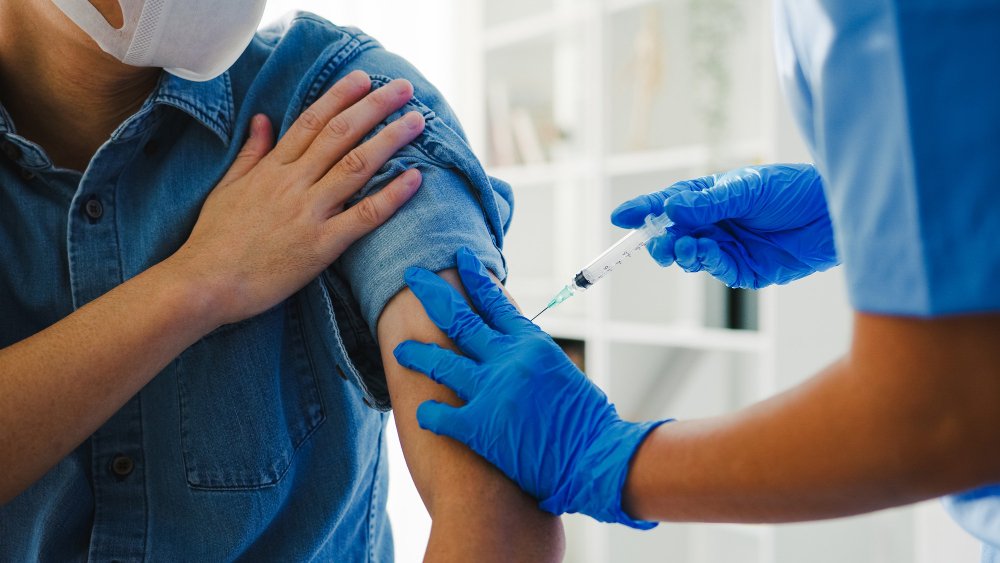
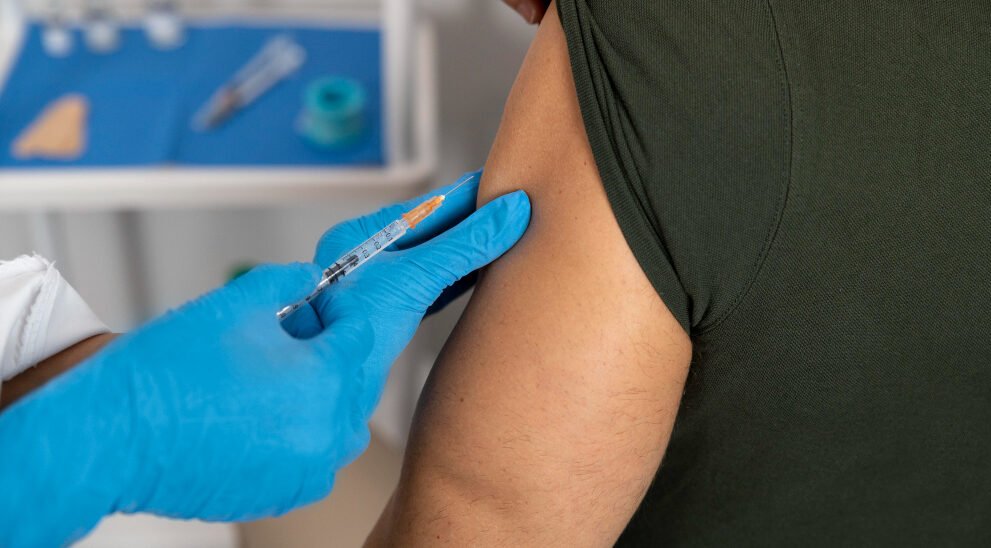
WHO guidance is similarly explicit. It states that IM rabies vaccines should be administered in the deltoid region (upper arm near the shoulder) in adults and in the anterolateral thigh (the front and outer part of the thigh) in small children, adding that the vaccine “should not be given in the gluteal region because of low absorption due to the presence of adipose (fat) tissue.” The CDC likewise recommends the deltoid area for adults and the deltoid or anterolateral thigh for children and states, “Do not administer vaccines in the buttocks or gluteal area.”
What do the experts say
Dr Swati Rajagopal, Senior Consultant, Infectious Disease & Travel Medicine, Aster CMI Hospital, Bangalore, agreed with the viral claim.
“Rabies vaccines should generally not be administered in the buttocks,” she said. “For adults and older children, the vaccine is usually given into the muscle of the upper arm, while the outer part of the thigh may be used for infants and very young children.”
She added that the exact site can depend on the recipient’s age and the type of vaccine being used.
Dr Rajagopal also stressed the importance of receiving rabies vaccination promptly after an animal bite or scratch and having it administered by a trained healthcare professional, according to the recommended schedule.
If a vaccine has accidentally been administered in the buttocks, she advised patients to inform their treating doctor or healthcare provider as soon as possible. “A dose given at an incorrect site may not provide the expected level of protection because vaccine absorption can be affected,” she said.
She explained that depending on the vaccine, route of administration and applicable guidelines, a healthcare professional may recommend repeating the affected dose and continuing the remaining vaccination schedule.
“It is important not to stop or restart the entire course on your own,” Dr Rajagopal said. “Anyone who has received a rabies vaccine at an incorrect site should seek medical advice promptly so that the vaccination can be reviewed and appropriate steps taken.”
Also read: Abhayrab rabies vaccine batch flagged over potency concerns: What patients should do
(Do you have a health-related claim that you would like us to fact-check? Send it to us, and we will fact-check it for you! You can send it on WhatsApp at +91-9311223141, mail us at hello@firstcheck.in, or click here to submit it online)