

Author
Men in northeastern India bear a higher cancer burden than women, with tobacco-related cancers and cancers of the upper aerodigestive tract accounting for a substantial share of diagnoses across the region, according to the latest ICMR-NINE report. The disparity is particularly pronounced in Tripura, where tobacco-related cancers account for 67.2% of all adult male cancer cases, while Assam has the highest projected number of new adult cancer cases in the Northeast in 2026.
The report, which has published comprehensive cancer factsheets for 23 states, highlights regional disparities in cancer patterns and the disproportionate burden borne by men in the Northeast. Tobacco-related cancers (TRCs) and cancers of the upper aerodigestive tract account for a substantial share of diagnoses across the region.
In Tripura, tobacco-related cancers account for 67.2% of all adult male cancer cases, compared with 46.2% among females. The state also has a higher cumulative risk of developing cancer between the ages of 0 and 74 among males, at one in 10, compared with one in 14 among females.
Tobacco-related cancers drive male burden
According to the ICMR-NINE projections, Tripura is expected to record 1,947 new adult cancer cases among males in 2026, rising to 2,055 by 2030.
Lung cancer is the leading cancer site among men in the state, accounting for 19.5% of cases, followed by cancers of the oral cavity at 14.5%, the larynx at 8.2% and the gallbladder at 6%.
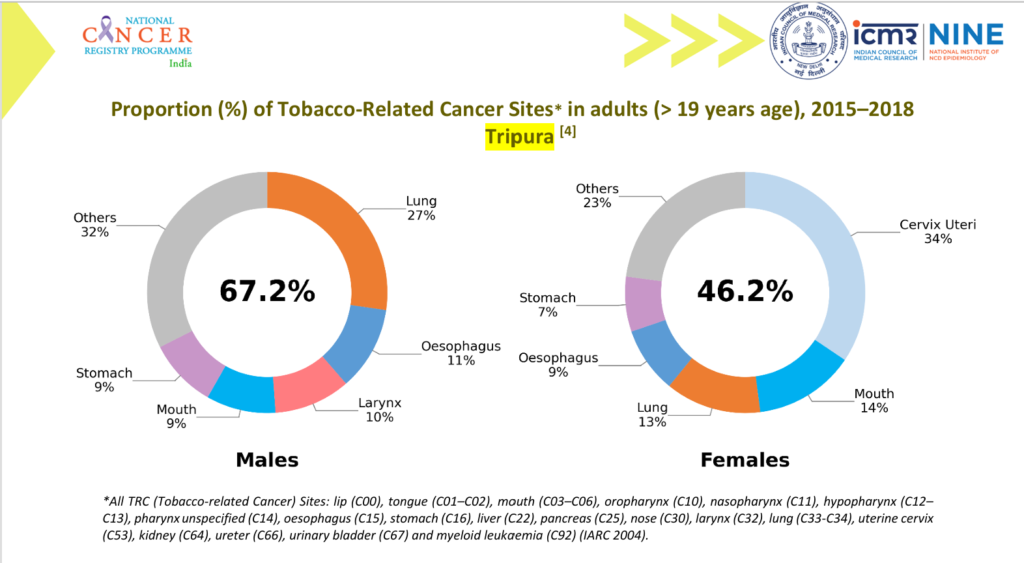
The findings highlight the significant contribution of tobacco-related cancers to the male cancer burden in Tripura and underscore the need for stronger tobacco-control measures, early detection and accessible diagnostic services across the northeastern states.
This male-skewed trajectory is reflected across other North Eastern states:
- Assam: Assam carries the largest overall cancer load in the region. The state profile projects 51,734 new adult cancer cases in 2026, with males accounting for 28,141 cases compared to 23,593 females. By 2030, adult cases in Assam are expected to hit 53,399. The top cancer sites among men are the oral cavity (16.9%), hypopharynx (14.9%), and oesophagus (14.6%). In Kamrup Urban district, the cumulative risk reaches an extraordinary 1 in 4 men.
- Meghalaya: Linked to widespread tobacco and betel nut consumption, Meghalaya is projected to record 3,109 adult cases in 2026, rising to 3,206 by 2030. The East Khasi Hills district continues to register exceptionally high rates of esophageal and upper aerodigestive tract cancers among adult males.
- Mizoram, Nagaland & Sikkim: Mizoram maintains some of the highest age-standardised cancer incidence rates in the country, with men suffering heavily from stomach, lung, and nasopharyngeal cancers. Stomach and nasopharyngeal malignancies similarly dominate male cancer profiles in Nagaland and Sikkim.
Childhood cancers (ages 0–19) also demonstrate a subtle male skew in regional projections. For instance, Tripura’s 2026 estimates project 37 cases among boys compared to 27 among girls, with lymphoid leukaemia remaining the leading childhood malignancy across the region.
Late-stage diagnosis and low screening rates compound the regional crisis
While high incidence rates highlight lifestyle-driven disease risks, the ICMR-NINE report points to an equally severe systemic bottleneck: minimal screening coverage and late clinical stage presentation.
Across almost all North Eastern states, cancer screening coverage among adults aged 30–49 remains exceptionally low, ranging between 0.2% and 0.7%.
A 2026 study points out that cancer care in the Northeast is hindered by financial hardship, low health literacy, inadequate healthcare infrastructure, transport difficulties, limited insurance coverage, stigma and geographical barriers. These factors can contribute to delays in screening, diagnosis and treatment, particularly for people living in remote and underserved areas.
In Tripura, for example, 77% of male oral cavity cancer patients present at a locoregional stage at the time of diagnosis.
Expert insight: Why is the burden higher?
Dr Ashwin K R, HOD, Department of Surgical Oncology, Aster Whitefield Hospital, said the higher cancer burden among men in some Northeastern states could be linked to a combination of social, behavioural and environmental factors. Smoking, alcohol consumption, areca nut use and certain occupational or environmental exposures may all contribute.
“There is considerable heterogeneity in cancer profiles across different states, and therefore, it would not be justified to consider Northeastern states as a homogeneous population group,” he said. In Assam, for instance, ICMR-NINE’s 2026 projections show more cancer cases among males than females, with cancers of the oral cavity, hypopharynx and oesophagus among those common in men.
Dr Ashwin said tobacco and areca nut exposure are particularly important because of their association with cancers of the mouth, throat and upper aerodigestive tract. Alcohol consumption can further compound the risk, particularly when combined with tobacco use.
He also pointed to gaps in awareness, screening and healthcare infrastructure as barriers to early detection. People may not recognise early symptoms or know where screening services are available, while fear, stigma and financial constraints can delay care.
“Screening cannot take place only on paper,” he said, adding that people need to know about screening, understand its importance even without symptoms and be able to access services affordably.
“Geographical barriers can further complicate cancer care in remote and mountainous areas, where patients may have to travel long distances for diagnosis and treatment. The financial burden can extend beyond medical expenses to transport, accommodation, food and lost earnings,” he added.
Dr Ashwin said cancer control in the Northeast should therefore extend beyond tertiary hospitals, with greater involvement of primary healthcare centres, mobile clinics and community health workers. These services can help improve awareness, identify warning signs and facilitate referrals.
He also emphasised that tobacco and areca nut cessation should be integrated into cancer prevention efforts, while telemedicine could help connect remote centres with specialists.
“Screening will make no sense without timely diagnosis and treatment,” he said, stressing that diagnostic and oncology services also need to be strengthened.
Also read: Can 30 minutes of exercise really keep 13 cancers at bay?
(Do you have a health-related claim that you would like us to fact-check? Send it to us, and we will fact-check it for you! You can send it on WhatsApp at +91-9311223141, mail us at hello@firstcheck.in, or click here to submit it online)