
Author
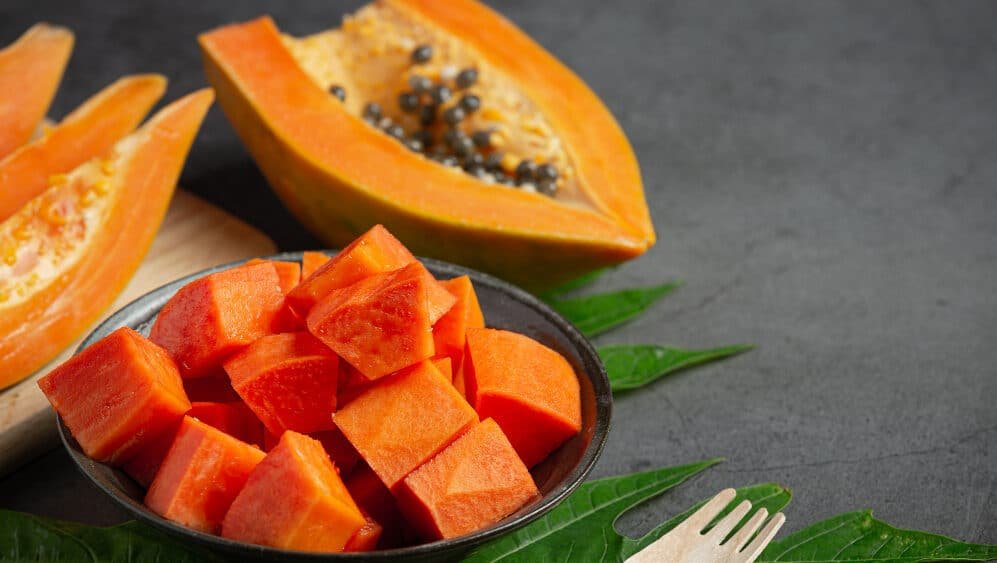
CLAIM: Ripe papaya is safe during pregnancy, while raw or unripe papaya should be avoided because it contains latex.
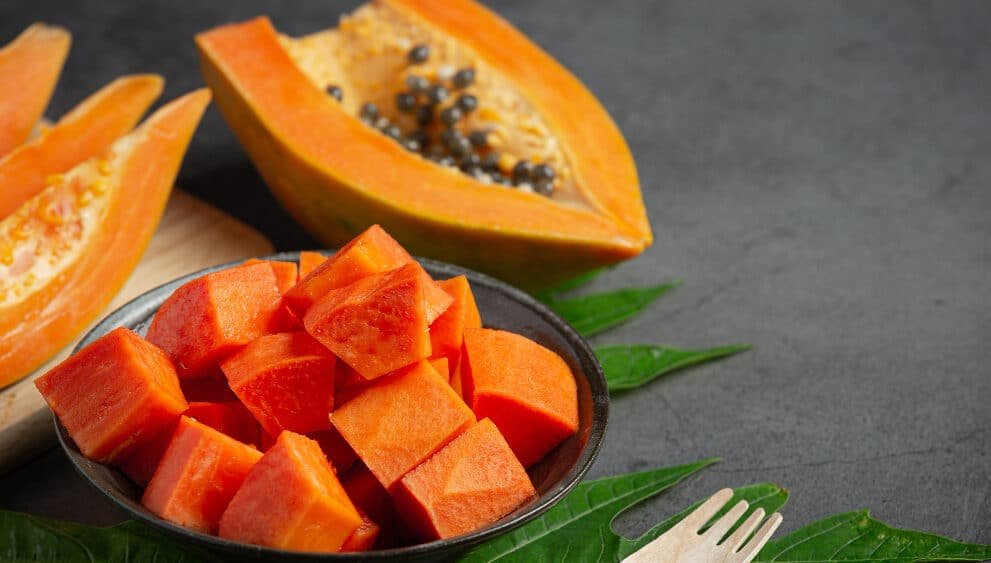
FACT: It is too broad to say that papaya is unsafe during pregnancy. The concern mainly relates to raw or unripe papaya, which contains higher amounts of latex that has been shown to stimulate uterine contractions in laboratory and animal studies. Fully ripe papaya contains less latex and, when consumed in a normal portion, is generally considered a reasonable food choice during a healthy pregnancy, although direct evidence in pregnant women is limited. Ripe papaya may also help support regular bowel movements because it contains dietary fibre and water.
Pregnancy comes with a myriad of suggestions, questions and doubts, especially when it comes to what women should eat and what they should avoid. From fruits and vegetables to everyday foods, several pregnancy-related food myths continue to circulate, often leaving expectant mothers unsure about what is actually safe to consume.
In a viral Instagram reel posted by nutritionist Shweta Shah, who has around 5.37 lakh followers on Instagram, featuring actress Karishma K Tanna, who has around 13.2 million followers, the two discuss common questions around foods that are considered safe during pregnancy, including whether papaya should be avoided.
The reel, which has garnered around 2.48 lakh views, features Tanna asking Shah about foods that are safe to consume throughout pregnancy. She specifically asks, “Is papaya unsafe to have in pregnancy?”
Shah responds that papaya is not unsafe during pregnancy and calls the belief a myth. She explains that the concern has historically been associated with raw or unripe papaya, which contains latex.
“Papaya is not unsafe. It is really very safe. It’s a myth,” Shah says.
She then explains that raw papaya contains latex, which she says can cause uterine contractions, and that this is why it is traditionally avoided during pregnancy. According to Shah, as the fruit ripens, the amount of latex decreases, making ripe papaya safe to consume.
“Basically what happens is that raw papaya has a liquid called latex which contracts your uterus and so the complications. So we avoid raw papaya. But as the papaya ripens, the latex goes down completely,” she says.
Shah also encourages pregnant women to eat ripe papaya, pointing to its beta-carotene content and suggesting it may help with constipation.
“In fact, it gives you better beta carotenoids. So if you have a constipation problem, you should definitely eat papaya,” she says.
Should pregnant women avoid papaya?
The evidence on papaya and pregnancy is more nuanced than simply saying that the fruit is safe or unsafe. Much of the concern has stemmed from research on unripe or semi-ripe papaya and papaya latex, rather than ripe papaya.
An older animal study investigated the effects of different components of Carica papaya on adult cycling and pregnant rats. The researchers reported that unripe papaya affected the oestrous cycle and induced abortions in the animals, while the abortifacient effect appeared to diminish as the fruit ripened.
The study stated, “The abortifacient property seems to decrease as the fruit becomes stale or ripe.” The researchers also found that progesterone partially counteracted the adverse effects on pregnancy. However, because the study was conducted in rats, its findings cannot be directly applied to pregnant women.
A 2002 study looked more specifically at the difference between ripe papaya and crude papaya latex. Researchers gave pregnant rats ripe papaya preparations at different stages of gestation and found no significant difference in the number of implantation sites or viable fetuses compared with the control group. They also reported no signs of fetal or maternal toxicity.
The researchers then tested ripe papaya juice and crude papaya latex on isolated uterine tissue from pregnant and non-pregnant rats. While ripe papaya juice did not produce a significant contractile effect, crude papaya latex caused marked spasmodic contractions.
The researchers reported that “ripe papaya juice (0.1-0.8 ml) did not show any significant contractile effect on uterine smooth muscles”, whereas “crude papaya latex (0.1-3.2 mg/ml) induced spasmodic contraction of the uterine muscles.”
Based on these findings, the researchers concluded that “normal consumption of ripe papaya during pregnancy may not pose any significant danger.” At the same time, they cautioned that unripe or semi-ripe papaya, which contains a higher concentration of latex, could potentially be unsafe during pregnancy. Importantly, they also noted that further studies would be required to determine the risk in humans.
What experts say?
Dr Chetana V, Sr. Consultant – Obstetrics & Gynaecology, Aster CMI Hospital, Bengaluru, said it would be too broad to describe the belief that papaya is unsafe during pregnancy as simply a myth.
According to her, the concern primarily relates to raw or unripe papaya, which contains higher amounts of latex and other compounds that may affect the uterus. Fully ripe papaya, she said, is different and is generally considered less concerning when consumed as a normal food portion.
“Scientific evidence specifically studying papaya consumption in pregnant women is limited. Therefore, it is better not to make an absolute statement that all papaya is either safe or unsafe,” Chetana said.
She explained that laboratory and animal studies have shown that concentrated papaya latex can stimulate uterine contractions, but cautioned against directly applying these findings to normal food consumption in humans.
“These findings do not necessarily mean that eating a normal amount of raw papaya will cause contractions or pregnancy complications in humans. The amount and form of latex used in such experiments can be very different from what a person consumes as food,” she said.
Since there is limited evidence in pregnant women, Chetana said it is difficult to determine exactly how much raw or unripe papaya could pose a risk. As a precaution, she recommends avoiding raw or unripe papaya during pregnancy rather than taking an unnecessary risk.
“There is a clear difference between unripe and fully ripe papaya, particularly in their latex content. As papaya ripens, the amount of latex generally decreases, which is one reason fully ripe papaya is considered less concerning,” she said.
However, she cautioned against interpreting this as proof that ripe papaya is definitively safe for every pregnant woman. Individual pregnancy conditions and dietary needs can vary.
“For a healthy pregnancy, a normal portion of fully ripe papaya is generally considered a reasonable food choice, while raw or semi-ripe papaya is better avoided as a precaution,” Chetana said. “The important point is not to create unnecessary fear around ripe papaya, but also not to make an absolute safety claim without sufficient evidence in pregnant women.”
On the reel’s claim that papaya can help with constipation, Chetana said ripe papaya can be part of a healthy pregnancy diet and may support regular bowel movements because it contains dietary fibre and water.
“Constipation is common during pregnancy, and increasing fibre intake along with adequate fluids can help improve bowel regularity,” she said.
However, she cautioned that there is not enough evidence to suggest papaya has a unique or significantly greater effect on constipation than other fibre-rich fruits. Its potential benefit, she explained, is mainly related to its overall nutritional content, including fibre.
“Pregnant women can consider ripe papaya as one of several fruit options rather than treating it as a specific remedy for constipation,” Chetana said. She added that persistent, painful or severe constipation should be discussed with a doctor rather than managed only through dietary changes.
Also read: FACT CHECK: Does papaya help reduce bloating?