Author
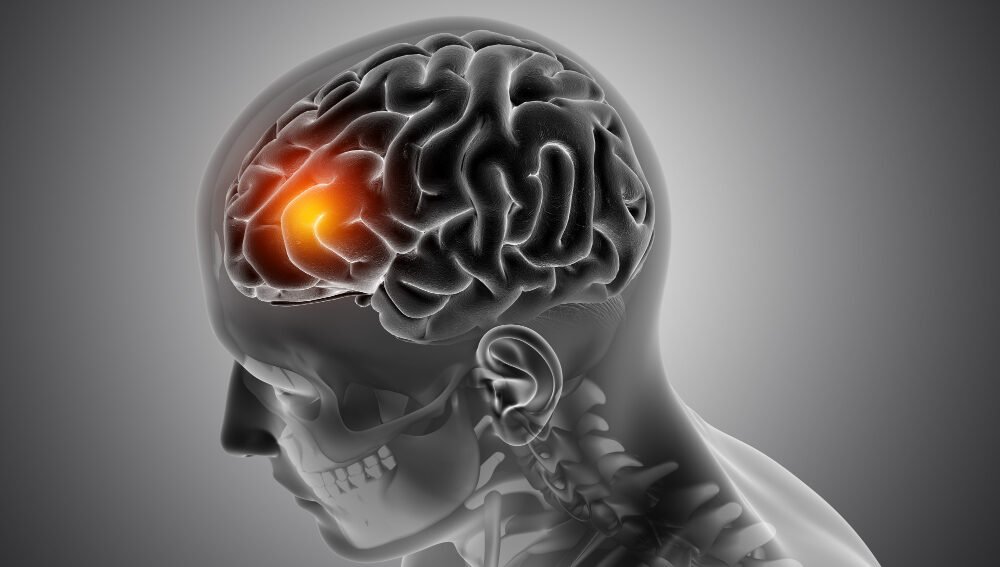
More than 3 billion people worldwide are living with a neurological condition, and fewer than one in three countries has a national policy to deal with the problem, according to the World Health Organisation’s first Global Status Report on Neurology, released in October 2025.
The report estimates that in 2021, neurological disorders affected close to 3.4 billion people, or 42% of the world’s population, and were responsible for over 11 million deaths that year.
These conditions are now the leading cause of ill health and disability combined, ahead of both cancer and heart disease when measured by years of healthy life lost.
The ten conditions contributing most to this burden were stroke, neonatal encephalopathy, migraine, Alzheimer’s disease and other dementias, diabetic neuropathy, meningitis, idiopathic epilepsy, complications linked to preterm birth, autism spectrum disorders and cancers of the nervous system.
The burden is not evenly spread!
More than 80% of the disability-adjusted life years lost to neurological disorders occur in low- and middle-income countries, where diagnosis, treatment and rehabilitation services remain limited.
WHO Assistant Director-General Jeremy Farrar said, “Many of these neurological conditions can be prevented or effectively treated, yet services remain out of reach for most – especially in rural and underserved areas – where people too often face stigma, social exclusion and financial hardship. We must work together to ensure we put patients and their families first and that brain health is prioritized and properly invested in.”
The workforce gap
A central reason for the treatment shortfall is the shortage of specialists. According to survey data collected for the WHO report, the median number of neurologists across 70 reporting countries was 0.94 per 100,000 population.
High-income countries reported a median neurologist density 2.3 times that of upper-middle-income countries, nearly 18 times that of lower-middle-income countries, and more than 80 times that of low-income countries.
The regional gap is starker still.
Countries in the WHO European Region reported a median of 8.63 neurologists per 100,000 population, a rate 227 times higher than in the African Region and 47 times higher than in the South-East Asia Region.
In practical terms, low-income countries had, on average, one neurologist for every 2.5 million people, compared with one neurologist for every 17,800 people in high-income countries. Availability of child neurologists was even lower, at roughly one per million people globally.
Epilepsy and the treatment gap
Epilepsy illustrates how workforce shortages translate into unmet need. The WHO report noted that although 70% of people with epilepsy could achieve adequate seizure control with proper treatment, global median epilepsy service coverage stood at just 49 %in 2022. In low-income countries, the treatment gap, the share of people who need treatment but do not get it, can exceed 75%.
A systematic review of the worldwide epilepsy treatment gap (ETG), published in the journal Epilepsia in 2022 by researchers from the International League Against Epilepsy, examined data from 45 population groups across 33 countries. It found treatment gaps ranging from 5.6% in Norway to 100% in parts of Tibet, Togo and Uganda.
The review noted, “For the ETG to be a useful metric to compare levels of unmet epilepsy care across different countries and regions, a standardized definition must be adapted, recognizing some of the limitations of the current definitions. Our proposed definition takes into account the lack of effective health care insurance, the diagnostic gap, the therapeutic gap, quality-of-care, and other unmet health care needs.”
Barriers to medicines
A separate WHO report, Improving Access to Medicines for Neurological Disorders, published in July 2024, examined why treatments that exist often do not reach patients.
Using epilepsy and Parkinson’s disease as reference conditions, the report identified poor health financing and high out-of-pocket drug costs, low public awareness, inadequate healthcare infrastructure, insufficient provider training, and regulatory hurdles in the selection of essential medicines at the national level. It noted that the epilepsy treatment gap can reach 90 %in low-income countries, meaning nine out of ten people with epilepsy receive no care at all.
The report also pointed to steps taken by some countries. Ghana updated its national essential medicines list to include treatment guidance for epilepsy and Parkinson’s disease. The United Republic of Tanzania set up a national coordination committee for neurological disorders and added related medicines to its national health insurance package in 2024.
The India context
India faces many of the same pressures.
A 2021 study published in the Annals of Indian Academy of Neurology, marking World Brain Day, noted that the burden of mental, neurological and substance use disorders in India rose by 44% between 1990 and 2013, a faster increase than in most other Asian countries, and was projected to grow a further 23% by 2025. Neurological disorders were found responsible for 9 million deaths and 276 million disability-adjusted life years in India, making them the country’s leading cause of disability.
The paper also pointed to a widening stroke burden. While stroke incidence and mortality declined by 30 to 40% since the 1990s in high-income countries, incidence and prevalence rates in India doubled over the same period, with high case fatality.
India recorded about 1.5 million new stroke cases in 2010, at an annual incidence rate of 145 per 100,000 population. The study noted that time-sensitive treatments such as thrombolysis and thrombectomy remain available only at a limited number of centres, and that acute stroke care in private hospitals involves high out-of-pocket costs.
A global action plan
WHO Member States adopted the Intersectoral Global Action Plan on Epilepsy and Other Neurological Disorders in 2022, setting ten targets to be met by 2031, including bringing neurological disorders into universal health coverage packages and improving access to essential medicines and technologies.
According to the WHO status report, only 32% of countries currently have a national policy addressing neurological disorders, and just 18% report dedicated funding for the purpose.
The report described the scale of the shortfall in stark terms, stating that survey data “indicate a dearth of neurological workforce in many parts of the world.”
For patients such as Valentina Kahn of Chile, who is quoted in the report describing her own recovery from childhood epilepsy, timely access to a neurologist meant she “was seizure-free by the age of 18.”
WHO says closing that gap for the rest of the world will require sustained investment in health workers, medicines and national policy over the next five years.
Also read: FACT CHECK: Do daytime naps really give you a bigger brain?
Do you have a health-related claim that you would like us to fact-check? Send it to us, and we will fact-check it for you! You can send it on WhatsApp at +91-9311223141, mail us at hello@firstcheck.in, or click here to submit it online.