Author
CLAIM: An Instagram post claims phones emit radio frequency (RF) energy that increases brain cancer/tumour risk and lowers sperm counts, especially when kept near the head or on the bed while sleeping. It advises keeping phones off the bed.
FACT: False. Large-scale research has consistently found no link between mobile phone use and brain cancer. A long-term Canadian study tracking cancer registry data found glioma rates remained stable for over two decades despite a sharp rise in phone subscriptions. Separately, a global review of decades of research across dozens of countries found no increased risk of brain tumours linked to mobile or cordless phone use, even with heavy or long-term exposure. Experts note that phone radiation lacks the energy to damage DNA, unlike X-rays or gamma rays, and suggest that keeping phones away from the bed and on silent mode can help improve sleep quality.
Have you ever considered that your phone, the device you can’t imagine parting with even briefly, might actually be harmful to you?
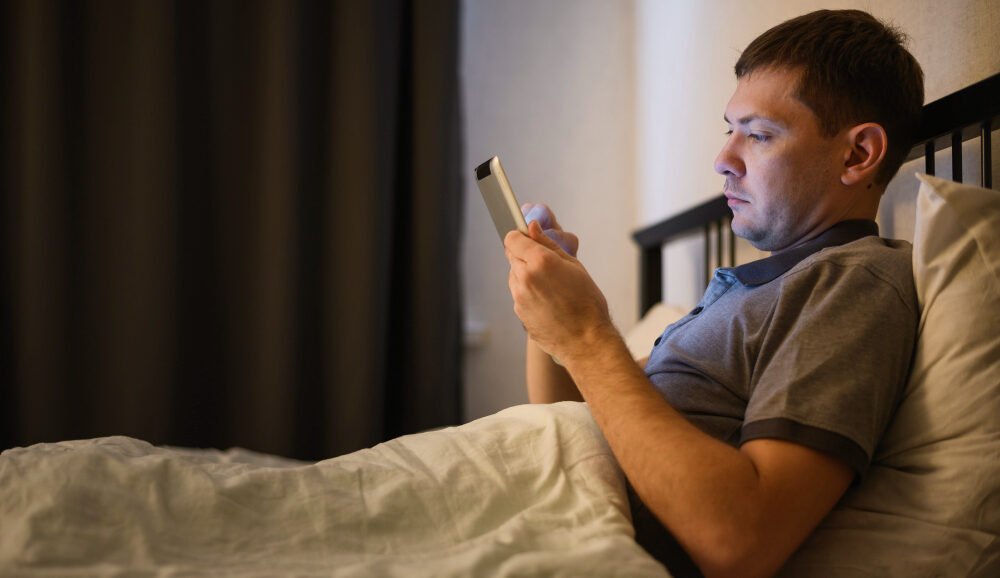
An Instagram post claims that sleeping with your phone on the bed or near your head could raise the risk of brain cancer. It states that phones emit radio frequency energy, which increases cancer and tumour risk. The post also claims radio frequency energy has been linked to lower sperm counts.
It advises keeping the phone away from the bed while sleeping. “Take a break from the screen and keep it off the bed!” the post states.
What do studies say?
A 2021 study published in Environmental Research offers evidence against the claim that mobile phones cause brain cancer. The study examined Canadian cancer registry data between 1992 and 2015, a period when cell phone subscriptions rose from almost none to nearly 29.5 million.
If mobile phones truly raised brain cancer risk, glioma (a type of brain tumour) cases should have climbed sharply alongside phone use. Instead, the study found that “age standardized incidence rates for glioma in Canada were relatively stable between 1992 and 2015.”
The study also tested predictions based on earlier, widely cited research linking phone use to cancer, including the large INTERPHONE study, and found these overestimated actual glioma cases by 50% to 86%.
The study concluded that these findings suggest “there may not be a causal link between cellphones and glioma.”
A 2024 systematic review published in Environment International, commissioned by the World Health Organisation, examined decades of human studies on mobile phone radiation and cancer risk. The review covered 63 studies from 22 countries, published between 1994 and 2022.
“RF-EMF exposure from mobile phones (ever or regular use vs no or non-regular use) was not associated with an increased risk of glioma, meningioma, acoustic neuroma, pituitary tumours, salivary gland tumours, or paediatric (children, adolescents and young adults) brain tumours, with variable degree of across-study heterogeneity,” the review found.
“There was no observable increase in mRRs (meta-estimate of the relative risk) for the most investigated neoplasms (glioma, meningioma, and acoustic neuroma) with increasing time since start (TSS) use of mobile phones, cumulative call time (CCT), or cumulative number of calls (CNC). Cordless phone use was not significantly associated with risks of glioma, meningioma, or acoustic neuroma,” it added.
The review also examined long-term exposure and workplace exposure and found no meaningful increase in brain cancer or blood cancer risk in either case. Researchers rated the evidence as offering moderate to low certainty that mobile and cordless phone use likely does not raise cancer risk.
What are experts saying?
Dr Amit Chakraborty, Head and Neck Onco Surgeon at SSO Hospital, Mumbai, said there is currently no clear scientific evidence that mobile phone use causes brain cancer or reduces sperm count. He said the concerns circulating online often conflate the low-energy radio waves emitted by mobile phones with the much higher-energy radiation known to damage DNA.
“Based on the research available today, there is no clear evidence that the radio waves (RF energy) from mobile phones cause brain cancer. Many studies have looked into this over the years, and most have not found a direct link between normal mobile phone use and brain tumours. More research is still ongoing, but at present, no proof exists that using a mobile phone causes brain cancer.”
Explaining the difference between mobile phone radiation and established cancer-causing forms of radiation, Dr Chakraborty said, “Phones give off low-energy radio waves, which do not have enough power to damage DNA. On the other hand, radiation such as X-rays and gamma rays has much higher energy and can damage cells, which may increase the risk of cancer.”
He also rejected claims that keeping a mobile phone close to the body or sleeping with it nearby lowers sperm count. “There is no strong scientific proof that keeping a phone on the bed or close to the body lowers sperm count. A few small studies have suggested a possible effect, but larger studies have not confirmed this.”
According to Dr Chakraborty, factors such as lifestyle and overall health are more significant concerns for male fertility. “Smoking, obesity, poor diet, stress, lack of sleep, and certain medical conditions have a much bigger impact on male fertility.”
While he found no evidence linking a phone kept near the head during sleep to brain cancer, Dr Chakraborty said there is a more established reason to keep devices away from the bed: they can interfere with sleep.
“There is no evidence that sleeping with your phone near your head causes brain cancer. However, it can affect your sleep quality. Notifications, sounds, vibrations, and the screen’s blue light can disturb your sleep,” he said.
He advised people to “keep your phone on silent or Do Not Disturb mode and place it a little away from your bed to help you sleep better.”
Do you have a health-related claim that you would like us to fact-check? Send it to us, and we will fact-check it for you! You can send it on WhatsApp at +91-9311223141, mail us at hello@firstcheck.in, or click here to submit it online.