Author
A new nationwide study of Indian schoolchildren has found that goitre, a condition where the thyroid gland swells up in the neck, has dropped sharply over the last two decades. But the same study also found that thyroid autoimmunity, where the body’s immune system mistakenly attacks its own thyroid gland, has more than doubled in the same period.
The study, published in The Lancet Regional Health – Southeast Asia, examines the impact of India’s salt iodisation programme, under which iodine is added to table salt to prevent iodine deficiency disorders. Iodine is a nutrient the body needs to make thyroid hormones, which help control growth, brain development and metabolism.
India began iodising salt on a large scale in 1986 under a government programme now called the National Iodine Deficiency Disorders Control Program. Without enough iodine, the thyroid gland can swell up, a condition called goitre, and can also stop working properly.
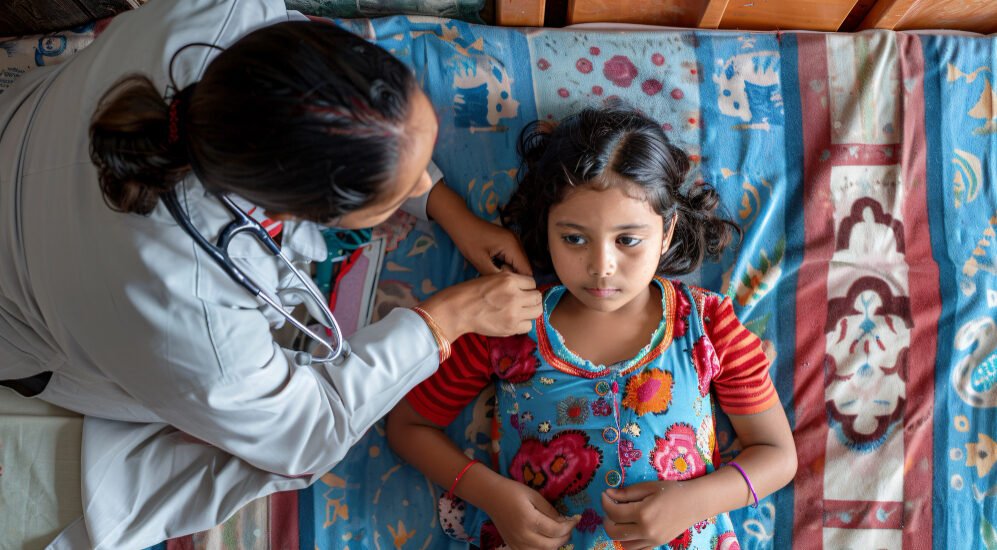
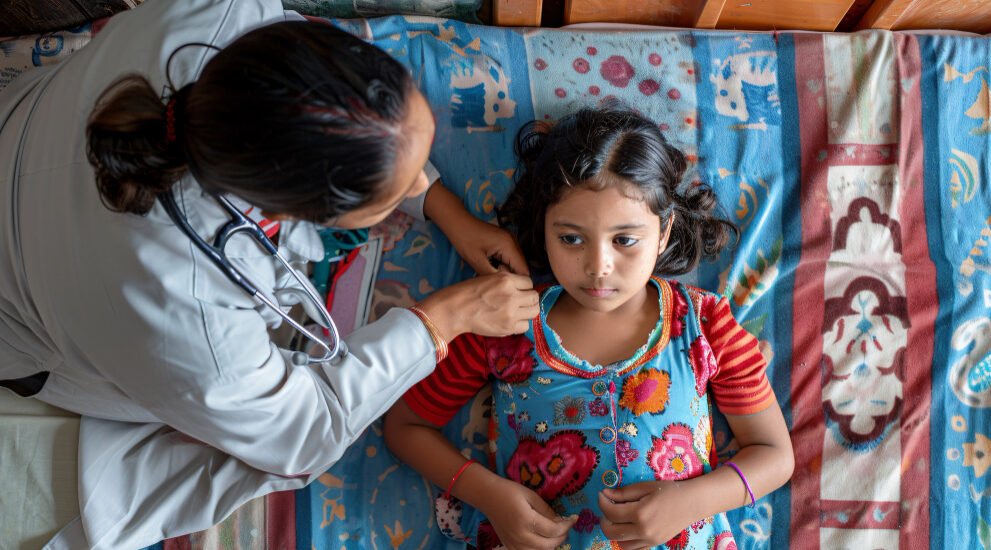
For the new study, researchers examined 8,903 schoolchildren aged 10 to 18 years from eight regions across India between January 2024 and December 2025. The children were checked for goitre through physical examination. Blood and urine samples were also collected from many of the children to check thyroid hormone levels, thyroid antibodies, and iodine levels in urine.
The study found that goitre prevalence, meaning how common the condition was in the group studied, stood at 10.3 percent. This is a steep fall from 23.5 percent recorded in a similar survey in 2003 and 17.6 percent recorded in 2012. Almost all the goitre cases found, 98.6 percent, were mild, classified as Grade I under World Health Organization criteria.
“Goitre prevalence in India is showing a steady decline,” the study noted. An earlier gap in goitre rates between children from poorer and wealthier backgrounds, seen in previous surveys, was no longer present in this study.
Urinary iodine concentration, a measure of how much iodine a person has recently consumed based on their urine, was found to be adequate. The median level was 133.2 micrograms per litre, within the range the World Health Organization considers sufficient.
More than 90 percent of surveyed households reported using iodised salt, and 89 percent of salt samples tested had iodine content above the minimum recommended level of 15 parts per million.
Girls were found to be at higher risk than boys for both goitre and thyroid autoimmunity. Female children had roughly twice the odds of developing goitre and testing positive for anti-TPO antibodies -antibodies that mistakenly attack the thyroid gland.-compared to male children, based on the study’s analysis. Children who were overweight or classified as obese also showed higher odds of goitre and hypothyroidism.
The study did not find any rise in hyperthyroidism, a condition where the thyroid gland is overactive, across the study period.
The researchers noted that because it is a cross-sectional study, meaning it captured a snapshot of the children’s health at one point in time rather than tracking them over years, it cannot establish whether iodine intake directly causes the rise in thyroid autoimmunity or hypothyroidism.
The study also pointed out some limitations, including that goitre was assessed through physical examination alone, without the use of ultrasound scans, since field conditions did not permit this. Blood samples for thyroid function and antibody testing were also not available for all children who took part in the study.
More than iodine at play
Doctors treating children in clinical settings say the trend highlighted by the study is not unfamiliar to them, though they urged caution before drawing sweeping conclusions from it.
Dr Mahesh D M, senior consultant, endocrinology, at Aster CMI Hospital, Bangalore, said that in his own clinical practice, doctors are increasingly identifying children with thyroid antibodies, mild thyroid function abnormalities and autoimmune thyroiditis.
However, he was quick to add a caveat. “Individual clinical experience should not be considered proof of a nationwide increase because awareness, screening and access to thyroid testing have also improved considerably,” he explained, noting that children are now being evaluated more frequently due to family history, growth concerns, weight issues or thyroid tests that turned up abnormal by chance.
Dr Mahesh further stressed that a positive antibody test is not, by itself, a red flag. “The important point is that antibody positivity alone does not necessarily mean significant thyroid dysfunction,” he clarified.
He revealed that when assessing a child with suspected thyroid autoimmunity, he examines the complete clinical picture, including symptoms, growth pattern, thyroid examination, TSH, free T4 and thyroid antibodies, rather than relying on a single test result.
On why thyroid autoimmunity could be rising even when iodine levels remain adequate, Dr Mahesh pointed out that iodine status is only one part of a much larger picture. He explained that genetic susceptibility, family history of autoimmune disease, infections, environmental exposures and changes in immune regulation could all play a role.
“If autoimmunity is increasing despite adequate iodine levels, it suggests that other environmental, genetic and lifestyle factors may be contributing,” he remarked, adding that more research is needed to understand these interactions specifically in Indian children.
Also read: FACT CHECK: Iodine deficiency making a comeback due to trendy salt alternatives?
Do you have a health-related claim that you would like us to fact-check? Send it to us, and we will fact-check it for you! You can send it on WhatsApp at +91-9311223141, mail us at hello@firstcheck.in, or click here to submit it online.