
Author
India’s healthcare system serves over 1.4 billion people through a vast network of public and private providers. While the country has made significant strides in improving healthcare delivery, persistent challenges remain, including inadequate infrastructure, a shortage of healthcare professionals, urban-rural disparities, limited health insurance coverage, and a growing burden of non-communicable diseases. Bridging these gaps requires solutions that are not only scalable but also inclusive, particularly in a multilingual nation where language itself can become a barrier to healthcare.
Research also highlights the role of communication in improving healthcare delivery. A 2026 study examining healthcare communication in Karnataka found that language barriers disrupted communication between patients and healthcare providers, contributing to misdiagnosis, poor health literacy, increased treatment costs and delays in care, while also causing emotional distress for both patients and healthcare workers. It concluded that “interdisciplinary action and the use of modern clinical translation technology may mitigate linguistic barriers and increase access to quality healthcare and improved health literacy.”
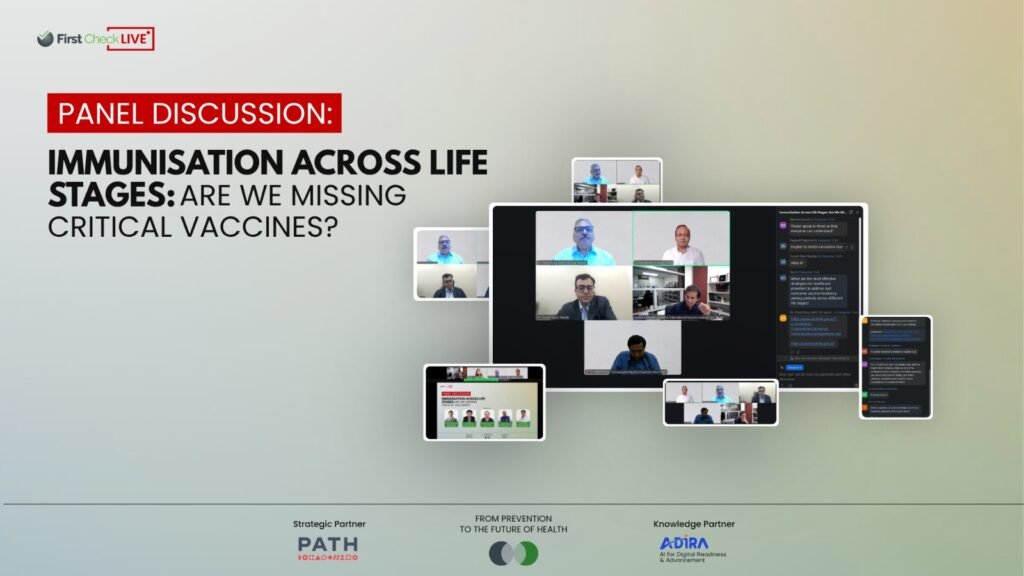
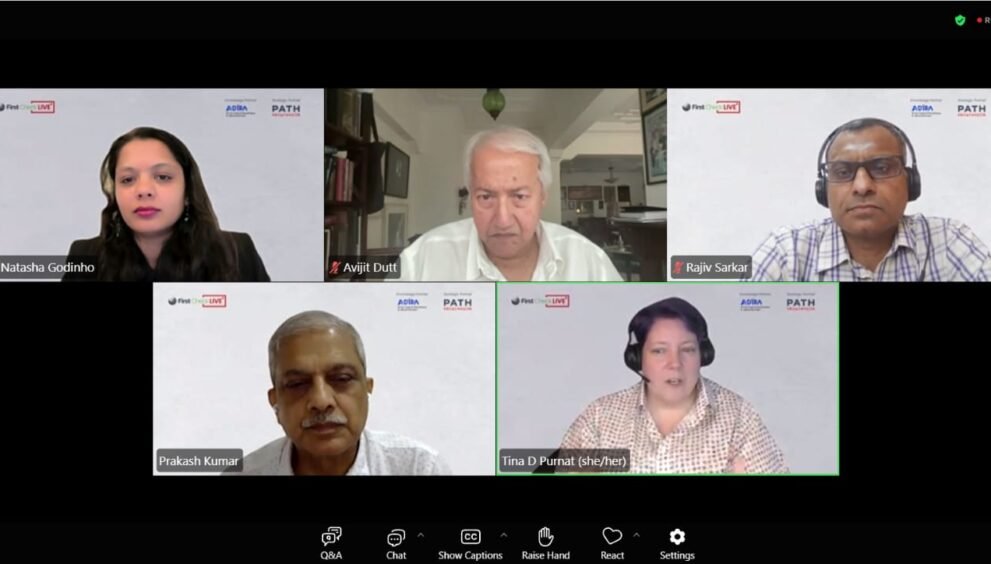
These issues took centre stage on Wednesday during First Check LIVE’s curtain-raiser panel discussion, ‘The Trust Audit: Health Information Pathways and the Future of Public Trust,’ moderated by Prakash Kumar, Independent Advisor – AI Strategy, Technology Governance, User-Centred Design, and Generative AI Systems.
The discussion brought together Natasha Godinho, Vice President, Global Health Strategies for Africa; Tina Purnat, Global Health Expert on Data, Policy, Technology and Social Determinants and Harvard DrPH candidate; Dr Rajiv Sarkar, Scientist-E at ICMR’s National Institute for Research in Digital Health (NIRDH); and actor, filmmaker and communication consultant Avijit Dutt. Together, the panel explored how AI, public health systems, fact-checking, community health workers, and trusted communication can work together to rebuild public confidence in health information.
Trust in health information is breaking down at multiple levels
Opening the discussion, moderator Prakash Kumar, Independent Advisor – AI Strategy, Technology Governance, User-Centred Design and Generative AI Systems, noted that healthcare has always depended on trust – trust in doctors, science, institutions, public health advice and the responsible use of personal data. However, the rapid expansion of information sources has fundamentally changed how people consume health information.
“Health information now reaches people through doctors, community workers, television, WhatsApp groups, social media, influencers, online search, AI tools and increasingly algorithm-driven platforms. People often have more information than ever before, but not necessarily more clarity,” Kumar said.
Responding to the question of where trust is breaking down, Dr Rajiv Sarkar, Scientist-E at the ICMR–National Institute for Research in Digital Health (NIRDH), argued that the trust deficit cannot be attributed to any single factor. Instead, he described it as a multi-layered problem shaped by scientific evidence, institutions, communication channels and the credibility of information sources.
“It comes down to the quality of the scientific evidence, the credibility of the institution producing it, and the reliability of the source sharing it. If any one of these layers becomes weak, it can result in a trust deficit,” Sarkar said. He added that people often forward WhatsApp messages without checking their origin, making source verification increasingly important.
Why does misinformation spread faster than facts?
Natasha Godinho, Vice President, Global Health Strategies for Africa, described today’s information landscape as a “misinformation paradox”, where trust in science continues to coexist with the rapid spread of misinformation.
She explained that rumours shared by relatives, neighbours and community groups often carry greater influence than official corrections because they come through familiar and trusted relationships. In rural areas, where access to healthcare is often limited, this dependence on informal sources becomes even stronger, with many people turning to WhatsApp, YouTube and influencers for health advice.
“Reliable information isn’t reaching people through the channels they already trust,” Godinho said. “To close the trust deficit, we need message credibility, message accuracy and message reach.”
Offering a broader public health perspective, Tina Purnat, Global Health Expert on Data, Policy, Technology and Social Determinants and Harvard DrPH candidate, said trust in health information depends not only on facts but also on who delivers them.
“People trust those who are close to them or share their identity. That’s why a wellness influencer can sometimes be more persuasive than a Ministry of Health website,” she said, adding that different people recognise different forms of authority in healthcare.
Can AI become a trusted health partner?
The panel agreed that artificial intelligence should complement healthcare professionals rather than replace them.
Illustrating the changing relationship between technology and healthcare, actor, filmmaker and communication consultant Avijit Dutt shared an anecdote about a sign outside a doctor’s clinic that read, “Please leave your phone outside. There’s no internet inside.” The remark, he said, captures how instinctively people now turn to Google, ChatGPT and social media before consulting a doctor. Yet, when faced with serious illness, they continue to place their trust in medical professionals.
“AI is never going to replace the medical profession. It is only going to augment its efficacy,” Dutt said.
He argued that AI could significantly reduce the burden on frontline healthcare workers, particularly Accredited Social Health Activists (ASHAs), by digitising record-keeping, generating reminders, organising patient information and supporting telemedicine in underserved areas. He also highlighted AI’s potential to analyse health data, identify disease hotspots and improve access to primary healthcare in rural India.
Adding to this, Purnat stressed that community health workers should remain at the centre of digital health systems. She suggested routinely “asking patients where they obtain health information, identifying those who may be vulnerable to misinformation, and ensuring health workers have the tools and support needed to guide them effectively.”
Building trustworthy AI
Discussing AI governance, Dr Sarkar cautioned that there can be no universal benchmark for trustworthiness. Instead, the level of scrutiny should depend on the risk associated with the AI application.
He explained that while informational tools may simply require factual accuracy, AI systems used for diagnosis must undergo rigorous testing for sensitivity, specificity, accuracy and performance across different settings and languages.
Beyond technical performance, Sarkar said trustworthy AI must also comply with legal frameworks, follow ethical principles and remain transparent about the data used to train models.
“We need to know where the data comes from, whether it represents the population the tool is meant to serve, whether there are algorithmic biases, and where the system may fail,” he said. He added that human oversight remains essential throughout development and deployment, with continuous monitoring to ensure AI systems remain safe and reliable over time.
How do we rebuild public trust?
Looking ahead, Godinho argued that AI should improve understanding rather than simply accelerate the delivery of information. She cautioned against creating systems that prioritise speed over comprehension.
“AI can explain complex health information in simpler language, help people understand risk and uncertainty, and make health information more accessible,” she said.
Godinho also stressed that behaviour change depends on trust rather than facts alone. Drawing lessons from vaccine communication, she said empathy, storytelling and trusted human relationships remain indispensable. In India, she suggested, the most effective model would be “AI behind a trusted human”, where technologies support ASHA workers instead of replacing them.
She also called for a shift from reacting to misinformation to anticipating it. “You need to pre-bunk before you debunk,” she said, arguing that public health agencies should anticipate likely false claims, equip trusted community voices with accurate information in advance, and work alongside fact-checkers, governments and influencers to amplify credible health information before misinformation takes hold.
Also read: Why 90 minutes of weight training a week could be enough for boosting longevity