Author
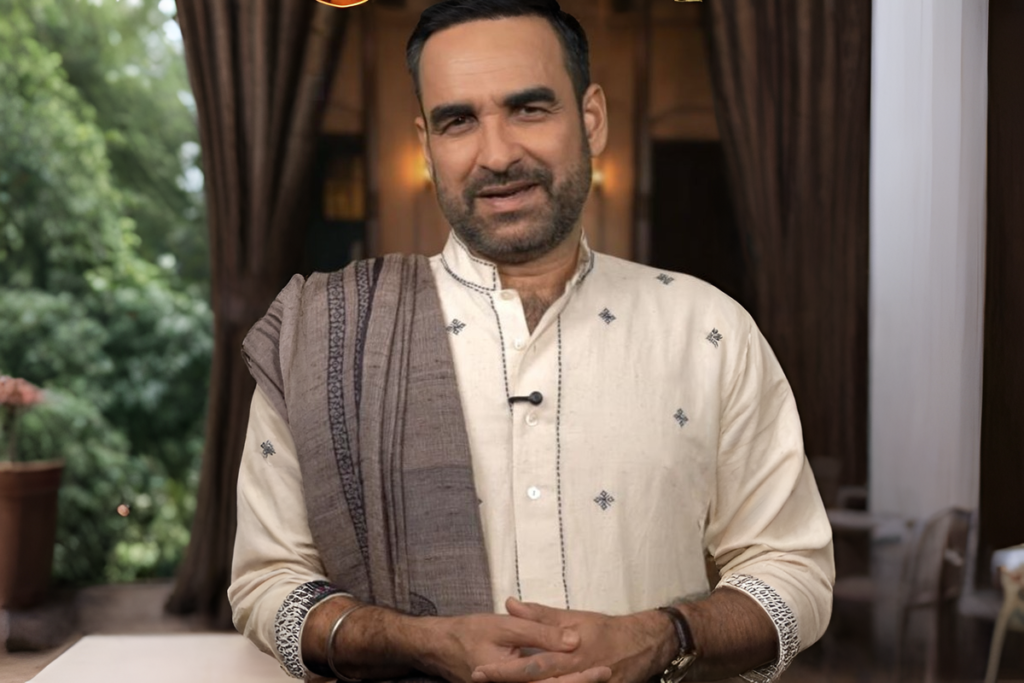
CLAIM: Actor Pankaj Tripathi, in an FSSAI “Eat Right India” video, says he now takes 30 minutes to eat, focusing solely on food, savouring each bite mindfully, and treating meals with gratitude and reverence, like worship. He claimed that slow, distraction-free, mindful eating for a set duration benefits health and digestion.
FACT: Research shows that eating slowly and savouring food can encourage more deliberate eating, with oral health also playing a role. Structured programmes focused on attentive eating can significantly improve emotional eating and awareness of eating habits. Experts note that eating slowly aids fullness signals and digestion, but no fixed duration such as 30 minutes is medically required.
In an FSSAI “Eat Right India” video, actor Pankaj Tripathi opens with the campaign’s now-familiar refrain, stressing that eating right is essential for good health.
He goes further, drawing a link between what we eat and who we are, saying our bodies are shaped by our food just as our personalities are shaped by our thoughts.
Tripathi reveals that over the past month, he has made a habit of taking half an hour to eat each meal, slowly and without distraction, savouring every bite.
“Pay attention to your food and your thoughts,” he says, arguing that since the day’s hustle ultimately exists to earn these two meals, mealtime deserves undivided focus.
He then draws on Indian tradition, referencing rituals like adding water to the food and offering salutations before and after eating. Eating with such reverence and gratitude, he says, is “a form of worship.”
What does science say?
A 2025 study published in Scientific Reports looked at what actually makes people eat slowly and chew properly. Researchers surveyed over 1,600 adults in Japan, aged 40 to 70, asking about diet, oral health and lifestyle habits, then used statistical analysis to see what set the slow eaters apart from the fast ones.
The biggest factor was not willpower or time. It was simply paying attention to taste. Researchers found that across nearly all age groups and both genders, eating slowly and chewing well “was associated with ‘savoring while eating’ followed by ‘not eating with one’s mouth full.'”
Oral health mattered too. Men who had no bone loss around their teeth and women with no toothache were also more likely to eat slowly. The researchers concluded that encouraging people to savour their food may be a simple, practical way to promote slower eating.
A randomised controlled trial published in 2026 in the International Journal of Behavior Nutrition and Physical Activity tested a structured eight-week mindfulness program, called Mind-Eat, against standard nutrition education in adults with overweight or obesity.
The results favoured the mindfulness group. Participants in the Mind-Eat program showed significantly greater improvement in mindful eating scores compared to those who received usual dietary education, both right after the program and a month later. They also showed bigger drops in emotional eating, where people eat in response to feelings rather than hunger.
The researchers noted that “no between-group differences were found for restrained eating, perceived stress, anxiety, depression, physical activity, or weight.”
Experts’ opinion
Edwina Raj, head of services, clinical nutrition and dietetics at Aster CMI Hospital, Bangalore, offered a measured but insightful take on the viral claim.
“There is good evidence that eating slowly can support healthier eating habits, but there is no scientifically established ‘ideal’ duration, such as exactly 30 minutes, that everyone needs to follow,” she explained thoughtfully.
According to her, slower eating gives the brain more time to register fullness signals from the gut, though she was careful to add that “a 30-minute meal can be a useful mindful-eating routine, but it should not be considered a medically prescribed duration.”
Raj also noted that a calm mealtime can genuinely support digestion through the parasympathetic nervous system, the body’s “rest and digest” response. However, she cautioned firmly that “claims that gratitude itself directly improves digestion or dramatically changes nutrient absorption are not strongly established by clinical evidence.”
She also stressed that mindful eating works best as one piece of a larger picture, remarking that it “should therefore complement evidence-based medical and lifestyle interventions rather than replace them.” Her overall message was simple that slowing down helps, but no single ritual is a cure-all for metabolic health.
Also read: FACT CHECK: Does eating noodles regularly affect your fertility?