
Author
CLAIM:
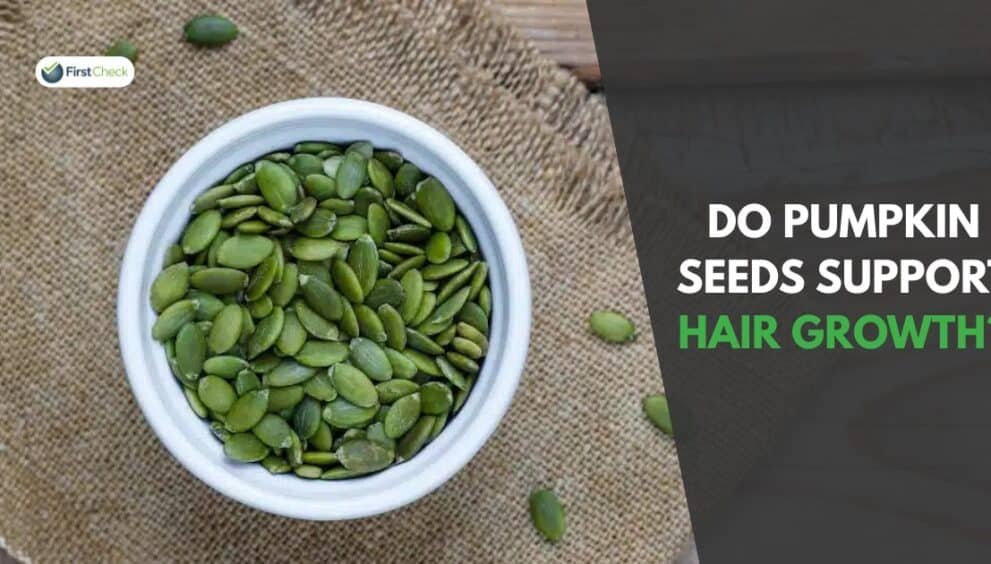
The post claims that eating pumpkin seeds can help strengthen hair roots, support hair growth, and improve scalp health because they contain nutrients such as zinc, iron, magnesium, healthy fats, and vitamin E. It also suggests that including a handful of pumpkin seeds in the daily diet can contribute to overall hair health, although they are not a cure for hair loss.
FACT:
Pumpkin seeds contain nutrients such as zinc, iron, magnesium, healthy fats, protein, and vitamin E that support normal hair and scalp health. However, there is no strong clinical evidence that eating whole pumpkin seeds alone promotes hair growth or reduces hair loss. Most positive research has been conducted on pumpkin seed oil supplements, not whole pumpkin seeds. Experts recommend a balanced diet, adequate sleep, stress management, and treatment of underlying medical conditions as the most evidence-based approach to maintaining healthy hair.
Hair loss is a common concern affecting millions of people worldwide, prompting many to seek dietary remedies that claim to promote stronger, healthier hair. Among the foods frequently recommended on social media are pumpkin seeds, which are often promoted as a natural way to reduce hair fall and support hair growth.
A recent Instagram post by ‘lifewith_biologyye‘, which has over 3.14 lakh followers, has attracted attention for making similar claims about pumpkin seeds and hair health.
The post mentions that, “People who suffer from hair fall should eat more pumpkin seeds, to strengthen hair roots, support hair growth and improve scalp health.”
The caption of the post adds that pumpkin seeds are a nutrient-rich snack that “may support healthier hair.” It explains that they contain zinc, iron, magnesium, healthy fats, and vitamin E, which “help nourish hair follicles, strengthen hair roots, and maintain a healthy scalp.” According to the post, “Including a handful of pumpkin seeds in your daily diet can contribute to overall hair health.”
At the same time, the caption acknowledges that pumpkin seeds are not a cure for hair loss. It states that, “Hair fall can also be caused by genetics, stress, hormonal changes, or nutritional deficiencies.” The post further advises that, “For the best results, combine a balanced diet with proper hair care, adequate sleep, hydration, and consult a healthcare professional if hair loss is severe or persistent.”
The post has also sparked reactions from users in the comments section. While some appeared to take the claim humorously, with one user commenting, “I ate them and now I have grown a pumpkin in my stomach!”, another simply wrote, “Pumpkin seeds Market.”
What research says?
Research on pumpkin seeds and hair growth is promising, but most of the direct evidence comes from pumpkin seed oil (PSO) rather than eating whole pumpkin seeds. Existing studies suggest that PSO may support hair growth in certain settings, although larger human studies are still needed.
A 2014 placebo-controlled trial investigated whether pumpkin seed oil could improve hair growth in 76 men with mild to moderate androgenetic alopecia (male-pattern hair loss). The researchers noted that “Pumpkin seed oil (PSO) has been shown to block the action of 5-alpha reductase and to have antiandrogenic effects on rats.” Participants received either 400 mg of PSO daily or a placebo for 24 weeks, and hair growth was assessed using clinical photographs, patient self-assessments, hair thickness, and hair counts. After 24 weeks, “the PSO-treated group had more hair after treatment than at baseline, compared to the placebo group.” The study reported that “Mean hair count increases of 40% were observed in PSO-treated men at 24 weeks, whereas increases of 10% were observed in placebo-treated men.” The researchers also found that “Adverse effects were not different in the two groups.”
Subsequent animal research reported similar findings. A 2019 study examined the effects of topical pumpkin seed oil in male Swiss mice whose hair growth had been suppressed with testosterone. After three weeks, the researchers found that “PSO (10%) increased hair growth score”, while histopathological analysis confirmed increased hair follicle activity.
The authors concluded that, “Topical application of PSO showed hair growth promotion” and “might be regarded as a promising alternative for treatment of male pattern alopecia.” They suggested that “free fatty acids and minor components like phytoestrogens and vitamin E may have contributed to this effect.”
Evidence has also begun to emerge in women with hair loss. A 2021 randomised clinical trial compared pumpkin seed oil with 5% minoxidil foam in 60 women with female pattern hair loss (FPHL) over a period of three months. The researchers observed significant improvements in several dermoscopic markers among participants receiving pumpkin seed oil, including reductions in hair shaft diversity and vellus hairs, alongside an increase in regrowing hairs. The study concluded that “Findings of the present trial provide evidence of a promising potential role of PSO in treating FPHL.” However, the authors also noted that further studies with larger populations are needed.
More recently, a 2022 animal study evaluated both oral and topical pumpkin seed oil in BALB/c male mice. The researchers found that oral PSO increased the number and length of hair follicles, while topical PSO also increased hair follicles, although these appeared less organised microscopically. Importantly, the study reported that “PSO did not induce genotoxic or mutagenic effects.” The researchers concluded that “Oral PSO for 14 days was effective in increasing the number of hair and length follicles” without signs of liver toxicity, while noting that “The mice represented an excellent model to study the hair cycle because it was a short procedure, lasting only for 3 weeks.”
Do experts agree?
Commenting on the claim, Dr Priyanka Kuri, Consultant – Dermatology, Aster Whitefield Hospital, said that pumpkin seeds are a nutritious food and can contribute to overall hair health as part of a balanced diet. However, she emphasised that there is currently no strong evidence that eating whole pumpkin seeds directly promotes hair growth or reduces hair loss.
According to Dr Kuri, pumpkin seeds provide zinc, iron, magnesium, protein, healthy unsaturated fats, vitamin E, and antioxidants, all of which support normal hair follicle function and scalp health. A small handful (around 25–30 g) can contribute these nutrients, which “support normal cell growth, help reduce oxidative stress, and maintain a healthy scalp.”
However, she cautioned that “there is no strong clinical proof that simply eating a handful of pumpkin seeds every day will directly reduce hair shedding in otherwise healthy people.” Any benefit, she explained, is more likely in individuals whose hair loss is linked to nutritional deficiencies such as low iron or low zinc.
Dr Kuri stressed that hair growth depends on multiple factors, including genetics, hormones, age, stress, underlying medical conditions, and overall nutrition. “Simply adding pumpkin seeds to your daily meals is unlikely to reverse hair loss, especially in people with androgenetic alopecia or other underlying disorders,” she said. “They are better seen as one useful part of a nutrient-dense diet, not as a stand-alone fix for hair loss.”
She also highlighted an important distinction between pumpkin seed oil and whole pumpkin seeds. According to Dr Kuri, most published studies have examined pumpkin seed oil supplements, with some small clinical trials reporting modest improvements in hair count among people with androgenetic alopecia. “These findings cannot simply be applied to eating whole pumpkin seeds because the composition, concentration of bioactive compounds and effective dosage are different,” she said. “At present, there is not enough evidence to conclude that consuming whole pumpkin seeds produces the same effects.”
Discussing overall nutrition, Dr Kuri said that the strongest evidence supports identifying and correcting nutritional deficiencies rather than relying on any single food. She noted that adequate protein, along with sufficient iron, zinc, vitamin D, vitamin B12, folate, selenium, and essential fatty acids, is important for healthy hair. Foods such as eggs, fish, dairy products, legumes, soy products, nuts, seeds, citrus fruits, berries, and colourful vegetables can help meet these nutritional needs.
She also advised that supplements should only be taken when a deficiency has been confirmed, as excessive intake of certain vitamins and minerals may be harmful. “A balanced diet, adequate sleep, stress management and treatment of any underlying medical condition remain the most evidence-based approach to maintaining healthy hair,” she concluded.
This version removes repeated references to pumpkin seeds being part of a balanced diet, repeated explanations of nutrient content, and repeated mentions of underlying causes of hair loss while preserving all the essential expert points.
Also read: FACT CHECK: Are watermelon seeds really a superfood?
Do you have a health-related claim that you would like us to fact-check? Send it to us, and we will fact-check it for you! You can send it on WhatsApp at +91-9311223141, mail us at hello@firstcheck.in, or click here to submit it online.